Why can't I enjoy the process, only fixate on the results?
DustEcho Editorial
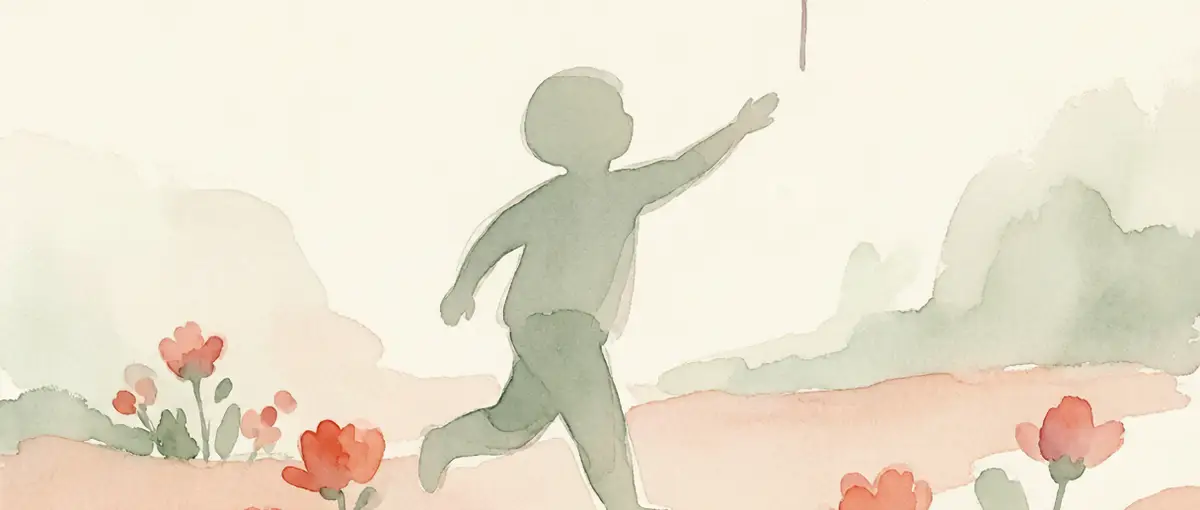
Why can't I enjoy the process?
You may be treating the present as a payment you have to make before you are allowed to feel satisfied. When every activity is judged only by its outcome, attention leaves the work itself and waits for the finish line. This is a learned pattern, not proof that you are lazy or incapable of enjoying life.
How can I enjoy the process without giving up my goals?
Keep the goal, but give one small part of the work its own value: describe what you notice, mark a small milestone, or leave one low-stakes activity without a performance target. Explore the pattern gently if reaching the next result is the only time you let yourself exhale.
You can't enjoy the process because, almost always without meaning to, you've been trained to treat "now" as nothing more than a stepping-stone to an outcome — the step only earns its meaning from what stands on top of it, while the step itself is just something to be walked over. The result-oriented habit flattens the present into a "means," so you stand in today while your mind permanently hangs on tomorrow's point; and when you finally arrive, you find that single point doesn't fill you the way you imagined.
This isn't laziness, and it isn't being "bad at life." It's an attention habit drilled in by repetition: you stake all value at the finish line, and the scenery along the way, the feel of the work in your hands, the doubts and the tiny adjustments, all get marked as noise you're allowed to skip. Below we'll look at three angles that don't get said aloud often enough — how this habit forms, why reaching the goal can leave you emptier than before, and why uncertainty makes you so restless you can't bear to linger.
Why does a process lose its taste the moment it becomes a "means"?
Whether an activity "has taste" for you depends on a fairly plain mechanism: are you willing to let your attention rest on it? When you treat exercise only as the cost of losing five pounds, time with your child only as the duty of "being a good parent," or writing a report only as one brick in your promotion file, your attention has been borrowed ahead of time — it isn't in the present, it's on the result that hasn't arrived yet.
That creates a quiet cost: you're doing the thing but hardly present. Your body performs the motions; your mind is already running the next step, the next metric, the next deadline. So the process is never really "lived," and it leaves behind no details you could later savor. When you look back and wonder "what was I even doing through that stretch of time," the brain often returns a blank — because the you of then wasn't actually there.
This is also why so many people get caught needing to be better than yesterday just to feel okay: the instant you make "progress" the only permitted state, simply resting in the present starts to feel like a kind of guilt. The process is stripped of its right to be "fine to just be."
Why do I feel emptier after the goal is reached?
People who are outcome-oriented often believe "once I get that thing, I'll finally exhale and enjoy myself properly." But the usual reality is: you get it, you exhale for about three seconds, and then — emptiness.
The reason isn't mysterious. For a long time you've invested your expectation in the act of "arriving." Once you arrive, the object of that investment vanishes, and the ability to enjoy "already having" was never exercised — it's a different muscle from "chasing." It's like someone who's walked head-down for years being told "you're there" and freezing: where do I look now? How do I look?
It sits on the same root as quietly shrinking your own achievements the moment they land in hand: we're poor at tasting the process and poor at resting in the result, so the whole experience gets suspended at both ends, leaving only the instant a checklist item gets crossed off.
Why am I so impatient with uncertainty?
Behind outcome-orientation there's usually an unspoken fear: I'm afraid the process won't guarantee the result. As long as the result isn't in the bag, every step in between feels like walking on wet cement — you want to sprint across and leave no footprints.
That intolerance of uncertainty makes you read "slowness," "detours," and "trial and error" all as waste. You cover every hesitation with efficiency and label each activity by "is it useful." Yet almost everything worth doing carries uncertainty natively in its process: relationships, creating, learning, the body's recovery — none of them can be button-pressed straight to the finish, and all of them ask for a going with the flow (shun-shi) that you've been trained to mistrust.
So the more urgently you rush to arrive, the less you can tolerate the process as it actually is; the less you can tolerate it, the less you can enjoy it. It's a loop that tightens itself, and it's often tied to that same going with the flow (shun-shi) stance you haven't practiced — you're not really racing anyone, you just can't bear for the road beneath your feet to have "no progress bar."
A gentler view: the process isn't the enemy of the result
First, take "enjoy the process" out of the motivational-poster drawer. It doesn't mean abandoning your goals, and it doesn't mean you must go Zen and care about nothing. It's more like a reminder: your brain has the habit of mortgaging "now" to "later," and mortgage it too long and a person loses, at the root, the felt sense of being alive.
Eastern thought offers letting go (fang-xia), and it fits here precisely — not throwing away your goal, but loosening the grip of "clutching the result" just enough that the texture of the process can land. And non-doing (wu-wei) isn't lying flat either; it's not spending every ounce of force fighting the thing that hasn't happened yet.
When you swap "I must see a result right now" for "I allow this thing the time it needs to take," the process gets back its space to be experienced.
Can I relearn how to enjoy the process?
Yes — but this capacity doesn't grow from figuring it out once. It's rebuilt through small, gentle, repeated practice. The moves below aren't mystical; the key is that they're low-threshold and doable every day:
- Leave one "purposeless" corner in your process. Each day pick one thing you'd normally treat as a means — a walk, washing dishes, a single song — and deliberately attach no outcome to it. Just stay with its texture: water temperature, rhythm, the thickness of a sound.
- Describe instead of evaluate. Midway through a task, don't rush to ask "how far from the goal is this?" First describe what you see right now, what the work feels like in your hands. Describing presses attention back into the present.
- Shrink your milestones. Don't wait for "completion" to reward yourself. A small step forward, one stuck point finally untangled — each deserves to be felt, not wiped out by a simplicity (jian-yi) urge to cut straight to the finish.
- Let "detours" count as progress. Trial, pause, changing direction — these aren't deviations from the result; they are the process itself.
The table below puts the two postures side by side so you can check which side you're standing on right now:
| Treating process as a means | Treating process as process |
|---|---|
| Doing it, mind on the result | Doing it, attention on the hands |
| Midway doubt = waste | Midway doubt = feeling it out |
| Allowed to be happy only at arrival | Progress itself can be felt |
| Can't stop, afraid of falling behind | Can stop, because you know you're walking |
What stays with you
Not enjoying the process doesn't mean something in you is broken. It's a habit trained in by environment, by comparison, by efficiency. It helped you "arrive" at places before — the cost was that you arrived without having been there much.
You don't need to become a slow-living guru overnight. Start with one small thing: take "now" down from its position as a means, and let it become again the place you actually live. That's enough.
Written and reviewed by DustEcho Editorial for self-reflection and cultural inquiry—not counseling, medical advice, or a clinical diagnosis.
Not sure where to begin?