How to Learn from Failure Without Spiraling
DustEcho Editorial
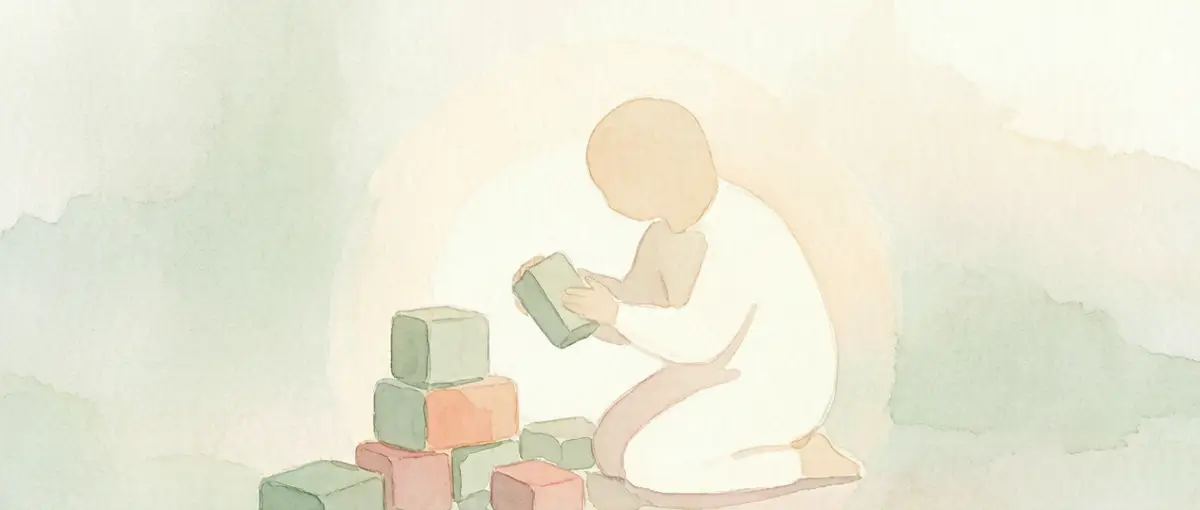
Whether you actually learn from a failure depends less on how fast you get back up and more on whether you let the part of you that got hit catch its breath first. The trick to not spiraling is to treat the failure as a single event instead of as your whole identity — and then run a concrete, grounded review rather than turning that review into a second trial. This isn't a test of willpower; it works because you protect your emotions before you switch on your reasoning.
Picture the night after a presentation goes badly. You open your laptop at one in the morning to "figure out what went wrong," but every sentence you write reads like an indictment: I froze, I'm not cut out for this, I wasted everyone's time. You aren't reviewing — you're prosecuting. The next morning you're exhausted and no closer to the truth, because the part of your brain that could see clearly was offline the whole time. Learning from failure is possible; learning from failure while spiraling usually isn't. The difference isn't talent or toughness. It's the order in which you do two things: feel first, think second.
Is a review really the first thing to do after failing?
A lot of people force themselves to "summarize the lesson immediately," as if pausing for a few hours is self-indulgent. But in the hours right after a setback, your brain is in a stress response — its job in that state is to protect you, not to see facts clearly. Trying to reason your way through it then easily upgrades "I messed up" into "I'm finished."
So the first move isn't a review; it's giving the emotion some room. Not letting it flood everything, but acknowledging it's there: you're allowed to feel disappointed, ashamed, or simply unable to make sense of it yet, and none of that needs to be solved on the spot. Sleeping on it, walking a few blocks, or sitting with someone who won't rush to give advice — all of these do more than staring at "where did I go wrong." Once the tightest knot loosens, thinking comes back online.
A sneaky trap: the more you blame yourself, the less you let yourself rest. When shame keeps you punishing the failed version of you instead of letting go (fang-xia), you trade a clearer tomorrow for a rougher one. Allowing yourself to stop isn't weakness; it's the precondition that makes a real review possible.
Why do I always feel like failure means "I'm just not good enough"?
Because we're quick to misread a single action as a fixed identity. A failed exam is "I wasn't prepared this time"; calling it "I'm just not an academic person" jumps from action to identity. The first version can still change; the second nails you in place.
That jump is nearly automatic, and it often grows from an invisible comparison pressure — once you start measuring yourself against others, "temporarily behind" quietly becomes "naturally worse." The fix is simple but easy to forget: in your sentences, keep "I" and "the thing" in separate boxes.
| This is an action (changeable) | This is an identity (it nails you down) |
|---|---|
| The pitch didn't land this time | I'm someone who can't communicate |
| The project slipped its deadline | I never finish anything |
| I skipped the gym today | I'm just lazy |
Every time you catch yourself saying "I'm the kind of person who…," pause and rewind it to the specific event. Identity is slow and heavy; action is fast and light. Failure only happens at the level of action — it can't reach who you are.
How can I make my review specific instead of self-attacking?
A review is neutral by itself, but many people slide straight into attack mode the moment they sit down: looping on "why didn't I do it differently" and "how could I be so stupid." That kind of review leaves nothing except another layer of shame.
A specific review looks like this: write only facts, no adjectives.
- What actually happened? (What happened — not "what I botched.")
- What decisions did I actually make?
- Which parts were within my control, and which weren't?
- If I faced it again, which single step could I do differently?
Notice the fourth question only asks "differently," never "perfectly." The point of a review isn't to convict the failure; it's to find the next slightly better move. Think of it as a field report, not a confession. The plainer you write it, the more useful it is — which is exactly why simplicity (jian-yi) matters here: strip the adjectives, and the signal survives. A one-line note like "I spoke for twenty minutes without checking the room" tells you more than a paragraph of "I'm hopeless at this."
How can I tell which variables were actually under my control?
A core skill for not spiraling is shifting attention from the "outcome" to the "variables." The outcome is already locked — you can't undo it. The variables are the knobs you can still turn next time.
Say a collaboration falls apart. The result can't be withdrawn, but the variables you controlled might include: syncing progress earlier next time, writing down the fuzzy division of labor, or hitting pause for ten minutes when emotions run hot. You'll notice the controllable things are usually small and concrete — too small to look like a comeback, yet those small knobs decide whether next time goes a little better.
What you fear isn't the failure itself but the不敢-to-try-again that follows it; often the aftershock of the last failure is what scares you off. Pointing your eyes at the controllable variables tells yourself: next time isn't a gamble with your life, just a few knob adjustments — and the "trying again will kill me" fear loosens a bit. That's also where going with the flow (shun-shi) helps: you work with what's actually movable instead of fighting the result that's already fixed.
How can I restart in steps small enough not to crack again?
You've learned something; the next move is to begin again. But plenty of people crack a second time on the restart, because they read "begin again" as "scrap everything and be reborn." Using one grand self-overhaul to cancel out the feeling of having failed just builds a bigger pile to fall from.
So the first step after cracking is deliberately tiny. Not "starting tomorrow I'll run five kilometers a day," but "tomorrow I'll put on my shoes and walk one loop." Not "become a new person," but "adjust that one small variable from before." Make it so small you think "this barely counts" — and that's exactly the point, because it won't trip the spiral program again. This is the practical side of non-doing (wu-wei): you don't force a dramatic transformation, you let the smallest useful action carry you forward. And if the shame is still clinging on, letting go (fang-xia) of the "I must prove myself now" story is what keeps the restart from becoming another trial.
Small steps you can take when you fail
Condense the above into a list you could pin to a wall:
- Stop first. Give the emotion 24 hours; don't force a review while stressed.
- Separate. Rewrite "I botched it" as "this thing got botched" — action stays action, identity stays identity.
- Write plainly. Record only facts and adjustable variables; skip "how terrible I am."
- Pick one. From the variables, choose the smallest one and move it next time.
- Start tiny. When restarting, cut the goal down to "too small to count" so you bypass the spiral switch.
Failure doesn't mean you're no good; it means this one time didn't work. Keep the person separate from the event, and the outcome separate from the variables, and you can quietly gather a little more experience than last time — without ever spiraling. Experience doesn't come from never falling; it comes from being able to walk after you fall.
How do I learn from failure without spiraling?
First let the emotional impact settle, then describe the event in plain facts rather than identity judgments. Separate what happened from what it means about you, choose one controllable variable to adjust, and restart with a small action. A useful review should produce a next step, not another punishment.
Want to understand your reaction to setbacks more clearly?
Use self-exploration to notice when a mistake becomes a verdict about your identity, and what helps you return to action with less self-attack.
Written and reviewed by DustEcho Editorial for self-reflection and cultural inquiry—not counseling, medical advice, or a clinical diagnosis.
Not sure where to begin?