Stop straining to prove you're responsible: the Daoist case for wu-wei
DustEcho Editorial
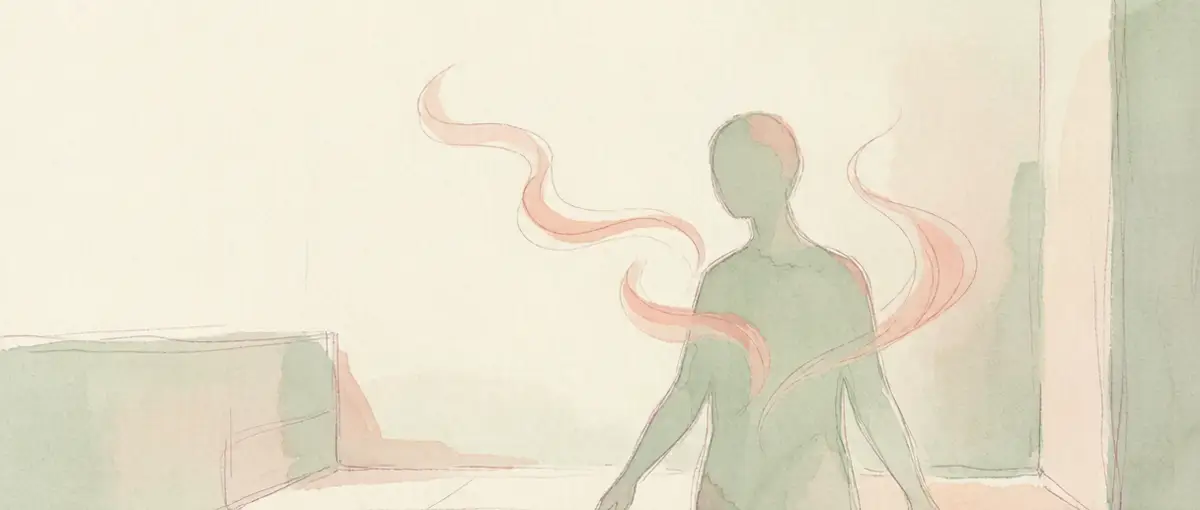
The moment most people hear the phrase "wu-wei" (无为), their faces tighten. A picture jumps into the mind: lying flat, doing nothing, letting the world rot while you nap. It's as if Laozi, two and a half thousand years ago, had pre-written an excuse for modern laziness. But if you actually open the Tao Te Ching, wu-wei was never "not acting." It's pointing at something else entirely — the habit of straining in places where no strain is needed.
What does wu-wei mean in Daoist philosophy?
Wu-wei, often translated as “non-forcing” or “effortless action,” does not mean doing nothing. It means removing unnecessary strain so your action fits the situation, timing, and nature of the task. It is a philosophical lens, not an excuse for passivity.
How can I practice wu-wei without becoming passive?
Before adding more effort, ask what the situation actually needs and what extra motion is only proving that you care. Explore the idea gently if responsibility has turned into constant over-responding.
Who Laozi was really talking to
When Laozi wrote about wu-wei, he was facing people much like you and me. They shared one flaw: they always felt they had to "do something" to prove they were alive, to prove they were useful. The rituals had to grow grander, the city walls taller, the decrees more numerous — as if they could not sit still without stirring things up. Wu-wei was aimed squarely at that restless, never-ending fidgeting.
There's a line in the Tao Te Ching that gets passed over: "In the pursuit of learning, one accumulates day by day; in the pursuit of the Way, one diminishes day by day. Diminish, and diminish again, until you arrive at wu-wei." Gathering knowledge outward is adding, day after day. Cultivating yourself inward is subtracting, item by item. What you subtract is not your skill, but the extra motions of "I thought I should do this." When there is nothing left to subtract, what remains is a clean, timely action — and that is wu-wei. It is not an empty space. It is the clarity left after filtering.
How we turned "acting" into "flailing"
What modern people least lack is activity. Group chats demand replies, to-do lists demand clearing, the kids need enrolling, the body needs managing, and even our emotions get reviewed every single night. The instant a problem appears, the mind has already lined up a three-step response plan. We call this responsibility. We call it ambition. We call it not letting people down.
But look closer, and how much of it is "pushing against the air." The problem hasn't happened, and half your energy is already spent. The issue isn't even clear, and you've stacked up three contingency plans. This is exactly what Laozi feared — the more you insist on "acting," the more easily you slide into "flailing." Movements pile up densely, almost none of them land, and you're worn out before anything real gets done.
Wu-wei is not lying down — let's be clear
We have to say this plainly: wu-wei is not the same as giving up. A farmer doesn't mutter, "I practice wu-wei, so I won't sow." He simply refuses to do things against the season — forcing sprouts out of frozen soil in the dead of winter, that is what reckless doing looks like. Wu-wei respects the rhythm of things: turn the earth when it's time to turn, wait honestly when it's time to wait.
It opposes the "human will conquers nature" style of forcing, not the act of doing itself. A mother who gets up at midnight to cover her child is acting, and rightly so. But if anxiety drives her to schedule every minute of the child's life, that energy has gone crooked. The dividing line of wu-wei is not "do or don't" — it's whether the energy behind the doing flows with the thing, or presses down on it.
A moment of stopping
You've probably had this experience. A draft won't come together; the more you edit, the messier it gets. So you shut the laptop and go wash some dishes. When you come back, the stuck part has untangled itself. That gap — shutting the laptop — is a little wu-wei. You temporarily stopped "trying to think," and handed the initiative back to the thing's own grain.
Often what traps us is not ability but the grip that won't loosen. The harder you clutch, the more it slips; the moment you relax, it falls into your hand. Wu-wei teaches exactly this relaxing. Not abandoning the search, but admitting that some knots only tighten when you yank them — you have to let the thread loosen on its own.
Notice that this isn't a technique you apply once and forget. The grip returns, usually right when something matters. The practice is simply to notice it again, each time, and loosen a little. Over weeks, the returning grip comes back weaker, because you've stopped feeding it.
Not every moment has to "mean something"
We've been trained to believe: idle equals wasted, a pause equals falling behind. So even daydreaming carries a little guilt, as if a single idle turn of the mind is a loss. Wu-wei's reminder is that some moments are valuable precisely because they "produce nothing."
Let a thought drift for a while. Let a relationship cool for a while. Let an unsolvable problem ferment slowly in the background. Not everything needs solving on the spot, and not every bit of force needs spending. Negative space is not a gap; it's where other things grow. A painting filled edge to edge is choked; a life scheduled to the minute is choked too.
When effort becomes noise
There's a more hidden kind of flailing: making effort itself the goal. As if, so long as I am "making an effort," I've done right by myself, and the result no longer matters. This kind of effort is heroic and hollow. It uses the density of motion to hide the blur of direction.
Wu-wei doesn't oppose effort; it opposes "using effort to cover up thinking." The truly effective move is usually very quiet. The problem that stuck you for three days might clear because of a single thought on a walk. The deadlocked negotiation might break because you held back the line you shouldn't have spoken. None of it is loud, but all of it works.
Leave some space unhandled in your relationships
The easiest trap in intimate relationships is "every emotion must be answered on the spot." The other person throws a barbed sentence, and you immediately organize a counterattack or an explanation, and the fire only grows. Here, wu-wei means: sometimes, not reacting is the better reaction.
Not cold silence — but recognizing "this emotion belongs to him, not to me." You don't catch the ball; it drops; he settles on his own. Many arguments are fed by the impulse that "this must be handled right now." Leave a little space unhandled, let the emotion flow through like water, and the relationship can finally breathe. You haven't done less — you've simply done one less harmful thing.
What makes this hard is the fear that silence reads as agreement or coldness. It sometimes does, briefly. But most of the time the other person is not asking you to solve their feeling; they're asking to be heard without being managed. Holding back your reply is not abandoning them. It's trusting the moment to carry itself.
Wu-wei is not having no opinions
We need one more line drawn. Some mistake wu-wei for "whatever you say, I'm fine with anything" — that isn't wu-wei, that's having no backbone. The wu-wei person has a clear sense inside, just fewer motions. The spineless person has no sense inside, so can only follow others.
The difference is "actively doing little" versus "passively being empty." The first filters out extra force; the second never had any to begin with. Someone who truly understands wu-wei refuses cleanly when they should refuse, and holds steady when they should hold — they just don't add extra drama. They aren't soft. They're economical.
The wu-wei person actually has more energy
There's a counterintuitive pattern: the people who love wu-wei tend to have more energy when real work arrives. Because they've saved the senseless straining for what actually matters. Compare them with someone perpetually tense, who has already burned more than half their battery before starting.
It's like a bow. A bow held at full draw the whole time has no power left when it's time to shoot, and the string snaps easily. A bow that knows how to loosen — when the moment comes to release, that one motion is clean. Wu-wei isn't lacking force; it's putting force on the blade's edge instead of hacking at air with the back of the knife every day. Every bit of superfluous strain you save is capital reserved for what truly matters.
The one thing you can try loosening today
No need for grand "practice." Tonight, pick one small thing you've been "hard-carrying" — maybe re-checking a message you already sent, maybe rehearsing lines for a conflict that hasn't happened, maybe filling in every hour of tomorrow before sleep — and deliberately choose not to do it, just once.
Not suppression, but observation: where does this urge to "do something" actually come from? Fear of losing control, or fear of being called lazy? The first step of wu-wei is often just recognizing that you're straining uselessly. Once you recognize it, the grip has already loosened by half. The rest, leave to the thing to grow on its own.
Keep reading: Bianyi: What You Thought Was Nailed Down Has Been Moving All Along · Buyi: When Everything Turns on You, Something Ought to Stay · Compassion: The Warmth You Hand a Struggling Friend, and Withhold From the Person in the Mirror
Written and reviewed by DustEcho Editorial for self-reflection and cultural inquiry—not counseling, medical advice, or a clinical diagnosis.
Not sure where to begin?