Compassion: The Warmth You Hand a Struggling Friend, and Withhold From the Person in the Mirror
DustEcho Editorial
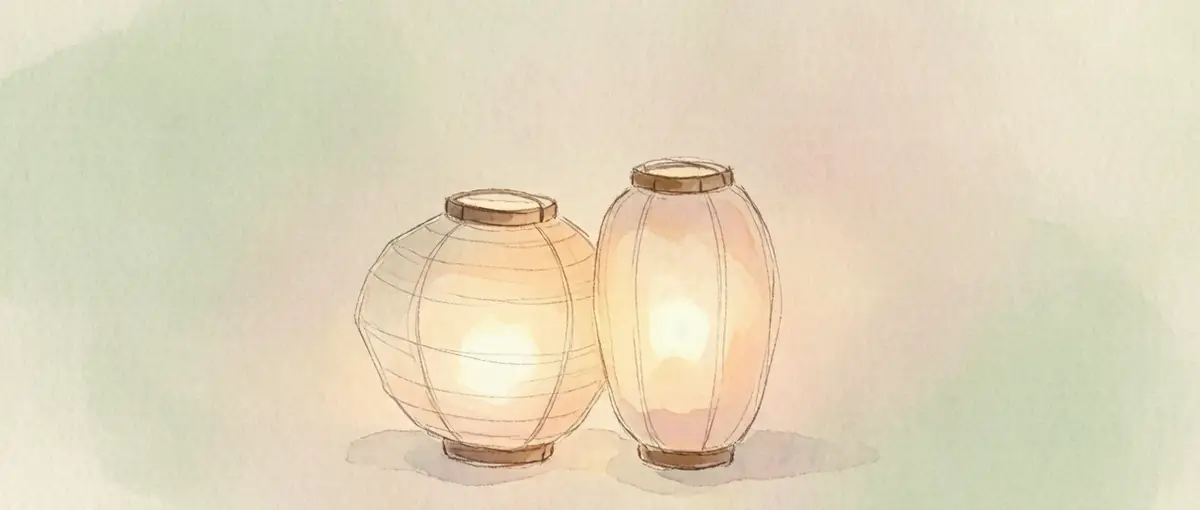
We've all had the moment. A friend messes up, and the words are out before you think: it's fine, take your time, everybody makes mistakes. But the same thing happens to you, and the voice inside says something else entirely — why are you like this again, you're so useless. Same person, two sets of rules. The word for this is 慈悲 (ci-bei), a Buddhist term with two faces: 慈 (ci) is the wish to give others ease and happiness; 悲 (bei) is the wish to stand in another's pain and help lift it. It's meant for everyone — and that includes you. Yet the one person we most reliably leave out is ourselves.
Kindness hands out candy, compassion wipes away tears
慈 is like offering someone a piece of candy. When another person is low, you naturally say something warm. 悲 is like reaching out to dry their tears. When someone is knocked down, you're willing to sit with them. With other people, most of us manage these two things passably well. But turned inward, 慈 becomes scolding, and 悲 becomes silently carrying everything alone. We tell ourselves that being tough on ourselves is how we improve. In truth it's just another form of drain — it spends the very energy you could have used to treat the world kindly, and spends it first on attacking yourself.
There's a quieter cost here. The harshness doesn't stay contained. The more you practice it on yourself, the more naturally it leaks outward, so that even your kindness to others carries a faint edge of shoulds and conditions.
We saved all the tenderness for everyone else
Being too good at reserving your tenderness for others is a kind of hidden deficit. The more thorough you are outward, the harder you are inward, and the account runs lower and lower. By the time someone actually needs your patience, there's no reserve left. Compassion that doesn't include yourself is like pouring water into a bucket with a hole in the bottom — it never fills, and it never reaches anyone else. No matter how warm you are to outsiders, it can't make up for what you owe yourself.
This is the part that surprises people. They think being selfless is the high road. But a selflessness that empties you isn't generosity; it's a slow leak you've agreed not to notice. The warmth you hand out starts to come with a tired, resentful undertone, because somewhere you know you're giving from a place that's already dry.
Being hard on yourself is not practice
Being harsh with yourself isn't cultivation — it's depletion. The Buddhist teaching on compassion puts self and other together from the very first line: 自利利他, benefit yourself, then benefit others. Settle yourself first, and only then do you have the strength to ferry anyone across. You don't have to browbeat yourself into being worthy of kindness. Quite the opposite: the more calmly you can catch your own messiness, the more calmly you can catch someone else's. A person who despises themselves hands out goodwill that always carries a little thorn, and the other person feels it even as they accept.
The logic is simple once you see it. If you can only be kind to others by being cruel to yourself, then your kindness has a price, and the people receiving it are quietly paying it. Real compassion has no such hidden tax.
Compassion is not being a doormat
Compassion is also not about being a pushover. It isn't swallowing every wrong without a boundary, and it isn't smiling while someone walks all over you. True compassion has bones: you are gentle, but you are also clear. You wish people well, but you do not take responsibility for their lives. Compassion without a bottom line turns into self-congratulatory sacrifice, and both sides end up exhausted. Compassion is warm, not soft; it is willing, not coerced.
You can hold both at once. You can say no and mean it, and still mean the other person well. The boundary isn't the opposite of compassion — it's what keeps the compassion from curdling into resentment.
It begins with seeing
It begins with seeing. You notice a friend putting on a brave face, and you say a word. You notice a stranger struggling, and you quietly step aside to let them through. You notice yourself winding up to attack again, and you pause, and swap the script to: this time I didn't do it well, next time I'll know how to change it. The first step of compassion is to see the person and the situation clearly, instead of rushing to judge. Only once you've seen your own pain can you recognize what someone else's pain looks like.
Seeing sounds passive, but it's the hardest part. Judgment is fast and automatic; looking without flinching takes practice. And the person we most avoid looking at, directly and without commentary, is usually ourselves.
Catch yourself first, then catch the other person
Catch yourself first, then catch the other person. This isn't selfishness — it's order. Once you've steadied yourself, the kindness you give carries neither the flavor of pleasing nor the bitterness of grievance. That composed warmth is something others can receive, and something you can keep giving for a long time. A person who is still leaking from their own wounds hands over a cup that always tastes of salt. Mend yourself first, and the warm water stays clean.
Think of it as a sequence, not a competition. You're recognizing that the you who shows up for others is the same you who needs steadying first.
Compassion is not weakness
Compassion is most easily mistaken for weakness. But have you ever met someone who, covered in their own wounds, still steadily caught another person? That isn't softness. It's that their bones were strong enough to hold the softness. Mend yourself first, and that softness won't shatter at the first touch. True compassion is the choice of the strong, not the retreat of the weak. You choose kindness because you have strength; a person without strength has only defense left.
The sentence you can say to yourself today
The sentence you can say to yourself today: take that line you'd say to a good friend — it's fine, take your time — and say it to yourself, word for word. You don't have to feel embarrassed. You deserve to be covered by your own gentleness at least once. You don't have to be scolded before you're allowed to get back up. Go a little easier on yourself, and the sky will not fall.
The patience inside compassion
It's easy to be patient with others, hard to be patient with yourself. You'll wait for a friend to get better slowly, but you won't wait for yourself to take your time. Yet growth has always moved at different speeds. When you force yourself to get better instantly, you press back down the very composure that had only just begun to grow. Compassion toward yourself also means giving yourself time. You allow others to be awkward; you should allow yourself to be awkward too.
The double standard is so ordinary we stop noticing it. We grant friends whole seasons to change, and give ourselves a single bad afternoon before the criticism starts.
What does self-compassion look like in daily life?
It can be as ordinary as changing “I should have handled that” into “that was hard, and I can learn from it.” Compassion does not remove responsibility or make you a doormat; it gives you enough steadiness to repair without adding humiliation.
How can I practice compassion when I am disappointed in myself?
Name what happened, name what you needed, and choose one helpful next step. Speak to yourself in the tone you would use with someone you love who had made the same mistake. If self-criticism is persistent, severe, or tied to thoughts of harming yourself, seek qualified professional support.
Want to understand why kindness feels easier to give than receive?
If you save all tenderness for other people, gentle self-exploration can help you make room for the tired person in your own mirror.
Stop measuring yourself with someone else's ruler
We're hard on ourselves often because we've picked up someone else's ruler. How someone else was at thirty, how smoothly someone else works a room, how composed someone else seems. But that ruler was made to measure them, not you. The first step of compassion is to put down the borrowed ruler, and look at how far you've walked by your own footsteps. You don't have to grow into anyone's shape. You only need to be a little looser than the you of yesterday.
Comparison is a borrowed anxiety. The moment you set the ruler down, a strange thing happens: you're not behind, you're just here, and here is a fine place to keep going from.
Small acts of compassion count too
Compassion doesn't have to be some grand deed. Going to bed early when you're worn out, offering a word of comfort to the self that made a mistake, giving the imperfect face in the mirror a smile — all of these are compassion. It doesn't need to be earth-shaking. The ordinary, tiny, for-your-own-ears-only kindnesses add up into the ground you stand on when you give to the world. The steadier you are with yourself, the less fake the warmth you hand out.
Compassion often starts by putting your hands down
Sometimes compassion isn't about doing something — it's about stopping first. Stop the self-attack in your hands. Stop the judging of others. Stop the impulse to correct everyone. One less harsh word, one less eye-roll, and for the person in front of you, that's a patch of shade. Compassion isn't always addition; subtraction works too. Not adding to the mess is itself a kindness.
We assume goodness means more action. But often the most merciful thing available is simply to withdraw the hand that was about to make it worse.
It makes people a little less alone
A person willing to be compassionate toward themselves also makes more room for other people's imperfections. Once you stop measuring yourself with a perfection ruler, you naturally stop measuring others with it too. That loosened atmosphere lets the people close to you dare to show their frayed edges. Compassion is like a lamp that isn't very bright — it doesn't hurt the eyes, but it's enough for two people to see each other's faces.
Don't turn compassion into a quota
Some people turn compassion into a metric: I must be kind so many times today, or my practice isn't enough. That's backwards again. Compassion is a natural outflow, not a check-in. When you're tired, be compassionate toward yourself first — allow yourself not to want to warm anyone today. It isn't a whip; it's an exit. Only once you've loosened toward yourself does it become real.
The moment kindness becomes a duty, it starts to taste like everything else you're obliged to do. It's permission to rest.
Compassion makes you less tired
A person who's always laying into themselves gets tired on the walk, because they're followed everywhere by a voice that never stops scolding. Compassion swaps that voice for a hand that helps you up. You don't have to take a beating before every fall; you can get up, brush off the dirt, and keep walking. Being gentle with yourself isn't indulgence — it's what gives you the strength to go further. It isn't a reward; it's range.
Compassion sees clearly — it does not look away
Real compassion can see the problem; it just doesn't rush to pass sentence. A friend goes off course, and you point it out — but in the tone of "I'm worried about you," not "you're done for." It's the same with yourself: you see your own flaws, but what you say is "this needs to change," not "you're beyond saving." The clarity inside compassion is more precious than simply going along, because it lets the kindness land on the ground instead of floating in midair.
This is the part that keeps compassion honest. Softness without sight turns into collusion. Sight without softness turns into cruelty. The practice is to hold both — to look, and to stay kind while looking.
In the end, compassion isn't some grand sacrifice. It's first setting aside a share of that kindness for yourself. Once you're warm, the people around you warm up too.
Keep reading: Dependent Origination: You Were Never an Island · Bianyi: What You Thought Was Nailed Down Has Been Moving All Along · Buyi: When Everything Turns on You, Something Ought to Stay
Written and reviewed by DustEcho Editorial for self-reflection and cultural inquiry—not counseling, medical advice, or a clinical diagnosis.
Not sure where to begin?