Going with the momentum: when fighting the wind only tightens the line
DustEcho Editorial
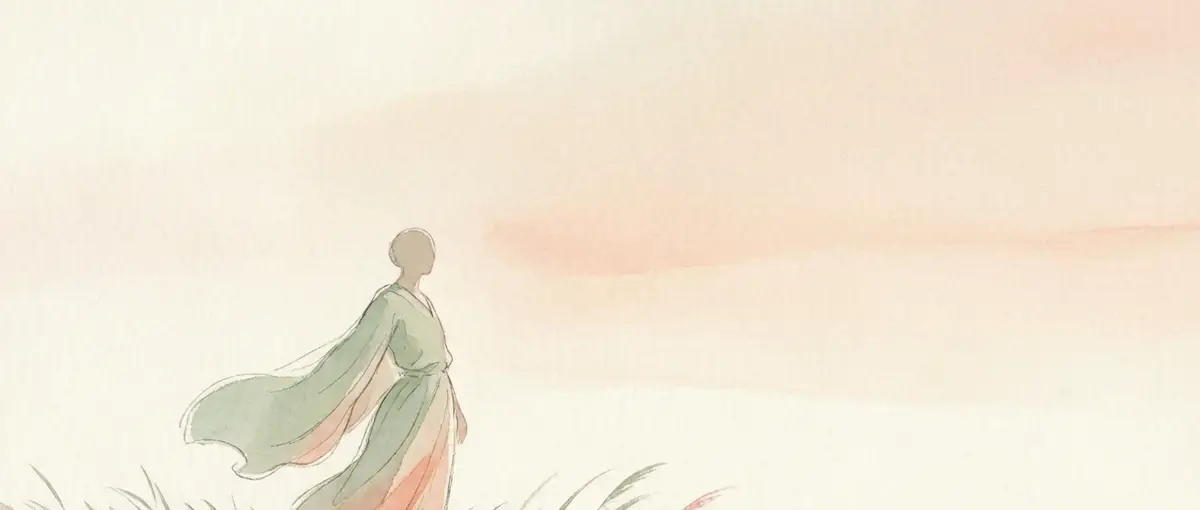
When I was a child I flew kites. On a slack-wind day the harder you ran the tighter the string pulled, and the kite would not budge an inch. An older kid watching said, don't run into the wind — turn around, step back two paces the way the wind is coming from. The moment you stepped back, the wind caught the paper and the kite lifted itself. That was the first time I vaguely understood the two characters 顺势 — to go with the momentum.
What you ride is not fate, but the force
The Daoists speak of 顺势, and what it follows is never "fate." It follows the inherent direction of things, the force that has already started moving. Water wants to flow downhill; if you dam it on flat ground you may hold it for a while, but not forever, and you exhaust yourself doing it. But if you dig a channel and guide the water where you want it to go, that is 顺势 — you did not defeat the water, you borrowed its force.
Many people mistake 顺势 for "let heaven decide everything." That is wrong. Letting heaven decide is handing yourself over; 顺势 is taking the external force and turning it into your own assist. One is collapsing, the other is dancing with borrowed strength — between them lies the whole distance of initiative.
The ones who push into the wind
We all know someone who "pushes into the wind." The company's direction is clearly shifting, yet he insists on the old method to the bitter end. A relationship has plainly cooled, yet he tightens his grip with ever more frequent questions. His body is sounding alarms, yet he braces with coffee and willpower. It is not that he doesn't try — it is that the direction of his effort is twisted against the current.
This kind of pushing looks heroic in the short term and is pure internal drain in the long term. For every step forward the wind pushes you half a step back, so the net efficiency is negative. Worse, the pusher easily mistakes "I'm exhausted" for "I must be right" — I've suffered this much, so it has to be correct. Suffering and correctness are usually unrelated.
Water flows low; so should we borrow the current
The Dao De Jing says "the highest good is like water," and also "to be bent is to be made whole; to be crooked is to be made straight." Bend a little, and you come out intact; yield a little, and you come out extended. This is exactly about not colliding head-on with the force. You want to go east, but the wind comes from the west; charging straight through is foolish. First veer south or north, borrowing the lay of the land and the direction of the wind, and you arrive faster.
顺势 is not taking the long way around — it is walking the road where the force helps you. Two roads to the same place, ten miles into the wind and ten miles with it, cost you twice the energy. The clever person does not calculate straight-line distance, but "effective distance" — of every mile, how many steps the wind walked for you.
Turning is easier than bracing
The hardest part of 顺势 is that "turn" itself. Once a person commits to a direction, turning back feels like admitting everything before was wrong, and the face won't allow it. Yet the one who truly borrows force turns faster than anyone. He notices the wind is wrong, immediately loosens his grip and changes course, and does not fight himself.
Behind this is a relaxed confidence: my goal hasn't changed, only the path has yielded a little. Yielding doesn't mean cowardice; it means I've seen clearly which way the wind blows. The one who dead-braces is the truly dangerous case — he doesn't believe in the direction, he is just afraid to admit he misread it.
Going with the flow is not opportunism
We must draw the line. 顺势 is not opportunism. Opportunism leans whichever way is profitable, carries no weight of its own, and is the first leaf to fall whichever way the wind blows. The person of 顺势 has a compass inside: I know where I'm going, I'm just riding the present wind for a stretch.
A person with conviction who goes with the flow gets closer and closer; a person without conviction who "goes with the flow" drifts farther and farther away. The difference is whether "where I myself want to go" is thought through. Think it through, and borrowing force is wisdom; fail to, and borrowing force is being swept along.
Borrowing force in relationships
顺势 isn't only for getting things done; it's for dealing with people. Some people, the more you persuade them, the more stubborn they get; the moment you step back, they figure it out themselves. This isn't a trick — it's respecting the other person's own force. Everyone has their own logic turning inside them; if you shove a conclusion in, they instinctively push back. If you leave space and let them turn to it themselves, they feel it was their own idea.
Good communication is often like that moment with the kite: not pulling, but loosening your grip and letting the wind hold it up. What you offer is not the answer, but an angle that lets them rise on their own.
Reading the current takes stillness
The premise of 顺势 is first seeing which way the current flows. But most people are too busy charging to have time to look. The wind has already turned and they're still sprinting the old direction, working up a sweat and blaming the road for being uneven.
Reading the situation requires stillness. Like feeling which way the wind comes before you fly the kite, before you act you should stop three seconds and ask yourself: in this situation right now, where is the force moving. Is the industry rising, are people's hearts changing, has a relationship reached the point where it should loosen. These signals make no sound; you have to quiet down to catch them. The more panicked you are, the less you see the current; the stiller you are, the more force you can borrow.
Going with the flow still needs a brake
Borrowing force is not charging straight to the end. Water runs happily down the slope, but at a cliff it knows to become a waterfall, and even shattered it finds a turn — it doesn't plunge straight down to smash to pieces. The person of 顺势 needs that brake line too.
Carried too far by the current, it's easy to forget where you meant to go. Precisely when the momentum is fiercest you should ask: is this force carrying me toward my goal, or somewhere else. Pull in when you should, jump off when you should. True 顺势 borrows and also stops. If you can only borrow and never stop, that's being swept along.
The current can deceive, too
One defensive note: not every "force that looks like it's moving" is worth borrowing. Some currents are bubbles, noise blown up by a passing trend; you borrow onto them and you fall harder than if you'd pushed against it. A few years back everyone piled onto whatever was hot, and few were left standing on the shore — that's the example.
Telling a real current from a false one relies on that bit of stillness. A real current has roots — it's demand, it's people's hearts, it's the grain of things moving. A false current only has volume; when the tide goes out its true form shows. The person of 顺势 doesn't borrow blindly with eyes shut; first he feels whether that force has a bottom. Borrowing a real current is wisdom; borrowing a false one is following the crowd — two different things, separated by one clear-headed person.
Borrow the small currents, too
Don't wait for great winds and waves to remember 顺势. The small currents of daily life are worth borrowing too: a colleague is in a good mood today, so ride that force and raise the awkward thing; your own state is online, so ride that force and clear the task you've dragged for ages. Walking with the small forces, you save a lot of bracing in a day.
Many people either brace against everything or simply lie flat, and the middle road of "borrowing the small currents" is the one nobody walks. Yet life is strung together by exactly these small currents. The more you borrow, the less you brace, and the total drain comes down. When you can't read the great current, start by smoothing the small one in front of you — that too is a practice.
What does “going with the momentum” mean?
Shunshi means noticing the force already moving through a situation and cooperating with it instead of fighting every inch. It is not fatalism or opportunism; you still choose the direction, limits, and point where a brake is needed.
How can I know whether I am adapting or giving up?
Ask whether the current helps you move toward a value you chose, and whether you can still say no. If you are only following pressure because resistance feels exhausting, pause and recover your agency before calling it flow.
Want to understand why pushing harder keeps making the line tighter?
If every obstacle becomes a reason to strain, gentle self-exploration can help you find the small current that is already carrying part of the load.
The wind you can borrow today
You don't have to wait for great winds and waves to remember 顺势. There's a small thing to practice today: one thing you've been bracing against — maybe a cold silence with someone, maybe a task that just won't move — first don't add force; first see clearly which way that force is flowing.
Then ask yourself: is there a road where that force walks a stretch for me. Turn around, step back two paces, let the wind hold the paper up. The wonder of 顺势 is exactly this: you didn't exert more, yet the thing moved forward on its own.
Keep reading: Bianyi: What You Thought Was Nailed Down Has Been Moving All Along · Buyi: When Everything Turns on You, Something Ought to Stay · Compassion: The Warmth You Hand a Struggling Friend, and Withhold From the Person in the Mirror
Written and reviewed by DustEcho Editorial for self-reflection and cultural inquiry—not counseling, medical advice, or a clinical diagnosis.
Not sure where to begin?