Shouzhuo: The Quiet Relief of Being a Little Unpolished
DustEcho Editorial
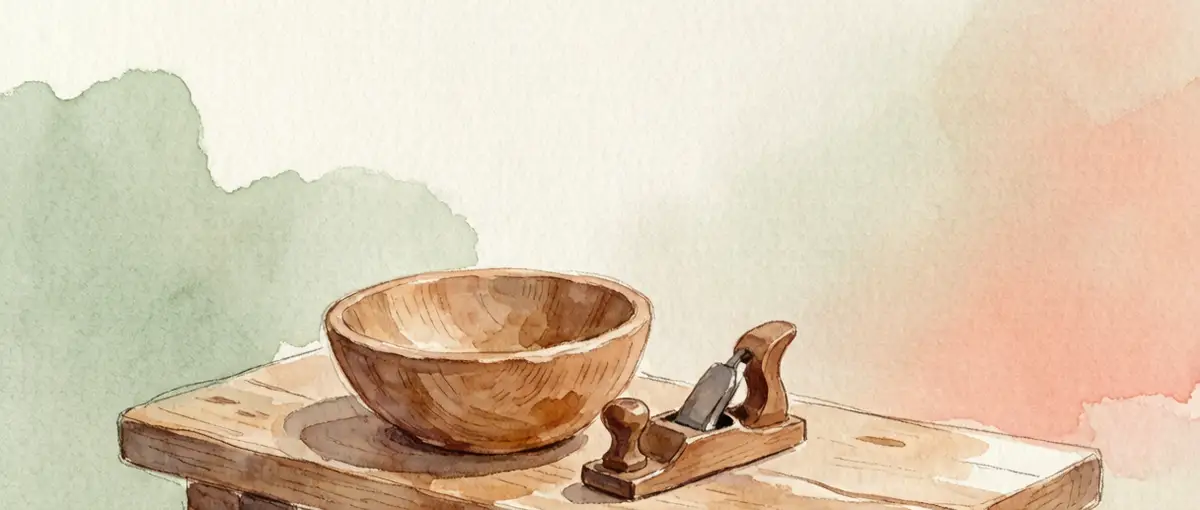
The word for "clumsy" — zhuo (拙) — doesn't win you anything today. When we praise someone we say "smart," "sharp," "quick on their feet." Nobody compliments you for being clumsy. And yet Daoism lifts zhuo onto a very high shelf. The Tao Te Ching says da qiao ruo zhuo — "great skill appears clumsy." True, great skill looks, from the outside, a little dumb. That sentence stings, and it also lets out a breath you didn't know you were holding. It says something fair on behalf of everyone who was never the quick one in the room.
This idea has a name in Chinese: shou-zhuo (守拙), "keeping clumsy." It is not a recommendation to become stupid, and it is not a costume. It is an honest refusal to perform. It is choosing the unshowy, solid, slightly awkward path over the flashy one — and trusting that the path holds.
Zhuo is the reassurance Daoism offers you
Laozi lived in a time that already had too many clever people. The smooth talkers got ahead. The ones who cut corners moved fastest. The plain, unhurried people looked, by comparison, a little pathetic. Laozi simply turned the whole order upside down. The ones who seem clumsy, slow, and reluctant to show off — they are usually the ones still standing longest. "Keeping clumsy" is a calming word for anyone not built for self-promotion: you do not have to become a different person to be alright.
Keeping clumsy is not a celebration of stupidity; it is a celebration of not showing off. It admits the world does have its clever, flashy side, but it reminds you that cleverness is easy to expose and exposed things break easily, while clumsiness draws no attention and is therefore safe. Think of a tree. The one with the lush, showy crown is the first to snap in a storm. The one with a thick, quiet trunk, asking for nothing, is the one that weathers the wind and the rain.
Why we're ashamed to be "clumsy"
Our modern fear of looking clumsy is heavier than anything Laozi faced. Social feeds are wall-to-wall "learn it in three minutes," "efficiency hacks," "overtake everyone on the curve." Slow has been recoded as losing. Clumsy has been recoded as deserving to be eliminated. So we all quietly train a single skill: the skill of looking clever. We jump in to speak first. We grab the task before anyone else can. If we're wrong, we smooth it over so prettily that no one notices the seam.
But that "looking" is hollow on the inside. The more afraid you are of exposing a flaw, the more energy you spend covering every flaw — until the performance eats the actual work. The time you might have spent genuinely getting better gets burned on the disguise. Keeping clumsy runs the other way. I let myself be slow. I let myself not know something yet. I let the process look ugly. Ugly is fine. What grows while it's ugly is real, and it's yours.
Great skill appears clumsy
The "clumsy" in "great skill appears clumsy" is not actual dullness. It is what solidness looks like once the decoration has been stripped away. Watch a carpenter. The beginner loves to carve the table full of patterns, to prove there is a craftsman present. The old master's table is smooth and plain; you see no flourish at all. But the moment your hand lands on it, you know it will not wobble. That steadiness is clumsiness. It does not need ornament to prove itself. It stands on its own weight.
Work is the same. A junior writes a proposal and piles it with jargon, to look expert. A veteran writes something clean, in plain words, that simply explains the thing. The second version looks "unimpressive" to a careless eye. In truth it is skill that has passed beyond the need to pretend. Keeping clumsy means daring to show up in the undecorated version of yourself, and letting the work speak instead of the costume.
Plain effort pays back slowly but surely
People who keep clumsy believe that slow is fast — not slow in the lazy sense, but slow in the sense of refusing the fast that comes from shortcuts. Fifty vocabulary words a day looks clumsy and old-fashioned. Half a year later, though, the way you open your mouth is different. Meanwhile the person hunting for the perfect "memory trick" stays hot for three days and forgets it by the weekend. Plain effort is slow to pay, but it grows into your bones, and no one can take it from you.
What this era is shortest on is exactly people willing to do plain effort. Everyone wants to leap straight to the top, so the foundation stays hollow and shakes the moment the wind arrives. The person keeping clumsy doesn't chase that particular wind. They put their head down and tamp the foundation until it's solid. When the wind passes, the one still standing is them.
Those who don't show off are the ones we trust
Have you noticed? The people who show off the most are the ones we least dare to hand anything important to. Too much of their strength goes into making sure you see them, and you're left wondering how much actual substance is left underneath. The quiet one, who says little and just does the work without announcement — given time, everyone starts bringing their problems to that person.
Keeping clumsy carries a kind of trustworthiness built right in. Such a person doesn't fight for the spotlight or the credit, and owns a mistake when it happens. That is exactly what lets other people relax. In a time when everyone is performing, someone willing to show their clumsiness becomes rare. And that trust — smooth talk can never buy it.
Keeping clumsy is not pretending
There is a crooked version to watch out for. Deliberately playing dumb to win sympathy, or to hide laziness — that is not keeping clumsy, that is being sly. The ground color of keeping clumsy is honesty: I really am doing it this solidly, not fast, and not pretending to be fast. Pretended clumsiness is obviously fake, and it is more irritating than open cleverness ever was.
The person who truly keeps clumsy doesn't feel sorry for themselves, and doesn't feel superior either. They simply chose an unshowy road, and know it is the long one. They don't measure themselves against who looks most impressive. They measure against themselves: is today's foundation a little more solid than yesterday's?
Longevity hides in clumsiness
Flashy moves look good, but they don't age well. Watch the ones who rose on small cleverness — a single wind scatters them. The ones tempered by plain effort are still here ten years later. The quiet wonder of clumsiness is that it puts time on its own side.
Think of the old neighborhood pastry shop. The recipe hasn't changed in decades; not a single step is ever skipped. From the outside it looks like it "doesn't understand innovation." And yet the regulars come back for exactly that one taste. That steadiness is clumsiness's gift. It doesn't chase the trend, doesn't ride the hot topic, just buries its head and does its own small thing properly. Trends arrive and leave; the solid thing is what remains. The person keeping clumsy isn't in a hurry to be seen. What they trust is simpler: slower, but don't break.
With children, don't rush them to be clever either
This anxiety about "looking clumsy" is easiest to pass on to children. At three we compare who recognizes more characters. At five we compare who's top of the class. We'd gladly squeeze every bit of childhood clumsiness out of them ahead of schedule. But a child's clumsiness is simply what it looks like while they're growing a real ability. The more you push "be clever," the hollower they become.
Applied to raising a child, keeping clumsy means allowing the child to be slow, allowing them to sit with one math problem for half an hour, allowing them to lose without rushing to repair the loss. The ability that grows from plain effort can't be taken from them. The cleverness that was rushed out of them shakes in the first wind. If you can let a child grow up a little clumsy, they actually get the chance to grow something real.
Clumsiness leaves room for yourself
Keeping clumsy has one more quiet benefit: you don't spend all your skill, you don't fill every sentence to the brim, you leave yourself room to turn around. The mistake clever people often make in reverse is laying every card on the table at once and saying everything absolutely — they seem to win, but they've lost the way back. The clumsy person doesn't rush to show the whole hand. They keep one card, and they keep a little room for the other person to step down gracefully.
That blank space is a kind of dignity. You do ten parts of the work and show seven; the remaining three are for the accident, for the other person, for tomorrow's self. Life always has a bend you didn't see coming. The person who draws the bow too full is the first to snap when the bend arrives. Keeping clumsy, at bottom, is just making "don't fill it all the way" into a habit. Fullness invites loss; modesty brings gain. The old saying isn't old at all.
Those who keep clumsy aren't in a hurry to prove themselves
Keeping clumsy has a side effect worth naming: you stop being in such a hurry to prove yourself. Because your confidence rests on what is solid, not on what is seen, it stops mattering much if you're seen a little later. While others show off, you work with your head down. While others grab the credit, you let it go. Not out of timidity — but because you know the real thing isn't going anywhere.
The people in the biggest hurry to prove themselves are the easiest to herd. Whatever's popular today, they stick the label on at once. Tomorrow the wind shifts, and they spin to follow it. The person keeping clumsy doesn't keep that rhythm. They have their own pace. Slower, yes, but every step counts. When the noise finally dies down, the ones still standing are usually the ones who were never in a hurry to prove anything.
What does Shouzhuo mean in everyday life?
Shouzhuo can be read as keeping the honest, unpolished part of yourself instead of performing cleverness for approval. It does not mean refusing to learn; it means letting skill grow through real practice rather than hiding every imperfect attempt.
How can I stop feeling ashamed of being slow or awkward?
Choose one task where completion matters more than impressing anyone, make the next imperfect version, and review what it teaches you. If shame becomes constant or stops you from participating in life, qualified support can help.
Want to understand why looking capable feels more important than learning?
If you edit out every clumsy beginning, gentle self-exploration can help you make room for honest progress.
The thing you could do a little clumsily today
You don't have to overhaul your whole life. Today, just pick one thing you've been "cutting the corner" on — maybe the report you glossed over, maybe the lesson you nodded along to without really understanding — and do it once the clumsy way. Slower. More real. Let the flaw show.
The practice of keeping clumsy was never about becoming stupid. It is about daring not to pretend to be clever. Every time you let a little clumsiness show, one more shell comes off. With fewer shells, the work gets more honest. A bit clumsy, the road a bit longer — but every step lands on the ground.
Keep reading: Bianyi: What You Thought Was Nailed Down Has Been Moving All Along · Buyi: When Everything Turns on You, Something Ought to Stay · Compassion: The Warmth You Hand a Struggling Friend, and Withhold From the Person in the Mirror
Written and reviewed by DustEcho Editorial for self-reflection and cultural inquiry—not counseling, medical advice, or a clinical diagnosis.
Not sure where to begin?