6 Signs You're Growing Even When It Doesn't Feel Like It
DustEcho Editorial
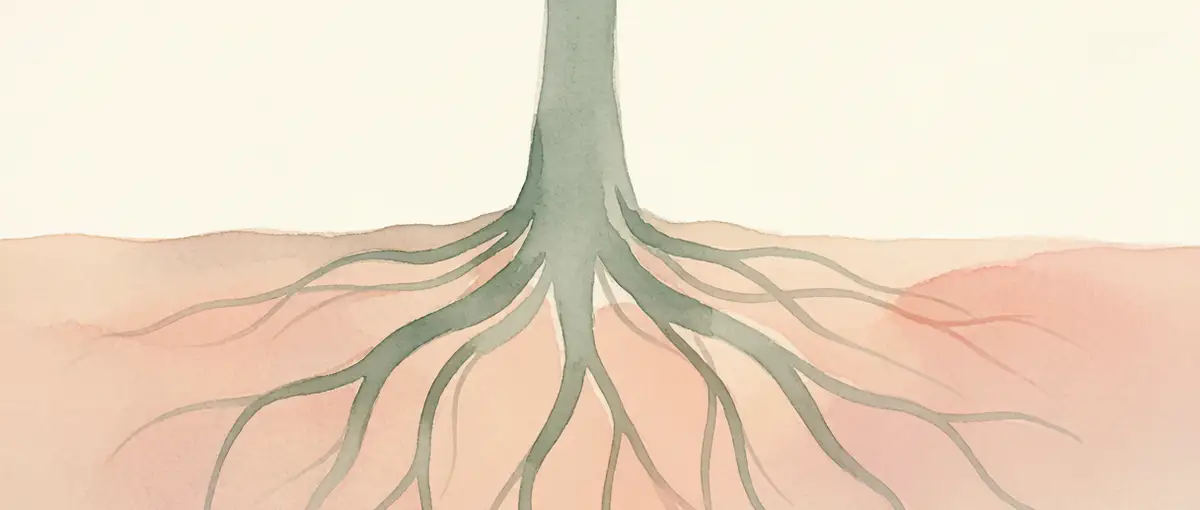
Growth is often invisible from the inside. You can be changing in real, lasting ways and still feel exactly as stuck as the day you started, because the part of you that's growing is rarely the part you can see. This piece is about those quiet signs that you're actually becoming someone steadier — even when nothing around you looks any different.
We're used to measuring progress with things the eye can catch: a few pounds lost, a little more money saved, a streak of days completed without breaking. When those numbers don't move, it's easy to decide we've wasted our time, that the months slipped by without leaving a mark. But a large share of human growth happens underground — it doesn't grow on the surface, yet it quietly holds up everything visible that comes later. The signs below are more honest than any scale, because they measure the person you're becoming, not the scoreboard you're keeping.
How do you tell whether you're actually growing?
Here's a counterintuitive starting point: the growth you're most likely to miss shows up in the moments when you didn't do something. Not a promotion, not hitting a target — but the afternoon you noticed you didn't blow up at something that used to set you off instantly. Growth often arrives looking like less of something: less panic, less needing to prove yourself, less beating yourself up afterward. So when you check whether you've grown, don't only count what you've added to your life. Look at which old reactions have quietly faded, which sharp edges have worn smooth.
This is where the idea of letting go (fang-xia) matters more than it first sounds. Letting go isn't about giving up or going slack; it's about loosening the grip on reactions that used to run you on autopilot. When a habit of self-attack loosens its hold, that absence is itself the evidence of change. The thing you once did without thinking — snapping, spiraling, performing — is simply gone, and you only notice the gap when you go looking for it.
Sign 1: You can hold your feelings instead of shoving them down
There was a time when sadness meant scolding yourself — "why am I like this again" — and anxiety meant scrambling for something to cover it up before it could be felt. Now you can sit with an emotion for a while. You don't rush to a verdict about what it means, and you don't hurry to push it out the door. This isn't becoming numb or indifferent; it's that your capacity got bigger. Imagine a cup traded for a deep bowl — the same water that used to overflow now has somewhere to settle. Being able to catch yourself, to stay present with what's hard instead of fleeing it, is one of the most valuable things growth quietly buys you.
Sign 2: You feel less urgency to prove yourself
Think back: weren't there moments when you couldn't help making yourself sound a little better, a little stronger, just to hold your place in the room? Now you notice times when you'd rather say less than grab for that "I'm capable too" line. This not-grabbing isn't weakness or a lack of confidence to show. It's knowing you're fine without everyone else's nod of approval. The urge to prove usually hides a fear of being looked down on; when that fear loosens, the urge loosens with it, and you find you have far more room to simply be.
Sign 3: You're willing to ask for help instead of treating need as shame
In the past, you'd rather break under the weight of a problem than say "I don't get it, I need help." Now you can open your mouth — asking a coworker, a friend, even admitting plainly "I genuinely can't do this one." Willingness to ask means you've stopped equating "not knowing" with "not good enough." Treating beginner status as a humiliation is one of the fastest ways to stay small, because it locks you into pretending. Being at ease as someone still learning is itself a kind of growing, and it frees up an enormous amount of energy you used to spend hiding.
There's a thread here to simplicity (jian-yi). A simpler life isn't only about owning fewer things — it's about dropping the constant performance of being endlessly competent. When you can say "I don't know" without a costume on, you've simplified your relationship with yourself. The mask you no longer have to wear every day is effort you can finally spend on actually learning.
Sign 4: You're more at peace with slowing down
You've started to accept a day when nothing "productive" got done — just a walk, just some staring into space — without immediately labeling yourself wasteful. You're learning that rest isn't the enemy of progress, and a pause isn't the same as going backward. Many people push even through their rest, optimizing their weekends and their sleep, so they never actually catch their breath. When you can truly soften inside the slow, it means the grip of "I must keep moving" has loosened, and that loosening is its own quiet achievement.
This is close to what non-doing (wu-wei) describes. Non-doing isn't laziness or checking out; it's acting without forcing, letting a necessary pause do its quiet work instead of fighting it. The day you can rest without guilt, without mentally itemizing what you "should" be doing instead, is the day that lesson has actually landed in your body, not just your head.
Sign 5: You've stopped comparing yourself to others in real time
When you scroll past someone else's update, the first thought is no longer "I'm behind again." You still think they're impressive, and you're glad for them, but that impressiveness no longer automatically becomes a verdict against yourself. The habit of comparing hasn't vanished entirely, and some days it still flares — but the waves it raises are smaller, and they pass faster. Being able to pull your gaze back to your own step, to your own honest pace, is growth with its feet on the ground rather than in someone else's highlight reel.
Sign 6: You can see the small progress you used to miss
The nicest part: you've started to recognize your light progress. Finishing a piece of writing, answering gently instead of snapping, going to bed on time — you used to wave all of it away as "what's that, anyone could." Now you'll give those small things a little room. Swallowing the reflexive "it was nothing much" and honestly saying "I really was steadier today than yesterday" — that's you growing. You've stopped erasing your own footsteps, and that makes the next ones easier to take.
Why doesn't visible progress feel like enough?
Because we live in a world that treats growth like a KPI: followers, grades, salary, step counts, all better in red every single day. The moment the line goes flat, we decide we're finished, washed up, behind. But real people don't rise in a clean straight line. More often we walk sideways for a stretch, take a small detour, step back half a step and then forward — and all of it is still movement. Reading "flat" as "stopped" and "slow" as "backward" is what feeds the anxiety. The point of this article isn't to force new growth out of you like squeezing juice from a stone, but to help you recognize what's already grown — what you may have been calling "nothing happened" the whole time.
There's a balance to find here, and it's not unlike the middle way (zhong-yong): not forcing a constant climb, not collapsing into giving up, but holding the middle where steady change can actually occur. Growth that lasts rarely looks dramatic from the inside; it looks like a life that's slowly, almost imperceptibly, getting easier to live.
What if today still feels like nothing grew?
Then assume you grew, and just haven't seen it yet. Before sleep tonight, instead of listing "what I finished today," try listing "where was I more at ease than before" — maybe you didn't overreact to a careless sentence, maybe you didn't stay up late, maybe you didn't rush to perform in the group chat. At first this list will feel almost empty, and that's normal; you've been trained to look for the big, visible wins. Write it a few times and you'll find you've been moving all along — just not on the ruler you were watching. The evidence was there, under the surface, doing its quiet work.
The six signs at a glance
| # | Sign | What it looks like in you |
|---|---|---|
| 1 | Holding feelings | Not shoving sadness away; sitting with it a while |
| 2 | Less proving | Sometimes saying less, not grabbing "I'm capable too" |
| 3 | Asking for help | Daring to say "I can't," no longer shaming the need |
| 4 | At peace with slow | A walk or daydream isn't instantly tagged "waste" |
| 5 | Not comparing live | Seeing others shine without auto-dismissing yourself |
| 6 | Seeing light progress | Willing to say "today I was steadier than yesterday" |
Save this page somewhere you'll find it. On the day you slip back into "have I wasted my life," hold it up like a mirror and read your own signs back to yourself.
How can I tell whether I am growing when progress feels invisible?
Look for quieter changes: you recover faster, ask for help sooner, need less approval, or can pause before reacting. Growth is not a permanent good mood; it is often more choice in the same situations.
What should I do when today still feels like no progress?
Compare yourself with an earlier version of you, record one small action, and let an ordinary day count. If low mood, hopelessness, or loss of functioning persists, seek qualified support rather than turning “growth” into another test.
Want to understand why change can be real before it feels visible?
If you keep dismissing quiet progress because it is not dramatic, gentle self-exploration can help you notice the roots under the surface.
A last word
The quietest shape of growth is the one you can't see, doing the groundwork underneath you. When roots spread through the soil, the tree's top doesn't move at all — yet the day the wind comes, what lets you stand is exactly those "nothing happened" days. Don't decide you haven't grown just because you couldn't see it. The growing was real; it was only ever invisible.
Written and reviewed by DustEcho Editorial for self-reflection and cultural inquiry—not counseling, medical advice, or a clinical diagnosis.
Not sure where to begin?