Is It Normal to Feel Lost in Your Twenties?
DustEcho Editorial
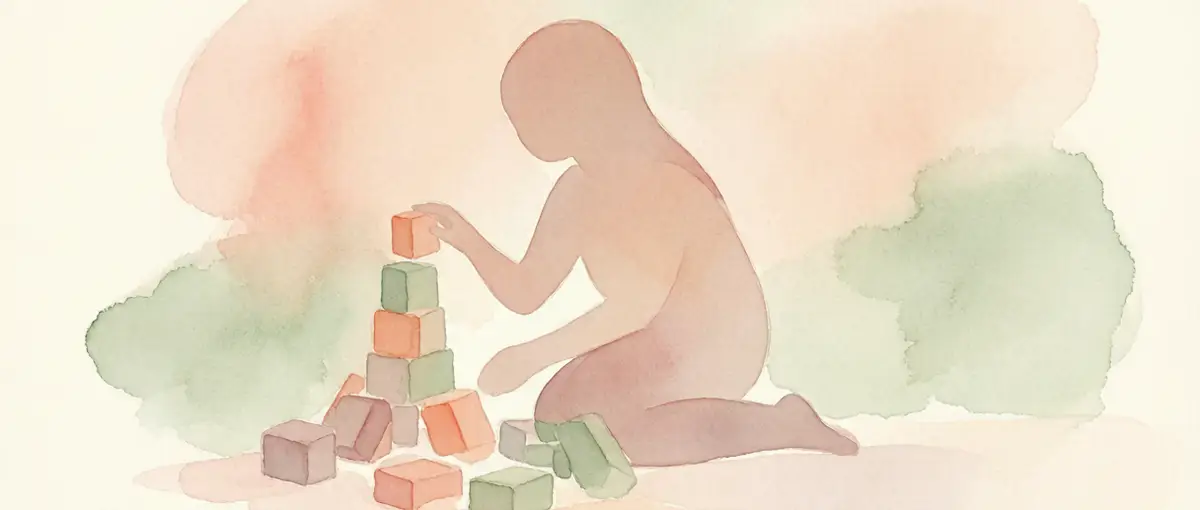
Yes — it's normal, and remarkably so. Feeling lost in your twenties or early thirties isn't a sign that something is broken inside you, nor that you're somehow "behind" everyone else; it's a near-universal feature of this particular life stage. If you're in your twenties or early thirties and frequently don't know what you actually want, suspect you've taken a wrong turn, or envy people who seem to have it all figured out — take a breath. You are neither alone nor abnormal.
The reason confusion clusters so densely in these years has less to do with your abilities and more to do with the fact that you've arrived, for the first time, at a crossroads with no ready-made map.
Why Does This Age Make People So Lost?
In earlier societies, the path was more or less laid out by the time you reached a certain age: study, settle down, take your place, live a steady life. You barely had to choose a direction — you simply followed the tracks. Your parents' generation could lean on a script that was stable, shared, and legible to everyone around them. Today, that "default route" is neither guaranteed nor universally desired, and no one hands you a replacement script. So you're expected to decide where you're going, yet you have no template to follow. Confusion grows in exactly that blank space.
On top of that, the internet quietly raised the bar for what a "good life" is supposed to look like. We now see, in vivid detail, a thousand lives we might have lived, and the comparison makes even a decent reality feel like a consolation prize. The old map didn't just stop working; it was replaced by an overwhelming menu with no recommended option.
More concretely, four forces pile up on top of one another:
- The identity transition isn't finished. You're no longer the student who was told what to do, but you haven't yet fully become the adult who calls the shots. Caught in between, the old self has loosened its grip while the new one hasn't formed. That floating feeling is itself enough to make anyone anxious.
- Option overload. Career, city, lifestyle, values — everything is laid out in front of you. The more choices, the more afraid you are of choosing wrong; the more you want to "choose right," the less you dare to move. Many people get stuck not because they're lazy, but because the sheer number of possibilities makes them afraid to commit.
- The pressure of the social clock. The milestones of peers — marriage, promotions, home ownership — act like an invisible whip. You may not actually want that pace, but the moment the thought "I'm behind" appears, anxiety follows.
- Comparison anxiety. Social media lays others' highlight reels before your eyes while quietly hiding the mess behind them. You compare your behind-the-scenes to everyone else's stage, and naturally conclude, "I'm the only one who can't cope."
Put these together and it's clear: feeling lost isn't a character flaw. It's a compound product of "the old map stopped working + the new map was never delivered + everyone else looks steady." It's not your personal trouble; it's a collective condition of an era.
Is Feeling Lost a Problem That Needs to Be "Fixed"?
No, and it doesn't need fixing.
The moment many people feel lost they panic: "I have to find my life purpose right now, or I'm done for." That urgency to eliminate the feeling only tightens the noose. Lostness actually has an underrated function: it's your mind telling you, "There isn't enough information here yet — don't charge in blind." It isn't a malfunction light; it's more like a yellow light asking you to slow down.
In other words, the first step is to stop treating it as a pathology. You don't need to feel ashamed of a normal transition. What you should really guard against is misreading normal confusion as "there's something wrong with me," and then, to prove you're fine, latching onto a goal that looks impressive but doesn't actually fit you — that's what leads to the hard falls. The feeling isn't the enemy. The enemy is the story you tell yourself about the feeling.
Does Everyone Else Have It Figured Out While Only I'm Lost?
Almost certainly not. The people you think have it "all figured out" are, in private, lost too.
People are wired to display certainty and hide chaos. What you see as "everyone has a plan" is mostly a filtered finished product, not the process. Some even perform "I know exactly" so hard that they exhaust themselves. When you doubt yourself because "everyone else is clear-headed," it helps to return to a simpler perspective: admitting "I'm still learning, still searching" takes courage, not shame. The person who seems most certain on Instagram is often the one most afraid of being found out.
So: being lost doesn't mean you're behind. Being confused doesn't mean you've failed. You're simply standing on a stretch of road that hasn't been marked yet — and unmarked roads are, by definition, the ones no one has walked before.
What Helps When I Can't Stay Lost Forever?
Right — lostness doesn't need to be "cured," but it does need to be put to use. A sense of direction isn't thought up; it's walked into. None of the paths below promise instant clarity, but they can bring you down from the floating void to solid ground:
| Instead of | Try |
|---|---|
| Waiting for a "perfect moment when everything is clear" | Doing one concrete small thing so action scouts the way |
| Forcing yourself to set a "life goal for the rest of your life" | Setting only the "next step" and leaving the big direction to time |
| Comparing your behind-the-scenes to others' stage | Recording your own progress, even if it moves slowly |
| Feeling ashamed of "still searching" | Counting exploration itself as a kind of progress |
- Move before you think. The longer you wait, the more lost you feel; the more you do, the clearer it gets. Many insights arrive after action, not before it. This is close to the spirit of non-doing (wu-wei): not forcing, but letting motion quietly reveal the path.
- Shrink the goal. You don't need to answer "what do I want from life" right now. You only need to answer "what's one small thing I can try this week." Small enough that you're not afraid of it, and you'll actually move.
- Give yourself permission to change the script. The greatest luxury of your twenties is the right to experiment and to switch directions. Choosing something today and disliking it tomorrow is perfectly fine. Here going with the flow (shun-shi) fits naturally — meet life as it arrives instead of locking yourself to a rigid plan.
- Loosen the fixation on "having to figure it out." Eastern wisdom speaks of letting go (fang-xia) — not giving up, but releasing the need to have it all worked out, letting the answer surface on its own as you live your days. And when the noise feels too loud, simplicity (jian-yi) is about stripping life back to what's essential so the next step becomes visible.
A Final Word
Feeling lost in your twenties isn't you breaking down; it's the necessary passage from a life that was arranged for you to one you write yourself. No one is born holding a map — everyone walks the road into existence step by step. So don't rush yourself into instant clarity. You're becoming the person who will one day thank the you who didn't give up.
Is it normal to feel lost in your twenties?
Yes. Feeling uncertain in your twenties is common because the old scripts for study, work, relationships, and identity stop being automatic before a personal direction feels settled. You do not need a lifelong answer immediately; choose a small experiment, learn from it, and let the next step become clearer through movement.
Want to understand what kind of direction you need right now?
Use self-exploration to name whether you are looking for rest, connection, direction, or a manageable next step.
Written and reviewed by DustEcho Editorial for self-reflection and cultural inquiry—not counseling, medical advice, or a clinical diagnosis.
Not sure where to begin?