How to Stop Impulse Buying When Stressed
DustEcho Editorial
It is one in the morning. The report due tomorrow is still unfinished, yet here you are in bed, thumb swiping through a shopping app. Your fingers move faster than your thoughts, and a sweater you do not need is already in the cart. When stress spikes, how do you actually stop the urge to buy? The most useful trick is not to berate yourself for a lack of discipline, but to deliberately wedge a ten-second pause between "I want this" and "place order," cutting the loop that stress has short-circuited. Interrupt that one step and everything after it gets easier.
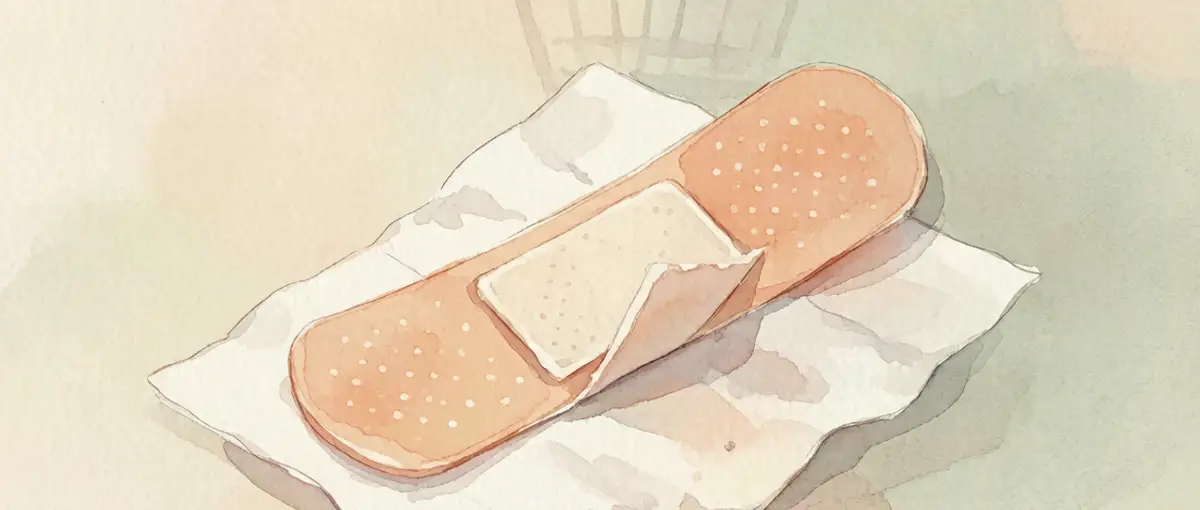
We like to tell ourselves that impulse buying is a failure of self-control. Under stress, though, it behaves far more like an automatic reflex. When the brain is crushed and gasping, it instinctively reaches for anything that delivers a little sweetness right now. The moment you tap checkout is not really about acquiring an object — it is more like slapping a band-aid on a wound. The pain stops for a second, but the wound is still underneath. That is why, after the rush of unboxing fades, so many people are left not with satisfaction but with a deeper emptiness.
Why Does Stress Make You Want to Buy Things?
The answer starts in the brain. Chronic stress keeps cortisol levels elevated, which makes you more anxious and far less tolerant of present discomfort. At that point, the brain's dopamine system — the one in charge of "feel good now" — jumps in to rescue the situation. It does not care whether you need the item. It only cares about the small, certain, controllable pleasure of "I order now, and in thirty seconds a package is already on its way."
The problem is that this pleasure is borrowed. It bypasses the real emotion and hands you a substitute comfort instead. A short-circuit forms:
Stress rises → you feel awful but cannot name what exactly → the brain says "go buy something, at least this is something I control" → you order, dopamine lands instantly → the high recedes, the original panic and exhaustion are untouched, and now there is also a charge on your card and a sliver of self-doubt.
What you bought was never the sweater. It was the illusion of "I can still do something for myself." And that illusion does not last long; the next time stress arrives, the loop runs itself again.
Impulse Buying Is an Emotional Band-Aid, Not a Cure
Let us extend the band-aid metaphor. When you are genuinely hurt, a band-aid helps — it stops the bleeding, guards against infection, and gives a little peace of mind. But if you have a wound on your leg that you never actually treat, and every day you just slap a fresh band-aid over it without ever lifting the old one to look inside, the wound will fester, inflame, and grow.
Impulse buying is exactly that kind of emotional band-aid. The instant it goes on, you do exhale with relief. But you never pause to ask: what am I actually hurting from? Is it the grievance at work that no one caught? The loneliness in a relationship you cannot put into words? Or that baseline sense that "I am never quite good enough"?
That feeling of "never enough" is usually not a real problem with your bank balance. It is a deeper sense of scarcity. As we explore in why you always feel like you don't have enough money, this sense of lack makes you grab for something — anything — to hold the moment you feel tense, and a shopping cart is the easiest thing within reach.
So what you need to stop is not the act of "being kind to yourself." It is the smuggling of "being kind to myself" into the single motion of "placing an order."
How Do You Stop the Urge in the Moment?
Now to the practical part. When the "I need this right now" surge hits, relying on willpower alone usually loses, because stress has already drained your reason. What you want is outside force, not inside force. Of the four moves below, just pick one you can do immediately:
- Ten-second physical separation. Flip the phone face down, close the shopping app, or dump a screenshot of the item into an album you name "24-hour cooling drawer." Disconnect your fingers from the screen for ten seconds and the loop loses its power.
- Name the emotion truthfully. Type one line in your notes — "I don't actually want a sweater; I'm panicking before tomorrow's presentation." Translate the fuzzy "want to buy" into the specific "what am I afraid of," and the impulse cools from a roaring fire into a single sentence.
- Find a free way to be held. Replace the "order" motion with something that costs nothing — a hot shower, a walk around the block, a message to a friend that says "I'm a bit spun out." What you wanted was to be soothed, not delivered to.
- Set a boundary of collect, never pay. Turn off password-free checkout. Let yourself put things in the cart, but rule that "tonight, I do not check out." Split "wanting" from "owning," and the desire cools on its own.
The common thread in all four moves is the pause they wedge between wanting and ordering. A pause is not a refusal of joy. It is switching off autopilot so you can sit back in the driver's seat.
Why Can "Resisting" Become a Trap?
There is an easy pitfall here. If you are normally harsh with yourself and reluctant to spend on anything, stress can trigger the opposite — a rebound of revenge spending. The suppressed "I deserve to be cared for too" will, on the day it snaps back, hit far harder than usual. As we discuss in why you don't allow yourself to spend on yourself, the tighter you forbid yourself to buy, the more likely you are to empty the cart in one collapse at three in the morning.
So "holding back" is not the same as "being harder on yourself." The healthy way to stop is to admit "I really do want some comfort," and then give it to yourself in a way that costs little or nothing — rather than shoving the desire, and yourself with it, underwater. What you intercept is the mechanism of "using spending to avoid emotion," not the need to "be treated well."
Before You Check Out, Can You See the Wound?
If the stress itself comes from anxiety about money, a ten-second pause alone will not be enough, because the fire source is still burning. As we break down in is it normal to feel anxious about money, that anxiety is rarely a numbers problem; it is a chain of associations where money equals safety equals whether I deserve to be held. Name that anxiety first, and the cart stops being your only emotional outlet.
There is also a sneakier trigger: you scroll past someone's seemingly polished life and suddenly feel you "should buy something too." That is the scarcity summoned by comparison talking. As we cover in why you compare your finances to others, when what you are comparing is not the balance but "am I living well enough," the cart fills up while the heart stays empty. See this layer clearly and you can pause before your finger hits "buy now": is this really mine, or just the shadow of someone else's life thrown onto me?
Putting the "emotional band-aid" and "actually treating the wound" side by side makes the difference obvious:
| Emotional band-aid (impulse order) | Actually treating the wound | |
|---|---|---|
| Speed | Seconds, intense | Slow, but it lasts |
| Cost | Money, plus later emptiness or guilt | A little time and a little courage |
| Effect on wound | Untouched, even festered worse | Seen, and slowly begins to heal |
What If You Bought It Anyway?
The method does not work every time. Some nights you simply do not catch yourself, and you wake up staring at a parcel, a little dazed. What you least need then is one more stab of self-attack — "why am I like this again, I'm hopeless." That only raises the stress another notch and paves the way for the next impulse.
If you did not hold back, do not rush to scold yourself. As we have written in why you feel guilty when you spend money, guilt itself is an emotion that deserves to be held, not proof that you have failed again. Do one small thing: treat this "didn't catch it" as intelligence gathering — what was I afraid of, tired from, missing, in that moment? One line is enough. The next time the same wave rolls in, you will recognize it half a second earlier than this time, and half a second is the crack where the loop begins to loosen.
At the bottom of it, wanting to buy wildly under stress is not laziness, greed, or a lack of worth. It is your body protecting you with the only move it knows: it does not know how to process that tangle of emotion, so it hands you a band-aid. What you can do is not to stop using band-aids forever, but to slowly learn to lift the edge and look before you stick one on — oh, this is bleeding. Seeing it is harder than ordering, and more useful than ordering. The next time that urge comes, try just one small thing more: pause ten seconds, and name the emotion. The wound will not heal at once, but you have already stopped using spending to staunch it. You are learning, really, to take care of it.
How do I stop impulse buying when stressed?
Pause before checkout, name the feeling you are trying to soothe, and add friction such as removing saved payment details or waiting until tomorrow. Then choose a non-purchase response that gives your body a break: a walk, food, sleep, a conversation, or professional support. If spending is causing serious debt or loss of control, seek qualified help rather than relying on shame.
Want to understand what your spending urge is regulating?
Use self-exploration to notice which emotions, situations, or needs tend to appear just before the impulse. This is emotional reflection, not financial advice.
Written and reviewed by DustEcho Editorial for self-reflection and cultural inquiry—not counseling, medical advice, or a clinical diagnosis.
Not sure where to begin?