Why Do I Compare My Finances to Others?
DustEcho Editorial
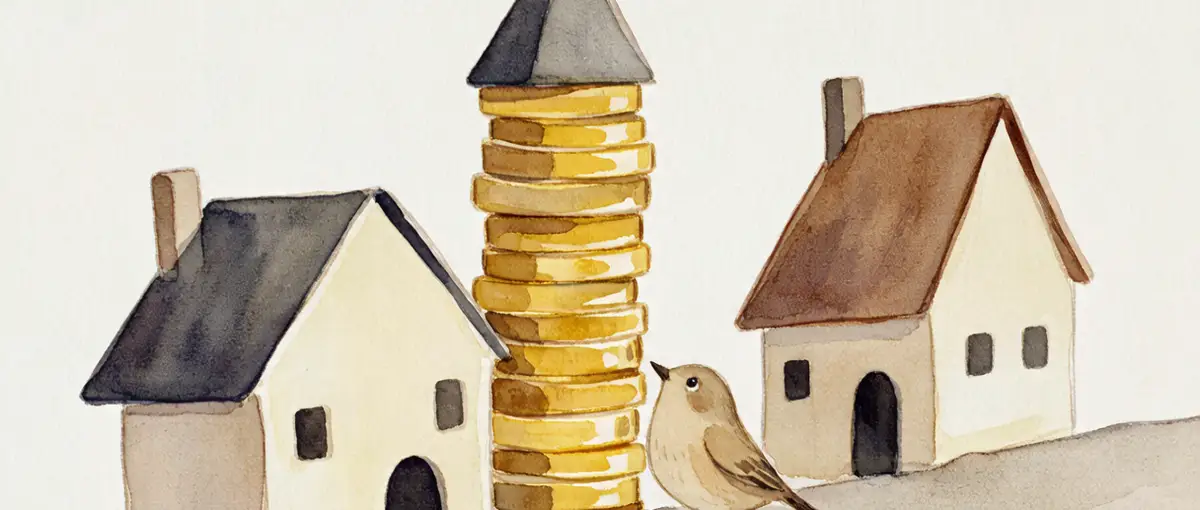
You compare your money to other people's because your brain quietly uses "how much I have" as a stand-in for "how good I am." This isn't greed and it isn't a small mind — it's an old human instinct. We evolved to figure out where we stand by reading the people around us, and in a world where income, houses, and spending are the most visible scoreboard of all, money became the thing we measure ourselves against. Once you see that, the shame of "am I just not good enough?" can soften into something kinder: "oh, I'm just caught in a mechanism that makes people compare."
Why do I compare my finances to others?
Short answer: money makes social status, safety, and progress look measurable, so your brain can mistake someone else's visible result for evidence about your own worth. The comparison is a signal to inspect your needs—not a final verdict on your life.
Why Can't I Stop Comparing My Income to Other People's?
It isn't a single flaw called vanity. It's several layers of psychology stacked on top of each other.
The first layer is the instinct for social comparison. Psychologists have known for a long time that people rarely judge their lives by absolute numbers. You judge by the reference group. Make twenty thousand a month and you'll feel fine among friends making eight — but anxious among colleagues making thirty. The number didn't change. Only the people next to you did. The pain usually comes not from "I have little" but from "I have less than them." A brain built for relative comparison helped our ancestors find their place and know when to advance or retreat; on the subject of money, it pushes us onto a track where there is always someone to measure against.
The second layer is that money got quietly loaded with identity. In many cultures, income, cars, and spending levels silently became stand-ins for "success," "independence," and "being respected." So comparing income is really comparing "am I a person of worth?" The moment you draw an equal sign between your bank balance and your self-respect, every bonus or new apartment someone posts is a small cut to your dignity. You think you're adding up money; you're really grading yourself.
The third layer is that scarcity amplifies the anxiety. If you already carry a background feeling that money is tight, that tension makes you extra sensitive to "others who seem more comfortable." Many people live with a baseline sense that "it's never enough," and that baseline slides every comparison toward "I lost again." When a string inside you already says "I might not make it," someone else's ease feels like a personal insult. For where that baseline feeling comes from, see why do I always feel like I don't have enough money.
How Does the "Other People's Lives" on Social Media Fool My Eyes?
The scene that triggers comparison most isn't usually dinner with friends in real life. It's the carefully edited world on a screen.
Social platforms are, by design, an upward-comparison engine. People post promotions, trips, and new purchases — not the nights they collapsed from overwork, not the hesitation of staying in a job they hate because of a mortgage. You set your whole real life against someone else's filtered highlights, and the game was unfair from the start. The island photo you scroll past at midnight might sit on top of an overdraft, or five days saved up from three years without a vacation.
More quietly, the algorithm keeps feeding you "people like you, but doing better," so it feels like everyone around you is richer. That illusion keeps feeding a thought: the whole world is moving forward and only I'm standing still. The truth is the algorithm simply matched your weakest moment to someone else's strongest performance.
Here is a truth worth naming: the "financial freedom" you see is often a façade held up by debt, or ten years of accumulation compressed into one afternoon of photos. Treating someone's slice as the norm is the worst trade in social comparison — you auction your real life against one frame in someone else's display window.
What Does All This Comparing Actually Damage?
On the surface, comparison just spoils your mood. Look closer and it gnaws at three places.
First, it drains your decision energy. Attention that could go to "how do I make next month steadier" gets stuck in the sulk of "why does he get to." Emotional churn crowds out the action that would actually improve your life. Getting quietly furious ten times a day at other people's updates is ten chances to plan your own life, handed to someone else.
Second, it distorts what you actually need. To not fall behind in comparison, people buy things they don't need and chase goals that don't fit — not for comfort, but to "look like they haven't lost." That adds burden and feeds a loop of comparing more and feeling emptier. You don't buy what you like; you buy "I can't be worse than him." You don't save for freedom; you save chips to "win the comparison later." If the urge to keep up drives your spending, it helps to look at why don't I allow myself to spend on myself — the flip side of the same pattern.
Third, it makes you afraid to talk about money. Many people, convinced "everyone is ahead of me," shrink from salary talks, splitting costs, even asking for help. Talking about money isn't that scary; the inferiority comparison bred is what turned it into a forbidden zone. For why bringing up money feels awkward, read why do I feel awkward talking about money. When shame seals your mouth, you lose more than one negotiation — you lose the chance to set a relationship straight.
Put those three layers together and comparison isn't a small thing. It steals your calm while pushing you away from what actually matters.
Am I Just Being Petty, Then?
Let's say something fair for you first: comparing your finances to others says nothing about whether you're shallow. It's human nature, not a flaw. What's worth watching isn't "can I stop comparing completely" — that's nearly impossible and goes against instinct — but "what do I do with myself after comparing."
Here is the difference between two common comparison paths, so you can check which side you usually walk:
| Comparison style | Thought that shows up | Feeling it brings | Likely result |
|---|---|---|---|
| Upward (watching the richer) | "He got a new car, I'm so far behind" | Anxiety, inferiority, resentment | Drive turns to pressure, action freezes |
| Downward (watching the tighter) | "At least I'm more comfortable than them" | Brief relief, even relief | Easy to slack; can breed complacency |
Note that downward comparison isn't a cure-all either — it calms temporarily but doesn't solve your real financial questions, and used too long it lets you stand still pretending nothing's wrong. The healthy move isn't to pick a side but to admit you're comparing, then pull your gaze back to your own coordinates: what's my goal this month? Which expenses are mine, and which were compared into me? When I stop measuring myself with someone else's ruler, what does the life I actually want look like?
How Can I Turn "Being Compared" into "Knowing Myself"?
Comparison doesn't have to only bring pain. It can also be a mirror that shows what you truly care about.
When a wave of envy rises, don't rush to call yourself "vulgar." Pause and ask: am I envying the money itself, or the freedom, recognition, or backbone of not bowing to anyone that money could buy? Often what looks like jealousy of someone's savings is really a hunger for a security you never gave yourself.
This self-questioning belongs to the same family as "feeling I don't deserve to be cared for" — both hang a sense of worth on an external ruler. If you often feel "I must be strong and useful enough to be loved," the grip on money is usually the same force at work; see why do I think I don't deserve to be cared for. When you tie self-respect to external achievement, money is just one exam paper someone is watching closely.
Turning external comparison into an internal checklist makes things simple:
- Log one trigger: which exact point in that post made me uncomfortable?
- Separate "want" from "being led": do I genuinely want this, or am I reacting to fear of falling behind?
- Set one own small goal: instead of "catch up to him," what do I more want to save, pay off, or worry less about this season?
- Set a boundary on comparison: it's fine to glance occasionally, but don't let the algorithm define "what a good life is" for me.
At the end of the day, someone else's financial statement was never your exam. The only paper you truly answer is this: with limited income, how do you live a life you can nod to? Comparison will come, and it will keep coming — but you don't have to hand in an answer every time.
How do I stop comparing my finances to other people?
Name the exact trigger, then translate the comparison into a personal need. If you envy someone's travel, freedom, or savings, ask what small version of that matters to you. Replace "catch up to them" with one measurable goal for your own season, and limit the feeds that keep resetting the scoreboard.
Why does comparing money make me feel worse?
Visible income and spending are incomplete stories, but the mind treats them as a ranking system. You compare your behind-the-scenes uncertainty with someone else's edited result, then turn the gap into a judgment about your worth. A personal baseline gives the comparison less authority.
Want to understand what your money comparisons are really asking for?
If financial comparison keeps turning into shame or urgency, gentle self-exploration can help you hear the need beneath the number and choose your own measure of enough.
Written and reviewed by DustEcho Editorial for self-reflection and cultural inquiry—not counseling, medical advice, or a clinical diagnosis.
Not sure where to begin?