Why Do I Think I Don't Deserve to Be Cared For?
DustEcho Editorial
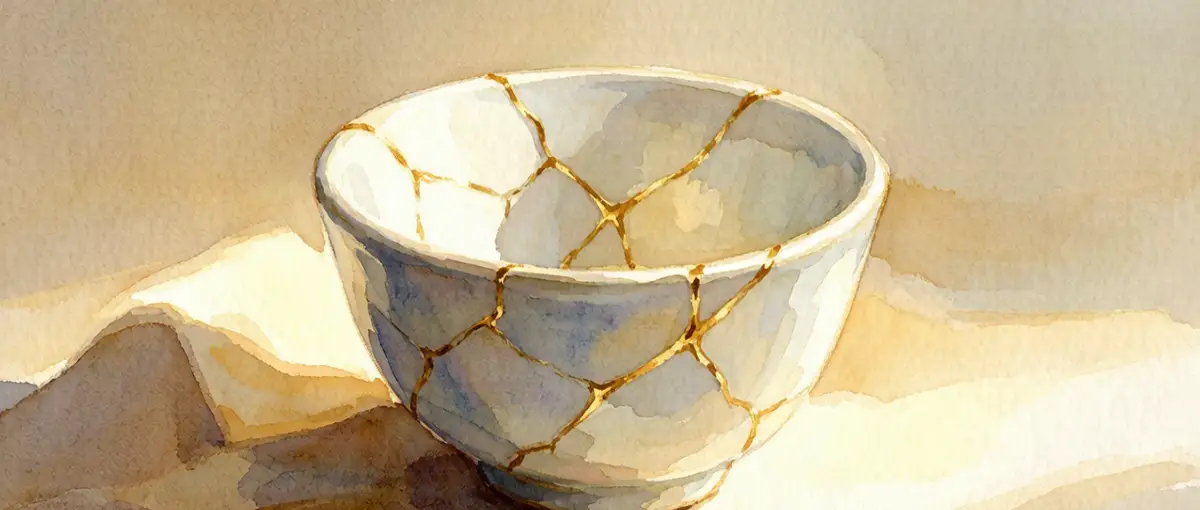
You think you don't deserve care not because you truly "don't deserve" it, but because you learned early to draw an equal sign between being cared for and being a burden. This is a relational unease you were trained into. Its root sits in the signals you received again and again while growing up: your needs were either ignored, or answered only when you were "useful." So when someone finally holds you in their attention, your body panics first, as if catching that kindness would saddle you with a debt.
I hear a version of this constantly: "I'm great at caring for other people, but the moment it's my turn I fall apart." One reader told me that when a friend came over to help cook, she stood in the kitchen doorway feeling not grateful but guilty — she believed she should be the one at the stove, and instead had become the one being served. For those thirty minutes her mind wasn't running "thank you," it was running "I owe him one" and "next time I have to pay it back double." Care, for her, was never something to receive in peace; it was a bill that had to be settled fast.
That "care equals debt" feeling usually begins much earlier than adulthood.
Why does being cared for make me want to run?
Because for you, "being cared for" and "exposing vulnerability" are the same event in the body. Getting close means risking disappointment again. Many people instinctively pull away when someone gets close — not because they don't love the other person, but because they know the taste of "expectations falling flat" so well that they bolt the door first. At that moment care becomes a danger signal: someone has seen my mess, and "being seen" carries the fear of being judged.
This is also why you wrestle with the impulse to carry it all alone. The core is usually this: as long as I don't ask for help, no one can refuse me, and no one can confirm my secret fear that "I really am a burden." Carrying it yourself becomes a pessimistic kind of protection for the relationship.
Am I treating care like a debt?
Very possibly. When your sense of worth has long been built on "what I can give" rather than "who I am," care stops being a gift and becomes an exchange. You quietly convert every act of being cared for into "I'll have to repay this later." We've written about this mismatch in why you confuse being needed with being worth something: the moment you only feel steady when "needed," pure kindness that asks nothing back leaves you weightless.
Here is a common confusion worth laying out in a table:
| What you assume "being cared for" means | What may actually be happening |
|---|---|
| I owe them a favor I must repay. | They simply wanted to be good to you and kept no ledger. |
| Accepting care means I'm weak or incapable. | Accepting care means I trust them and trust the relationship. |
| I'm unworthy, so they'll regret it eventually. | Their choice to care for you is their judgment, not your debt. |
Read those three lines twice and you'll notice the voice of "unworthiness" rests on a ledger you drafted unilaterally — the other person never signed it.
How did those overlooked childhood moments become today's "I don't deserve"?
The most direct path is "conditional response." If, as a child, the adults only turned gentle when you got good grades, obeyed, or behaved, you tied "being cared for" to "I must hit the mark first." Then as an adult, the moment you aren't "producing value," you feel you've lost the right to occupy anyone's attention. This shares a root with why you feel you don't deserve good things — good things, good intentions, good relationships all land on you like mail delivered to the wrong address.
A second path is "needs treated as trouble." When you showed distress and got not comfort but "what's there to cry about" or "you're overthinking again," you learned to swallow your needs. Later you felt that even voicing your needs was an offense, let alone quietly accepting a hug. Being cared for became a capacity you were never taught how to use.
A third, sneakier path: you got so good at caring for others that "caregiver" became your only safe identity. As we note in why receiving kindness makes you uneasy, some people only feel permitted to exist while "giving." Flip the role and existence itself feels hollow.
Gather these paths together and they point to one sentence: you are not "undeserving of care," you were simply "never taught how to receive it."
How can I tell real unworthiness from mere unfamiliarity?
This is the key step, because it lets you swap the auto-playing line "I don't deserve" for a more accurate description. Try measuring yourself against the lines below.
- "Undeserving" is a verdict; "unfamiliar" is a state. A verdict denies your right to be loved. A state only says you've practiced less.
- "Undeserving" makes you flee every kindness; "unfamiliar" lets you slowly soften after the stiffness. One slams the door; the other just has a rusty hinge.
- "Undeserving" demands you prove you're "good enough" before you qualify for care; "unfamiliar" admits that care never should have required a qualifying exam in the first place.
- If, after some act of being cared for, you can feel even a tiny loosening — rather than attacking yourself more tightly — you can be fairly sure you aren't undeserving, only not yet used to being held steadily.
At the end of the day, "undeserving" is not a fact; it is a narration you wrote on behalf of other people, of fate, of childhood. Eastern wisdom speaks of compassion — not others looking down on you with pity, but you finally willing to treat that self who "clearly tried so hard yet still feels not good enough" the way you would treat a friend you genuinely care about. You wouldn't demand that friend score full marks before deserving a meal, so you shouldn't set that rule for yourself.
If you only want to do one small thing today
You don't have to force yourself to accept a grand meal or a long talk right away. Practice "being cared for" from the smallest unit:
- A friend texts "tired today?" — instead of "I'm fine," try "a little, thanks for remembering."
- Someone brings you coffee — take it, say "just what I wanted," and don't add "next round's on me."
- Change "I don't deserve this" to "I'm just not used to this yet." That single edit is already re-parenting yourself.
You deserve care not because you did something right, but because you are the kind of person who worries about whether you "owe" anyone. Someone who tosses and turns over whether they've burdened another person is exactly the one who understands the weight of being cared for. Allowing yourself, now and then, to be the one cared for is not a fall from grace; it leaves the relationship room to breathe.
How do I stop feeling like I do not deserve to be cared for?
When the thought appears, replace "I don't deserve this" with "I am not used to receiving this yet." Then accept one small act without earning it first or promising an immediate repayment. Worthiness is not a score you raise through exhaustion; care can be part of a relationship before you have proved anything.
Why do I feel unworthy when someone treats me well?
Being treated well can expose an old rule that attention must be bought with usefulness. The kindness feels dangerous because it asks you to be seen without performing. Let the feeling be present while you notice the evidence: someone chose to care, and receiving that choice does not make you a burden.
Want to understand the belief that care must be earned?
If accepting support quickly turns into shame, gentle self-exploration can help you loosen the old equation and make room for mutual care.
Written and reviewed by DustEcho Editorial for self-reflection and cultural inquiry—not counseling, medical advice, or a clinical diagnosis.
Not sure where to begin?