Why Don't I Allow Myself to Spend on Myself
DustEcho Editorial
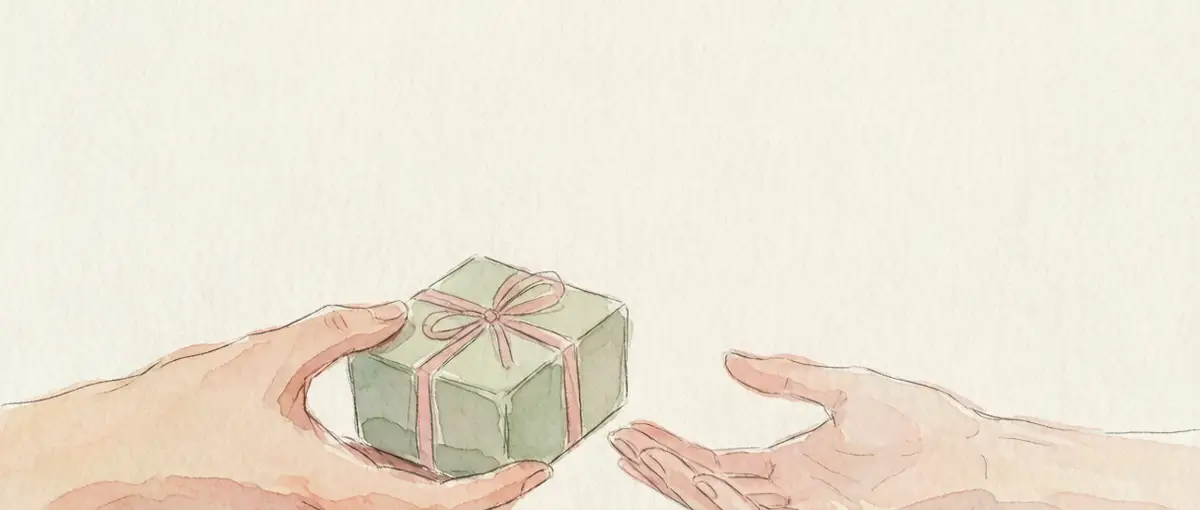
You're generous spending on others — for a friend's birthday you pick out a gift, for family you buy whatever they ask right away. But when it's your turn, your hand pauses at the moment of double-clicking to pay. A few-hundred-yuan coat gets added to cart and deleted again and again; the meal you wanted ends up being the cheapest option. It's not that you lack the money — spending on yourself feels like a crime.
A lot of people carry this guilt.
What it looks like
It hides in the details. You linger on the product page, read every review, just to convince yourself "I deserve it"; the moment you've bought it you regret it, thinking "I could've saved this"; even receiving the item, your first reaction isn't joy but "did I waste money." Every penny spent on yourself goes through a round of self-trial.
The contrast is sharp: spending on others, you don't hesitate; spending on yourself, you keep sentencing yourself. The same money, different recipient, completely different weight.
Where this feeling comes from
Many people were taught from childhood to "look after others first." In a tight household, the good things went to the kids, the elders, the guests — yourself last. Over time, "for yourself" and "selfish" were quietly equated. It's not that you don't deserve it; it's that "me first" itself feels wrong to you.
Some people use saving to prove they're "sensible" or "reliable." In the family of origin or a close relationship, saving is a quality that gets affirmed, while spending is a willfulness that needs explaining. So spending becomes a betrayal of that affirmation.
There's another layer: when your self-worth is low, you feel "I don't deserve something this nice." Not that you can't afford it, but deep down, nice things belong to "better people" — and you're not on that list.
How it affects us
The most direct cost is neglecting yourself. You rest only when your body collapses, replace things only when they break, and cross off all the small good things in life. You're harder on yourself than on anyone.
Deeper is the imbalance in relationships. You keep giving and never receiving, and others end up unable to be good to you — you've set your own place so low that no one can find an entry point to get close. Resentment builds, and turns into "no one really cares about me," yet you're the one who closed the door.
It also makes you miss the practice of "being treated well by yourself." Being good to yourself isn't a luxury; it's the footing that lets you live well. If you won't even spoil yourself, what do you have to carry life with?
Maybe try this
Give "spending on yourself" a small budget. Set aside a fixed amount each month, used only for small things that make you happy, for no reason at all. Buy a bunch of flowers, eat a good meal — purely because you want to.
Before buying, ask yourself: "If my best friend wanted this, would I say they're wasting money?" You wouldn't be that harsh with a friend, so don't be with yourself.
The person you keep ignoring
You carefully treat others well, yet you're hardest on yourself. But you're also someone who gets tired, who wants things, who needs to be spoiled. Moving yourself up from the bottom of the list isn't selfish — it's giving "being good to people" a source. The kindness of someone who won't even be gentle with themselves is laced with grievance. Take care of yourself first, and the goodwill you offer the world stays clean. You deserve to be treated gently by yourself; this shouldn't come after anyone else.
How can I spend money on myself without guilt?
Set a small amount that fits your real budget and decide what it is for before you start browsing. Planned spending is different from spending beyond your means, and caring for yourself does not require proving that everyone else has received more. For serious financial pressure, use qualified financial guidance rather than relying on a feeling of guilt.
Want to understand why your own needs feel less legitimate?
If buying something for yourself immediately triggers shame, gentle self-exploration can help you separate responsibility from the belief that you must always come last.
In the end
Being generous with yourself isn't selfish — it's treating yourself as someone worth caring for. All the good you give others already shows you believe "being good to a person" is right — and that person includes you.
Money spent on you isn't waste; it's life's account settled with yourself.
Keep reading: Why Do I Compare My Finances to Others? · Why Do I Feel Guilty When I Spend Money? · How to Set Financial Boundaries with Family (Without the Guilt)
Written and reviewed by DustEcho Editorial for self-reflection and cultural inquiry—not counseling, medical advice, or a clinical diagnosis.
Not sure where to begin?