Why do I get prickly when someone gets close
DustEcho Editorial
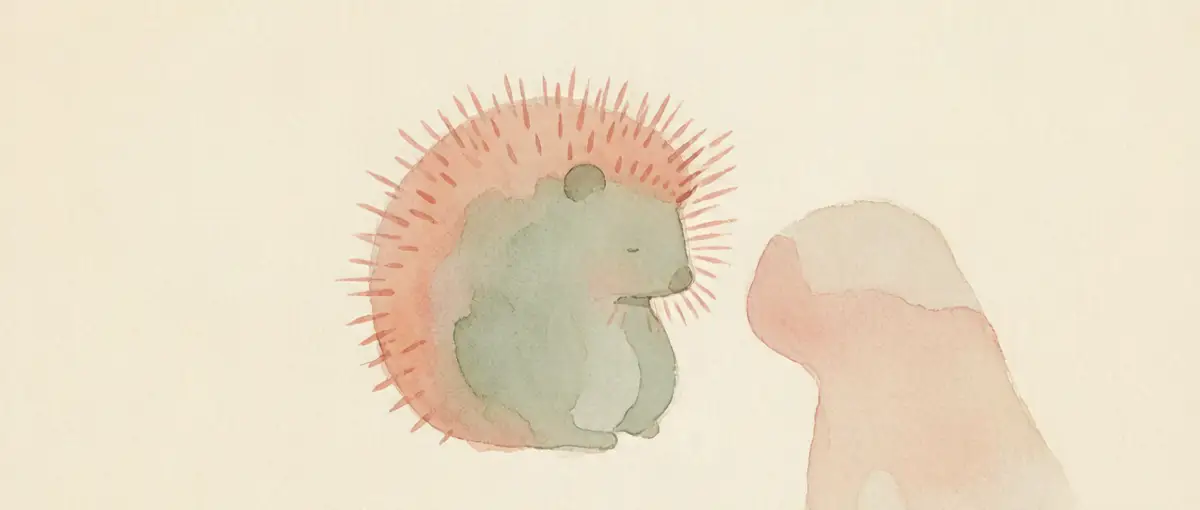
The closer someone gets, the more I pick at them. One second we're fine; the next he misses my emotion in a sentence, and a smirk or a sharp reply is already out of my mouth. When he freezes, I feel a little pleased and a little empty — like I won, and like I just pushed him away.
The closer, the more I poke
I noticed a strange rule in intimacy: the nearer, the more I nitpick. He replies half a beat slow, his wording isn't soft enough, his eyes rest on me a second too long — small things that don't matter at a distance become thorns up close. Like I installed an alarm in the relationship; the moment someone leans in, it goes off, and once it does I have to poke.
The worst of it is for him. He's leaning in, then gets pricked, not knowing what he did wrong. I don't either — I just panic when close, and poke when I panic.
Pricking is another way of hiding
This differs from "pulling away when close." Pulling away is retreating, cooling, stepping back; pricking is striking out, pushing the other away. One goes inward, one pushes outward — opposite directions, same goal: make the other step back so I can breathe.
Pricking is more aggressive and costs the relationship more. When I retreat, he at most thinks "he's a bit distant today"; when I prick, he receives "are you annoying me." Same fear of closeness, but pricking truly chills him.
I'm afraid closeness will blur me
Digging down: I'm afraid that getting close means showing more of the real me. That real me, I'm not sure is good enough. If we get too close and he sees clearly, then disappoints, then leaves — that hurts more than keeping distance. So pricking is a pre-emptive strike: I dismiss you first, so you can't dismiss me.
Truth is, the prick is me grabbing control. Retreating passively waits to be left; pricking actively drives him away — at least the "ending" is my decision, not abandonment.
Prick, then regret
Every time I prick, seeing him hurt, I regret it. Want to repair, but can't save face, so I go silent, and a small crack appears. Yet next time he leans in, the panic rises again, and I poke. A loop that won't stop, because besides pricking, I never learned how to say "too close hurts" any other way.
How can I stop pushing someone away when they get close?
Pause before turning discomfort into criticism. Try naming the feeling—“I’m tense because this feels close”—and ask for a little space without making the other person guess. If closeness feels unsafe because of past or present harm, support and safety matter more than forcing intimacy.
Want to understand what your irritation is protecting?
If you become sharp precisely when you want connection, gentle self-exploration can help you notice the fear before it becomes another distance-making move.
Try softening the prick
Small experiment: when close, swap "finding fault" for "saying the discomfort." Something he said left you cold — don't smirk, try "that line just now made me feel a bit cold." One pushes away; the other lays the feeling open — and laying it open brings two people an inch closer.
Another start: when he leans in, first name your own panic, don't rush to act. The urge to poke arrives — pause three seconds, ask "what am I afraid of." Often it's "too close means losing control," not what he did. Seeing that, the prick softens.
If you're like this, don't rush to call yourself "difficult, hard to be with." You're not difficult; you're too afraid of closeness. Soften the prick once, say something gentle, and you'll find the relationship isn't as fragile as you thought — it's sturdier than you imagine.
Keep reading: Why do I get anxious when the relationship is stable? · Why do I feel something's off when I'm treated well · Why Am I Afraid to Show My Anger to the Person I Love Most
Written and reviewed by DustEcho Editorial for self-reflection and cultural inquiry—not counseling, medical advice, or a clinical diagnosis.
Not sure where to begin?