Why do I always assume you'll leave
DustEcho Editorial
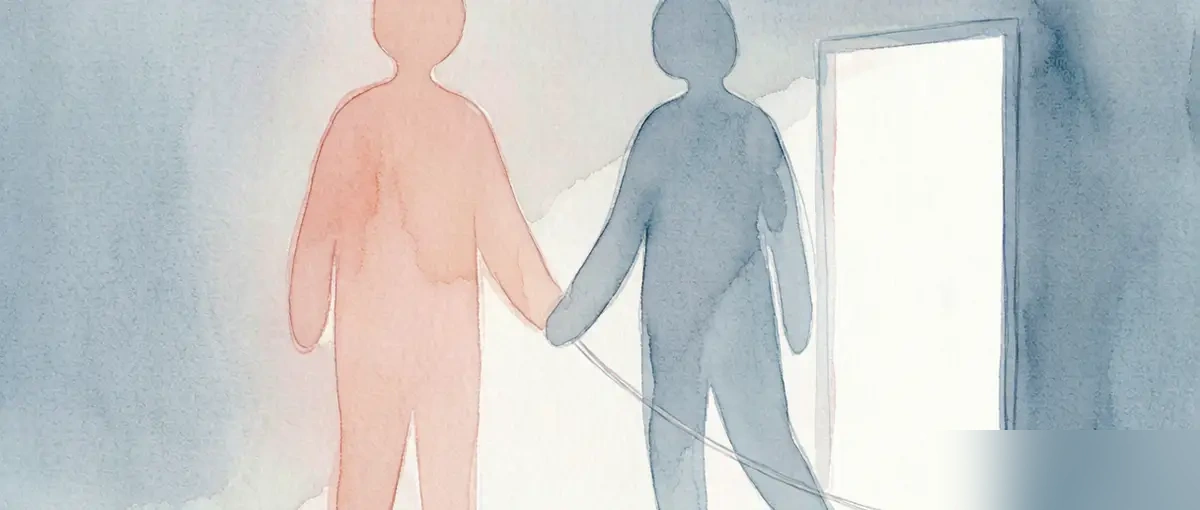
He was two hours late replying to my message, and my brain had already scripted an entire drama: is he getting sick of me? Am I being too clingy? Is he slowly pulling away? When his "just got out of a meeting" finally arrived, I felt relief — mixed with shame.
Nothing happened. And yet internally, I'd already rehearsed the breakup.
I'm not worried — I'm rehearsing loss in advance
I gradually understood: it's not the late reply itself that frightens me. It's that I can't help reading every tiny fluctuation as a prelude to "he's leaving."
Any crack in the relationship — a slower response, a cooler tone, a changed plan — my first instinct is never "communicate" or "check in." It's to shrink back to a safe distance first, as if by retreating early, I won't get left behind.
This reflex is too fast. So fast I often don't notice myself doing it. Like having a hypersensitive sensor installed inside you — any ripple triggers the same alarm: they might be leaving.
Pre-departing is insurance I bought for myself
Where does this pattern come from? If you dig into your memories, you'll probably find a version of this story: someone important left, and you were completely unprepared. That blindsiding pain was so profound your subconscious made a decision: never put yourself in that position again.
So you learned to start running before the gun fires. They haven't moved yet, and you're already mapping exit routes. They cool slightly, and you've already declared it over. This way if it actually happens, at least you can say: "see? I knew." — as if anticipating pain could somehow reduce its price.
But this insurance costs dearly: to avoid the possibility of being left behind, you chose to never fully rest inside any relationship. You sit in the middle of happiness while your heart stands at the door, ready to bolt at any moment.
Even "right now" becomes a countdown
The real loss is this: because I'm constantly assuming departure, every good present moment becomes a form of farewell.
When he holds my hand, there's one second where I think "what will I do without this hand later." When he praises me, a moment passes where I calculate "how many more times will I hear this." We're sitting together eating dinner, and I'm quietly assessing "how much time does this relationship have left."
This isn't enjoyment. It's guarding a ticking clock, each second tinted with "this will eventually end." Your body is here, but you're never fully here.
Move your foot back from the doorway
Here's a small practice that helped me: whenever the thought "they might leave" surfaces, force yourself to find counterevidence — one fact proving "they're still right here, right now."
They're replying to my messages. They're planning things we'll do together. They just sent me a meme — nothing significant, but it means in this moment some portion of their attention is on you.
Not about fooling yourself they'll never leave. About moving your foot from the threshold back into the room. Because if you can't even hold onto "now," what are you using to keep "later"?
Learn to stand inside first. Later can wait.
How do I stop assuming someone will leave?
Separate what happened from what your alarm predicts. Write down the observable fact—"they replied later than usual"—before adding the story—"they are losing interest." Then look for present evidence of care or ask a direct, calm question instead of withdrawing first.
Why do I expect abandonment even when nothing is wrong?
Your nervous system may have learned to rehearse loss as a form of protection. Expecting the ending can feel safer than being surprised by it, but it also keeps you outside the relationship that exists today. The fear deserves care without being promoted to a fact.
Want to understand why closeness keeps activating an exit plan?
If you keep one foot outside the relationship to avoid being hurt, gentle self-exploration can help you return to the present without demanding certainty about forever.
Keep reading: Why do I feel something's off when I'm treated well · Why Am I Afraid to Show My Anger to the Person I Love Most · Why do I keep one foot out the door in relationships?
Written and reviewed by DustEcho Editorial for self-reflection and cultural inquiry—not counseling, medical advice, or a clinical diagnosis.
Not sure where to begin?