Why do I forget the kind things my partner does
DustEcho Editorial
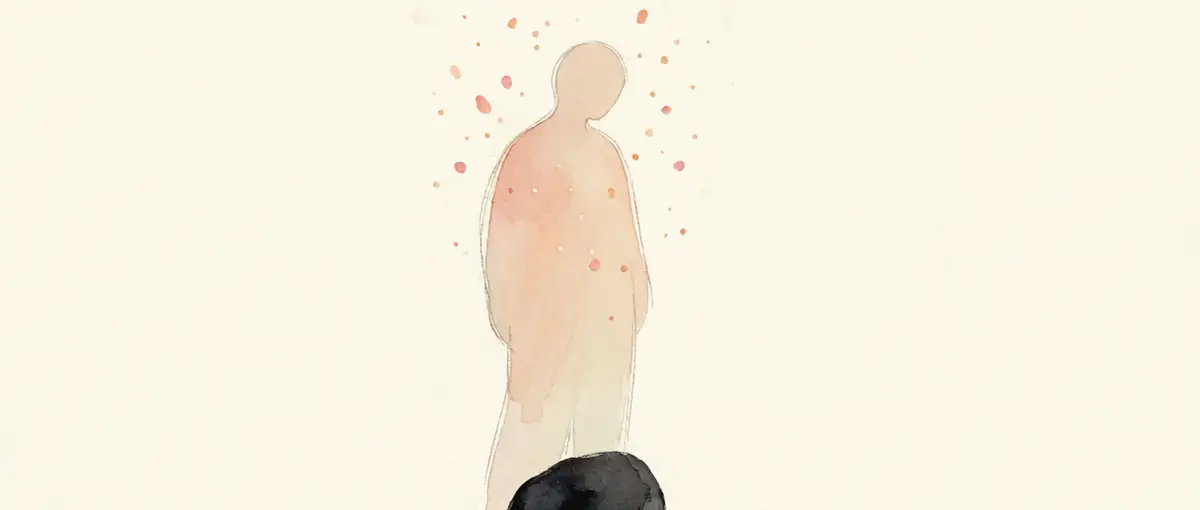
Yesterday he came home and brought my favorite chestnut cake on the way; I took it with a smile. But lying in bed at midnight, what looped in my head was the half hour he was slow to reply that afternoon, and that slightly barbed sentence he tossed off last week. The taste of the chestnut cake was long gone.
I didn't forget on purpose. Those good, warm moments just seem born lighter than hurtful words — they scatter at the first breeze.
The brain weights "bad" with a heavier token
Evolution made us hypersensitive to threat. A cold sentence might mean exclusion from the group, and exclusion once meant danger. So the brain automatically magnifies and files away "off" signals, priority-alerting you to "watch this."
Tender things carry no such survival weight. They're treated as background noise: taken for granted, not urgent, no need to store. So you remember his one cold spell and slide past his ten thoughtfulnesses.
You remember "evidence," not "facts"
More insidiously, when a relationship makes you uneasy, you half-consciously collect proof that "he doesn't love me that much." When he does well, you credit "chance" or "good mood"; when he slips, you credit "nature" or "doesn't care." Good gets waved off; bad gets confirmed.
That doesn't mean you're suspicious, or that the relationship is truly bad. It just means you're wearing glasses that enlarge the wound, scanning everything for the first crack.
Also "save" the good
You can't switch off the negativity bias with one click, but you can build another habit: give the good moments a landing spot. He poured you warm water, remembered your food taboo, walked you on the inside of the sidewalk — for these small things, jot one line on your phone that night, or simply pause three seconds in your mind and say, "this, I received it."
Good and bad were never on a fair field
Someone might ask: should I force myself to think more about the good? No. Bad news is born heavier than good — that's the body's kindness, trying to keep you safe first. You don't have to overthrow the setting; just leave a small spot for the good alongside it.
It's like a photo album where you always flip first to the blurry shot, the one with your awkward face, and miss the dozen behind it where you're laughing. Those laughs aren't absent — you flipped too fast. Flip slower, pin them to the wall too, and the weight of the picture rebalances.
You don't need to idealize him, nor deny the words that genuinely stung. Just don't let the scars monopolize your memory. When the good has also been saved with care, looking back at this relationship, the picture won't show only cracks and miss the warm parts that were actually there all along. Those warm parts never left; they were only waiting for you to look back once more.
How can I remember the good parts of my relationship?
Do not force yourself to ignore hurt. Add one concrete kindness to the record when it happens: a check-in, a repair, a small act of care. Balanced memory is not idealizing your partner; it is refusing to let anxiety become the only narrator.
Want to understand why painful moments stay louder than tenderness?
If your mind collects evidence against being loved, gentle self-exploration can help you notice the pattern without dismissing real concerns.
Start by "noting one" — no big overhaul needed
Don't make this a project. You don't need a long daily entry, and you don't have to begin with "forgive him." Just tonight, recall one small thing he did, and nod to it in your mind. One more tomorrow. The tilt in memory was built over decades; straightening it also takes repeated, small, deliberate notice. Slow — but the direction is right.
Keep reading: Why do I feel something's off when I'm treated well · Why Am I Afraid to Show My Anger to the Person I Love Most · Why do I get prickly when someone gets close
Written and reviewed by DustEcho Editorial for self-reflection and cultural inquiry—not counseling, medical advice, or a clinical diagnosis.
Not sure where to begin?