Why do I get anxious when the relationship is stable?
DustEcho Editorial
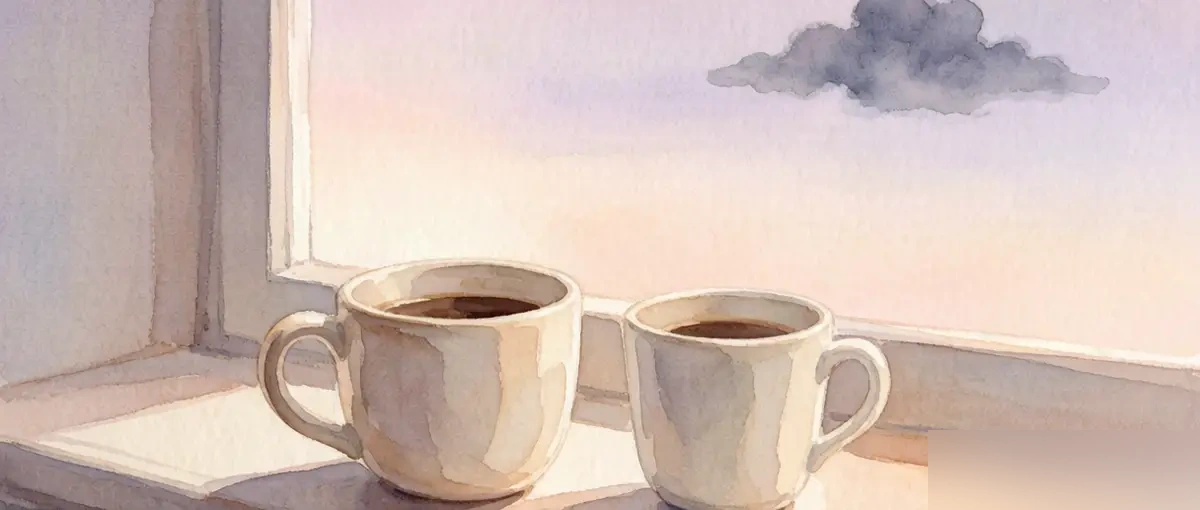
Lately things have been good between you. No big fights, no ice-cold silence. But one night in bed you suddenly can't sit still — not because something happened, but precisely because nothing did. The calm itself makes your heart race.
It's a strange feeling: others rest on good days, but you stay on alert on good days.
Others rest in calm; you patrol it
The moment the relationship goes quiet, your eyes start scanning automatically: was his reply half a beat slower today? Was that line just now a little dismissive? You're not nitpicking. You've gotten used to reading good weather as the prelude to a storm.
Others finally breathe in stability; you treat stability as an anomaly to watch closely. Like a night-shift worker who finds the silence too quiet and feels more uneasy than when there's noise — in your world, quiet isn't a rest signal, it's the ping of "something's wrong."
You quietly filed "good" as "temporary"
The root is often this: in your early experience, good things didn't last. So "stability" in your body isn't a safety signal; it's more like a countdown. Subconsciously you feel: this smooth, so something's about to go wrong.
So you tense up in advance, as if that could shield you before the blow lands. But the irony is, the more you brace, the more you confirm to yourself the belief "this won't last." You think it's defense, but you're rehearsing the loss in advance with your vigilance.
The panic is because you dare not believe it stayed
You don't not want this relationship calm. You dare not believe it can stay. Every time it gets good, you wait half-doubting for it to collapse — like a gift just placed in your hands that you dare not unwrap, afraid it's empty inside, or afraid it'll be taken back the moment you hold it steady.
That panic is actually fear of losing, not indifference. You hesitate to let your heart down not because you don't love, but because you're too afraid of "letting down then hurting again." You wear unease like armor, forgetting that underneath the armor, what you wanted was to be held properly.
The tighter you grip, the sooner you let go
This panic pushes you into silly moves: pick a small fight on purpose to see if he'll leave; or go cold suddenly to see if he'll panic. You think you're confirming safety, but you're shaking a table that was steady.
Many relationships aren't overturned by big events; they're quietly rocked apart by these "panic at the first calm" micro-moves. Each time you rock it, the other person gets a little more confused; rock it enough and the steady table really does loosen at the legs — from your own hands.
Try exhaling in the good weather first
You don't have to force full trust at once. Practice from tiny things: tonight nothing happened, so allow yourself to just lie there, not scrolling the chat history hunting for threats; attribute his slow reply to "busy," not "changed."
Re-recognize "nothing happened" as a good thing, not a storm forecast. Calm isn't a trap; you deserve to rest inside it. Next time the thought "too quiet, something's off" pops up, don't rush to act — just notice it, then tell yourself: nothing happened today, and that means today really was nothing.
How do I stop feeling anxious when my relationship is stable?
Separate evidence from the alarm. Ask, "What actually happened today, and what am I predicting?" If there is no concrete sign of a problem, resist testing the relationship with a sudden fight, withdrawal, or repeated checking. Give the calm a chance to remain calm.
Is it normal to feel uneasy when a relationship is going well?
Yes. Stability can feel unfamiliar when earlier experiences taught you to expect a change in mood or closeness. The feeling is real, but it is not proof that the relationship is unsafe. You can notice the fear, communicate a real need, and still allow a good day to be good.
Want to understand why calm feels unsafe?
If peace makes you scan for the next loss, gentle self-exploration can help you build a more reliable sense of safety from the inside out.
Keep reading: Why do I forget the kind things my partner does · Why Am I Afraid to Show My Anger to the Person I Love Most · Why do I get prickly when someone gets close
Written and reviewed by DustEcho Editorial for self-reflection and cultural inquiry—not counseling, medical advice, or a clinical diagnosis.
Not sure where to begin?