Why do I feel something's off when I'm treated well
DustEcho Editorial
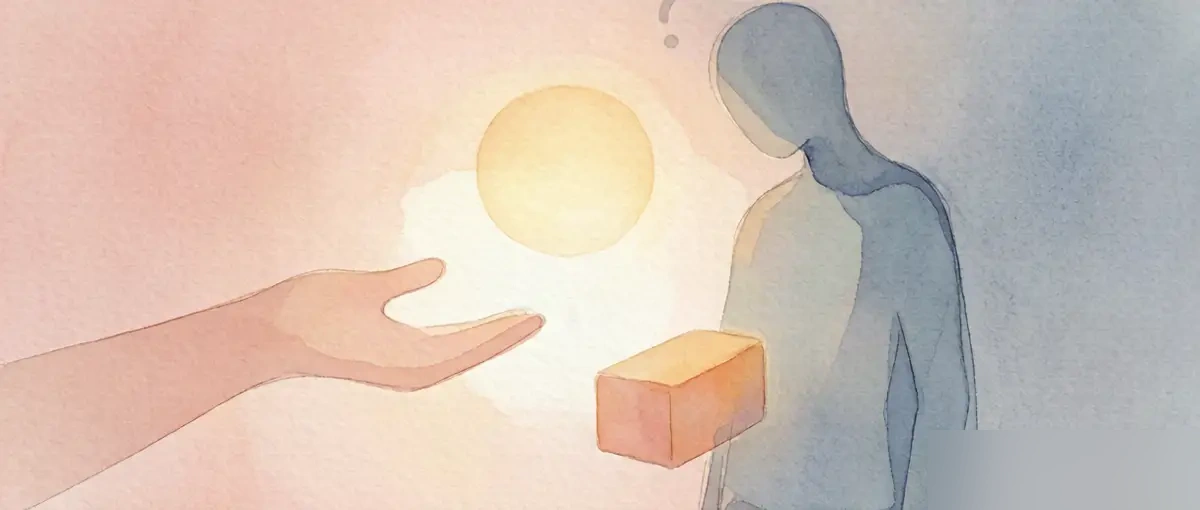
He remembers I don't eat cilantro, tilts the umbrella toward me in the rain, replies to every message with care. By all rights, I should feel at ease. But the more I'm treated this way, the more a vague unease rises inside me — like receiving a beautiful letter with no return address, and your first thought isn't joy, it's "was this sent to the right person?"
This isn't being dramatic. It's a conditioned response: when "good" becomes unfamiliar, the body automatically reads it as danger.
My radar goes off before my heart does
Think about your genuine first reaction when someone treats you gently. Is it ever pure enjoyment? Or is it something closer to vigilance?
They ask "were you tired today?" and your mind immediately starts hunting for subtext: what do they want from me? Is there an invoice attached to this kindness? This auto-translation is so practiced you might not even notice yourself doing it. Goodwill gets decoded as "setup," concern gets read as "targeted approach."
This isn't overthinking — it's self-preservation. If your experience has taught you that "being treated well" always comes with conditions, that warmth later reveals itself as transactional, then your body didn't learn how to receive care. It learned to flinch when care appears.
The script I know is called "giver"
There's something deeper going on. In relationships, you may have grown too comfortable on one particular side of the equation: the giving side.
When you're always the one who looks out for others, who gives first, whose reflex is to anticipate everyone else's needs — having someone turn that around and direct it at you feels disorienting. Like a bird that's spent its whole life sheltering others with its wings, suddenly finding an umbrella held over its own head. The first thought isn't "finally, someone's taking care of me." It's "what should I do to deserve this?"
Because in the script you know, good things are earned. Nobody treats you well for no reason — unless they want something. That belief runs so deep that when someone actually offers kindness with no agenda attached, your internal system throws an error: data anomaly, please verify source.
What frightens me most isn't being deceived — it's losing what I got
More unsettling than "they're using me" is a quieter fear: "what if one day they stop being like this?"
This anxiety is sneaky. It doesn't say outright "they don't love you." It says "this kind of good thing doesn't last." Your past experience has taught you that good things are temporary — that person who was once warm grew cold, that relationship that felt safe eventually turned strange. So now when someone is good to you, you can't fully receive it, because some part of you believes: the fuller you let it in, the emptier it'll feel when it goes.
Better to keep some distance now than to be caught off guard later. At least this way, if you lose something, you won't be completely blindsided.
Why do I feel suspicious when someone treats me well?
Steady care can feel suspicious when inconsistency or disappointment is what your experience taught you to expect. You do not have to trust instantly, but you can check the facts slowly: is there a concrete warning sign, or is kindness simply unfamiliar? If a relationship includes control, pressure, or manipulation, take those signs seriously.
How can I receive love without immediately looking for the catch?
Let one kind act remain one kind act. You can keep your boundaries while delaying the verdict that it must hide something. If suspicion makes closeness impossible or causes significant distress, a qualified professional can help you explore it safely.
Want to understand why being cared for feels like an alarm?
If warmth makes your body brace, gentle self-exploration can help you learn the difference between a real warning and an unfamiliar form of safety.
Maybe "off" just means "unfamiliar"
Here's something that might sound odd but matters: your discomfort with being loved doesn't necessarily mean you're unworthy of love, or that something is wrong with them. It might simply mean — this is too new for you.
It's like someone who's lived in the cold for a long time walking into a warm room for the first time. The body's first response isn't relaxation — it's sweating, heart racing, an urge to push back outside. Not because the room is bad, but because the temperature gap is too wide, and the body needs time to adjust.
You don't have to force yourself to trust that goodwill immediately. But you also don't need to rush to prove it's fake. Let it sit there — like an unopened letter. You don't have to read the sender's meaning right away, or decide whether to write back. Allow it to simply exist — a piece of kindness, sitting in front of you, neither opened nor returned.
Take your time. Learning to be loved is like learning anything else — it takes practice.
Keep reading: Why do I forget the kind things my partner does · Why Am I Afraid to Show My Anger to the Person I Love Most · Why do I get prickly when someone gets close
Written and reviewed by DustEcho Editorial for self-reflection and cultural inquiry—not counseling, medical advice, or a clinical diagnosis.
Not sure where to begin?