Why would I rather carry it alone than bother you?
DustEcho Editorial
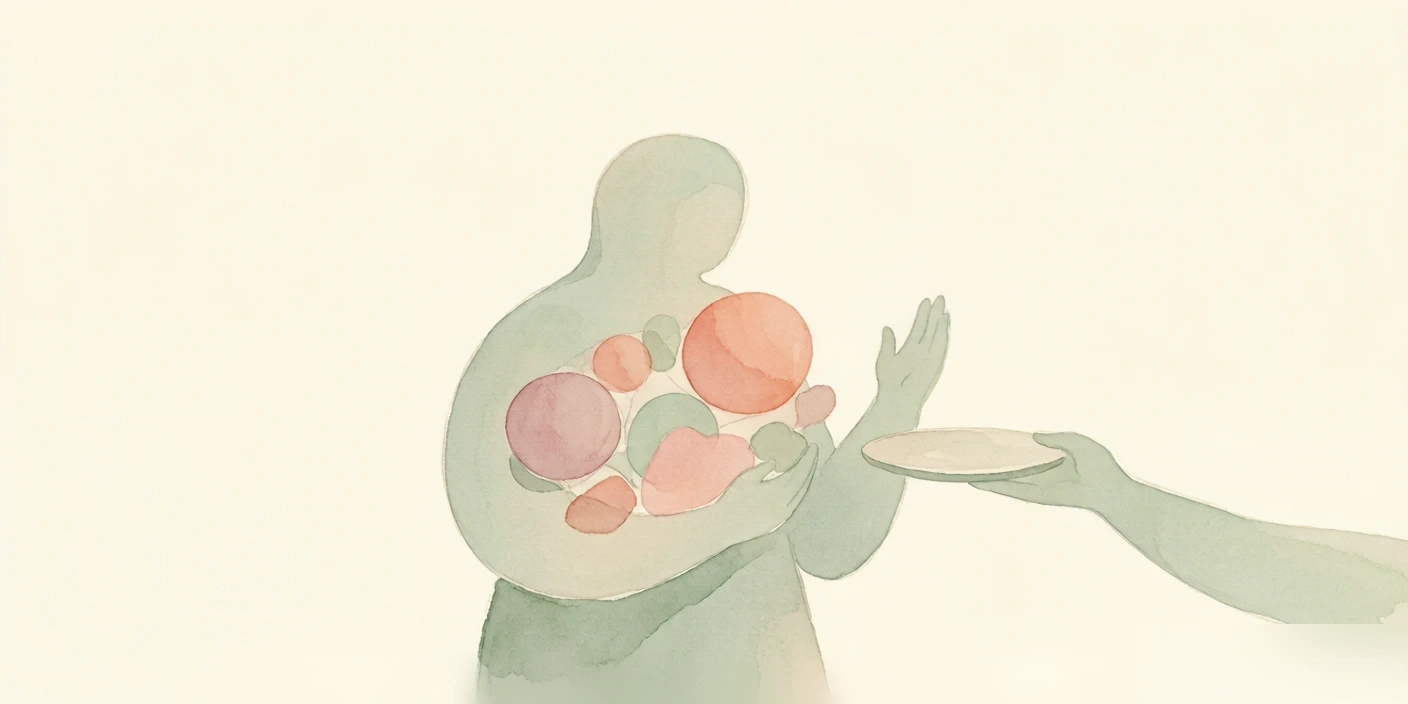
There's a word going around called "emotional value," but what you're carrying might be the other side of it: you're the one in the friend group who's always free, the first name friends think of when something goes wrong, the one who holds the atmosphere together in the group chat. Everyone says you've got a good head on your shoulders, that you're a real one.
Only you know that some nights, you'd actually like someone to catch you.
You've always been the one everyone depends on
Think about it — you rarely stand in the "being taken care of" position. From childhood to now, you've been more comfortable on the side that helps out: classmates stuck on something come to you, friends call you when they move, you're the first to step up when something happens at home.
It's not that you were born strong. You just learned early that "being needed" buys you stability in relationships: as long as they need you, you won't be left behind. So without realizing it, you stayed in that position, shaping yourself into someone who can always step up — yet hardly ever practiced the act of "asking for help."
The word "bother" weighs a lot for you
When someone casually says "could you help me out," it automatically translates in your head into a string of judgments: will I look incompetent? will they think I'm being needy? if I open my mouth this time, will it be even harder to take back next time?
Most of these thoughts didn't grow today. Back when you were little, you probably heard "solve your own problems" and "don't make trouble for people"; or the moment you showed any vulnerability, instead of support you got "why are you being so dramatic." Your body learned long ago: opening up equals being a bother, and being a bother equals being disliked. So you'd rather take the long way around on your own than send that message: "could you help me?"
What you're guarding isn't a boundary, it's a position
The interesting part is, you think you're protecting your independence, but what you're actually guarding is an "easy to be around" persona.
You know exactly how that position was built: sensible, never causing trouble, forever OK. It makes you liked, and it keeps you safe. But the moment you say "I'm a bit tired" or "I can't handle this," you have to step down from that glowing spot — and what you fear they'll see isn't your exhaustion, but "so you're not perfect after all."
So you'd rather stay tired than take the risk. That act of holding it together looks like strength, but underneath it hides a fear: that the moment you let go, people won't need you as much.
After carrying for so long, you almost forget you're carrying
The most hidden part is that this pattern has run so long it's become background noise.
You don't remind yourself every day "I'm forcing it again." You just naturally say "I'm fine," naturally take on work you could've turned down, naturally process your emotions alone. Then one day when you truly hit your limit, you wonder: why am I suddenly so exhausted? — but it wasn't sudden. You just never put the weight down.
And the people around you only see the you who's always got it together. They're not indifferent — they simply never got the chance to get close to the real you.
You don't have to suddenly turn soft — you can just stop pretending to be all-capable
I'm not asking you to start offloading your troubles to everyone tomorrow; that would be too out of character.
Just next time the "I'm fine" is about to come out, try leaving half a sentence of truth: something like "my head's a bit foggy today, just keep me company for a bit." You'll find that for the people who truly care, your "needing" isn't a burden — it's an invitation, inviting them to like not just the strong you, but also the tired you.
You always thought not bothering others was a kind of consideration. But for the friends who genuinely care about you, being excluded from your life is the greater regret.
Why would I rather carry everything alone than ask for help?
Needing help can feel dangerous when you learned early that it inconveniences people or makes you less worthy. Start with a small, specific request to someone who has shown they can respond safely. If your relationships punish vulnerability, choose support carefully rather than forcing yourself to disclose.
How can I ask for help without feeling like a burden?
Say what would help and how much: “Could you listen for ten minutes?” or “Can you help me with this one practical task?” A clear request gives the other person a real choice; it is not an obligation disguised as a feeling.
Want to understand why self-reliance has become a protective role?
If “I’m fine” arrives before you check whether it is true, gentle self-exploration can help you leave a small door open for care.
Keep reading: Why do I get anxious when the relationship is stable? · Why do I feel something's off when I'm treated well · Why Am I Afraid to Show My Anger to the Person I Love Most
Written and reviewed by DustEcho Editorial for self-reflection and cultural inquiry—not counseling, medical advice, or a clinical diagnosis.
Not sure where to begin?