Why Do I Make Jokes When I Want To Be Honest
DustEcho Editorial
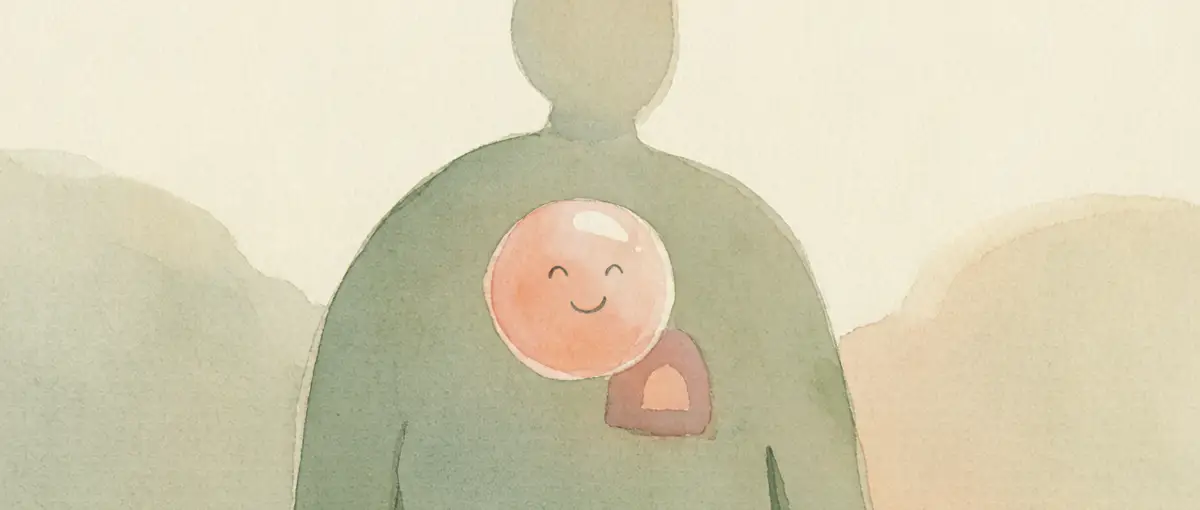
Have you had this moment. Something genuinely true rises in your chest — "I'm a little afraid you don't really care," "I've been really tired lately" — and yet the words that come out are a joke. "Haha, am I being too clingy," "a lazy person like me obviously complains about being tired." The punchline lands, the air loosens, and the true sentence slides away on the laughter.
The joke is your escape hatch
This isn't that you're naturally funny. Wrapping a real feeling in a joke gives you both saying it and not saying it. If they laugh, you're safe. If they take it seriously, you shrug "just kidding." A joke is a spring-loaded door: you push it open, show half your face, and can bounce back anytime. You're not unwilling to be heard — you're afraid to bet on what happens after.
You traded being interesting for a safe distance
Think back. You probably learned early that sincere talk goes quiet or gets seen through, but once you make people laugh, all attention lands on "you're so fun" and no one digs for what's underneath. Being amusing became your safest social seat — people like to be near the fun one, but they don't actually get close. You got company without handing over the soft, easily-rejected self.
The cost is you've never really been caught
Here's the problem. Every time you wrap honesty in a joke, the other person catches only the joke. You long to be understood, yet you keep passing a gift box; no one reaches the thing inside. Over time you might even wonder: if I stopped being funny, what's left that's worth liking? That very question is the deepest loneliness your humor was shielding you from.
Let one serious sentence land
You don't have to quit humor — it's part of you. Just occasionally, before the joke leaves your mouth, pause half a beat. Say the true thing all the way through, without adding a laugh or a ladder to climb back down. You meant to say "I missed you yesterday (just kidding)" — try only "I missed you yesterday," and swallow the tail. Your hands will shake, the air will be awkward for a few seconds — but maybe the other person says "me too," and for the first time someone catches the real you.
How can I be honest without hiding behind a joke?
Keep the humor if you want, but let one serious sentence stand on its own first: “I was hurt,” “I missed you,” or “I need help.” You are offering clarity, not demanding a perfect response. If the person is not safe to be honest with, choose a safer listener instead.
Want to understand why sincerity feels riskier than being funny?
If every vulnerable truth comes with an escape hatch, gentle self-exploration can help you stay present for one honest sentence at a time.
Keep reading: Why do I forget the kind things my partner does · Why do I get anxious when the relationship is stable? · Why do I get prickly when someone gets close
Written and reviewed by DustEcho Editorial for self-reflection and cultural inquiry—not counseling, medical advice, or a clinical diagnosis.
Not sure where to begin?