Waxing and Waning: Why everything feels light when the timing is right, and heavy when it isn't
DustEcho Editorial
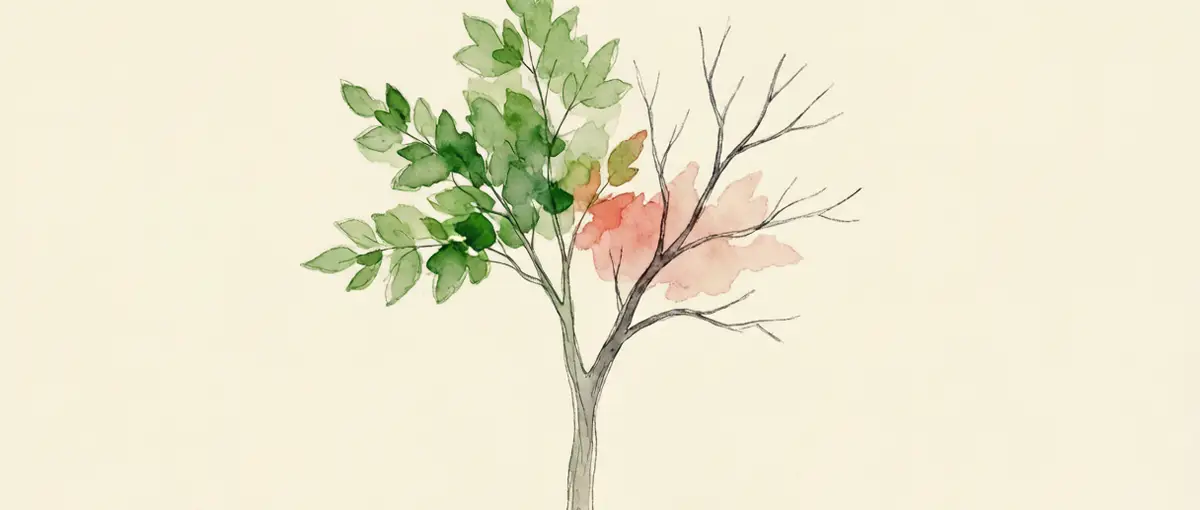
Within the five-element system, waxing, flourishing, resting, imprisoned, and dying describe what state an element is in during a given season. Wood waxes in spring, fire in summer, metal in autumn, water in winter — that is being in command of the season, called waxing. The element one generates rises, called flourishing. The element that generates one finishes and steps back, called resting. The element that restrains one is suppressed, called imprisoned. The element one restrains is exhausted, called dying. They split one fact — that vital energy rises and falls with the heavens — into five grades. There is no verdict of good or bad, only whether you are in your own season. Borrowed into life, it says: sometimes everything goes right, and sometimes the harder you push, the heavier it gets. The strength or weakness is not you having changed; it is the season rotating.
What does wang xiang xiu qiu si mean in everyday life?
Wang xiang xiu qiu si is a traditional five-stage image for how conditions can strengthen, support, pause, constrain, or drain an effort. In modern life, it can help you ask whether the timing and environment fit the task instead of treating every difficult season as a personal failure. It is a reflective metaphor, not a forecast.
How can I tell whether to push, rest, or gather energy?
Notice whether effort is meeting useful feedback, whether you are ready to hand something off, or whether pushing is only making you more depleted. Explore the pattern gently before turning a heavy season into a verdict about yourself.
Waxing: In the right season, even a clumsy method goes smoothly
To be in waxing is not that your ability grew, but that the environment, rhythm, and conditions all lean your way. You do something usually hard, and today your touch is strangely good. This ease is not won by force; the season is simply right, like plants in spring held up by soil, rain, and sunlight. When you feel waxing, don't demur from modesty or wonder if it's just luck — press forward while the energy lasts. Many lose out by not daring to use their waxing, and regret it once the season passes; others mistake this ease for real skill, pile on leverage, and fall when the season turns. Seeing that waxing is the season and not your ability lets you use it more steadily.
Flourishing: Being carried by the waxing energy is also a kind of rising
Flourishing is the side the waxing element generates, drawn upward with the energy that commands the season. It isn't the lead, but the one lifted. In life this is catching a tailwind: by standing in a team, circle, or trend moving up, you rise with it. The experience is easy to miss, because you think you're ordinary. Recognizing flourishing is learning to borrow momentum: choose a rising field and you'll be carried up. But don't dress flourishing up as your own skill. In a tailwind, quietly thicken yourself, so you still have a base when the wind stops.
Resting: Stepping back is not failure, it is retiring after the work is done
Resting is the element that generates you, stepping aside while you command the season. It once gave you footing; now that you've taken the stage, it rests. This is the most misunderstood grade — we read "stepping down" as having become incapable, but resting means "it's time to rest, and to rest with every right." The loosening after finishing a project, raising a child, or holding through a hard stretch and handing off the load — that is resting. It isn't decline; it's the rotation into rest. Allowing yourself to rest fits the seasons better than straining to prove you're still on the field. For many, the hard part isn't carrying the load, but learning to step back and rest easy when no one needs them to hold the line. Resting is not surrender; the season has rotated to others, and you rest — as you should.
Imprisoned and dying: Not the end, but energy gathered in
Imprisoned is the restrained one held down; dying is the one you restrain run out of energy. In experience this means a person is pressed down, unable to exert force, getting no response. This heaviness wears most because, unlike failure, it has no clean conclusion — it simply won't move. But no grade is permanent — imprisoned long enough turns, and past dying lies the tomb, the storing; the next cycle begins from birth. So the practical way through is not to force it, but to accept this as a time to draw in force: fewer big decisions, minimal drain, wait for the season to turn. Many stuck in imprisoned push harder as a first reflex, and sink deeper. The five elements answer quietly: gather. Shrink your actions and expectations, and energy slowly returns. Heavy is not finished; this season just isn't yours to bloom in.
How to tell roughly which grade you're in
You needn't cast a chart; life sends the signals. When something succeeds almost without effort and others cooperate, you're waxing or flourishing. When midway you suddenly exhale and want to hand off the load, resting is telling you to step back. When the more you do the less echo you get and others can't catch you, imprisoned or dying is gathering your force. These signals don't ask you to resign to fate; they tell you not to spend force wrongly in the wrong grade: strike while hot in waxing, withdraw at ease in resting, draw in force in imprisoned. Seeing the grade clearly beats forcing yourself to bloom every season.
Treat strength and weakness like weather, not like a verdict
These five grades are easily misread as "the fortune-teller says whether you'll wax this year." But they were never a verdict, only a reminder. Seasons turn, and you shouldn't conclude "I'm no good" over one sluggish stretch. Taken as weather-language, the benefit is clear: on a clear day work while it's hot; on a rainy day bring in the laundry and don't force it to dry. Reading the sky beats wrestling with the weather.
In closing: Strength and weakness take turns
What these grades really say is that there is no forever peak season and no wasted retreat. We too easily feel all-powerful in waxing and worthless in imprisoned, but both are the season, not you. See which grade you're in: charge when you should, rest when you should, gather when you should. Strike while the iron is hot when things go your way; preserve strength when they don't. That is the plainest way to live with yourself.
A more modern way to put it
Psychology speaks of "environmental fit": the same person performs worlds apart in a supportive setting versus a suppressing one. They only say that fit in the language of five turning grades. They don't read your fortune or prophesy next year; they only remind you that when the timing is wrong, don't rush to deny yourself — first see whether it's time to catch your breath and change the rhythm.
Keep reading: Guan Dai: the step from "alive" to "taking shape" · The Ji Shen: the quiet drain that saps a good state just as it's settling in · Lin Guan: grown enough to step up and take hold
Written and reviewed by DustEcho Editorial for self-reflection and cultural inquiry—not counseling, medical advice, or a clinical diagnosis.
Not sure where to begin?