Di Wang: the Fullest Breath, and the Sign It's About to Turn
DustEcho Editorial
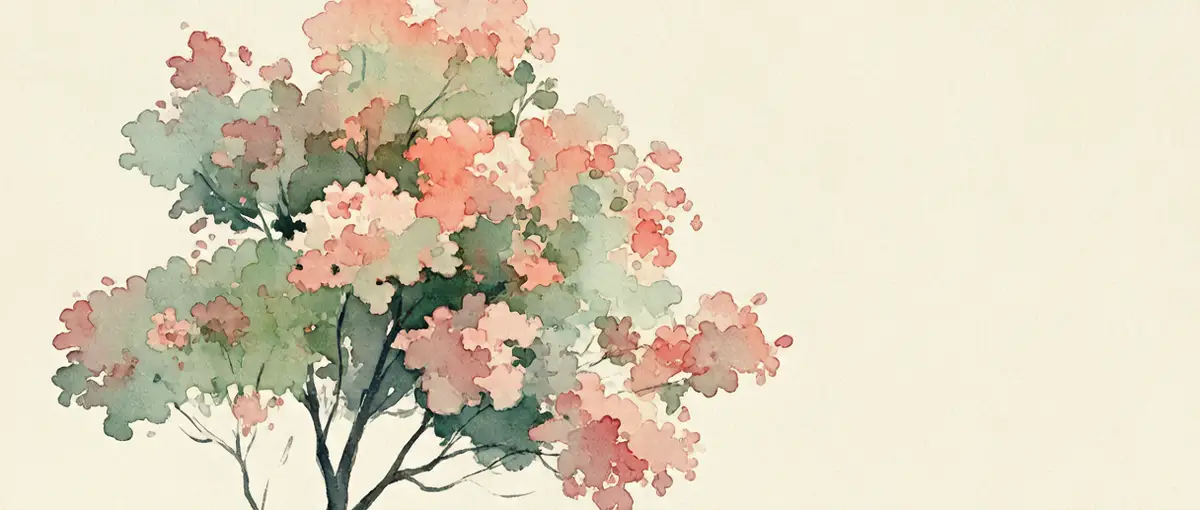
In the Twelve Life Phases, which trace how the five elements' energy is born, grows, decays, and turns, "Di Wang" is the fullest stage — right after Lin Guan, when you can just bear the weight. Di Wang is when that energy reaches its limit: a tree in full bloom, fruit swollen to its ripest, a thing at its brightest, most vigorous moment. It is beautiful, and it carries a message — past the extreme comes decline. Brought into life, Di Wang speaks not of fate but of an experience everyone knows: a state, a relationship, a self so full it is also almost at its end.
What is Di Wang?
We misread "the most flourishing" as "it will stay like this," but the clearest thing about Di Wang is this: it is already the top. A tree's blossoms all open — any further is wilting; a project at its summit — pushing further only flattens it. Life is the same: a career at its brightest, a relationship sweet to suffocation, your state at full charge — these are not "about to get good," they are "already as good as it gets." To recognize Di Wang is to enjoy the fullness and see the message behind it, not imagine it lasts forever. Too many fixate on "can it get even stronger" and miss the fullness in front of them. Di Wang asks not for more greed but for the wisdom to know this moment is the reward.
Di Wang in Your Work: Standing in the Brightest Spotlight
In a career, Di Wang arrives when you "step into the spotlight" — something done for years is finally seen, a hard-won project's numbers hit their peak. These moments dazzle, but anyone with experience knows: after the peak comes leveling off, then the fall. Many get stuck trying to "climb higher" — adding, expanding, refusing to reap, until they overreach and scatter the vigor they had. The wisdom is to hold something back at the brightest moment, not stake everything on holding the summit. The opposite trap: panicking at the peak, shrinking back for fear of falling, snuffing out that Di Wang yourself. Those who dare to stand are not fearless of falling — they are more afraid of never having stood properly at all.
Di Wang in Relationships: When Things Are Almost Too Sweet
In intimacy, Di Wang is "never wanting to be apart" — two people so close others say you're sickeningly sweet, messages answered in seconds. The relationship overflows, but the message is here too: such intensity usually means it is about to settle plainer. Many get stuck wanting it "always this intense" — one side manufacturing novelty, the other proving love, until they wear each other out. What Di Wang wants is to enjoy the fullness and accept it will soften. Protecting a first flourish is more real than forcing it never to change — ease your grip and it settles, on its own, into warm congee. The opposite trap: fearing "it won't stay sweet" and retreating first. Those who dare to overflow are not unafraid of plainness — they are more afraid of never having been intense.
Di Wang in Yourself: Those Days When Your Energy Is Fully Charged
Di Wang lives not only in things and relationships but in the person. There are stretches when someone sleeps well, eats with appetite, has drive for everything, and friends say "your state lately is unreal" — that moment is his own Di Wang. It is fragile, undone by a cold "don't get cocky," yet that full breath is born. Many good states die just as they flourish: staying up to celebrate the moment he gets lucky, going all in the moment he's strong, so the breath leaks out faster than it came. The restraint asked for is to allow yourself to "be full, and not rush to spend it all." Protect that bit of breath and it lands steadily.
Some misread Di Wang as "permission to overdraft" — it is not. Di Wang is full, not endless; what separates it from a hollow front is whether the breath is genuinely sufficient. Those who overdraft, who prop up appearances by force, often mean well, but good intentions are not kindness to Di Wang. Learning to hold back at your fullest is adulthood's hardest, most necessary lesson.
What Di Wang Fears Most: Never Knowing When to Stop
The easiest mistake is to keep piling on at the top: expanding a peaked career, stirring a too-sweet relationship, burning the candle when full. This leaks the vigor away, because "full" is not produced by adding — it is burst by overfilling. What Di Wang needs is "stop while it's good" — a little measure, letting the fullness settle instead of rushing until it spills. Many good things are ruined by being too full, not by being not full enough. So learn not to keep charging but to restrain the greed: let that breath settle on its own while you stand by and keep it from leaking. What it fears most is not the extreme but a hand flicking it, whispering "more." Those who crave fullness are usually not strong but anxious — fail to tell the two apart and you most easily flip the Di Wang you just reached.
After Di Wang Comes Decline — but Decline Is Not the Enemy
Right after Di Wang comes "Decline" — the energy heads down. This is not punishment but law: no fullness lasts, and the extreme must fall. Recognizing the message calms you: what comes next softens and flattens, and that is not failure but one cycle reaching its place. Many fear Di Wang passing, taking it as "it's over," when decline is really the preparation for new growth. Admitting Di Wang will fall is what lets you dare to be full — because falling is not vanishing but living another way. So when you pass through it, no need to cling: you have flourished, and sinking down only finishes one round; the next birth waits elsewhere for you to break ground.
Don't Mistake Di Wang for the Whole Point of Living
Another pit is to read Di Wang as "the entire purpose of life" — as if you haven't lived unless you reach the peak, and once there can never come down. This crushes the present and misreads the law. Di Wang is only the brightest of the twelve stations, linked before and after: Lin Guan lifts it up, Decline sets it down gently. To treat it as the only moment worth living is to miss the whole journey. To recognize it is to take it as a brilliant passage, not the destination — to flourish, to savor, then fall cleanly. That is the composure Di Wang teaches.
In the End: That Fullness Is the Reward Itself
Brought into life, Di Wang is that instant "brightest, fullest, almost overflowing, yet almost at its end." It is not mysterious, nor does it prophesy you stay strong forever; it only reminds you that flourishing to the extreme carries its own weight. Don't dodge it because it will fall, don't burst it because you want it stronger. Catch every fullest moment, and your life will, crop after crop, always have new green in full bloom.
What does Di Wang mean in everyday life?
Di Wang can be read as the moment a state, relationship, or period of work reaches fullness—beautiful, powerful, and close to turning. It is not a forecast that a peak must collapse; it is a reminder that no intensity needs to be held forever.
How can I handle a period when everything feels full?
Enjoy the good without demanding that it stay at maximum volume. Notice what needs pacing, recovery, or transition while you still have energy. If high energy comes with very little sleep, risky behavior, or loss of control, seek qualified professional support.
Want to understand why fullness can make you afraid of the next change?
If you keep gripping a peak because you fear its ending, gentle self-exploration can help you let the season change without calling it failure.
A More Modern Way to Say It
Psychology speaks of "peak experiences" and "hedonic adaptation": a person can reach extreme fullness, yet slip into plainness or even loss after the summit. The teaching of Di Wang is only to say, in the language of the five elements' birth and decay, exactly this — that the extreme turns downward, and fullness itself is the message. It does not read your fortune; it only reminds you the fullest breath is the most beautiful and the shortest — don't be greedy for it, and don't fear its falling.
Keep reading: Lin Guan: grown enough to step up and take hold · Shuai: how the breath loosens, little by little, after it has peaked · Si: the moment it stops — and the hiding place of the next turning
Written and reviewed by DustEcho Editorial for self-reflection and cultural inquiry—not counseling, medical advice, or a clinical diagnosis.
Not sure where to begin?