Guan Dai: the step from "alive" to "taking shape"
DustEcho Editorial
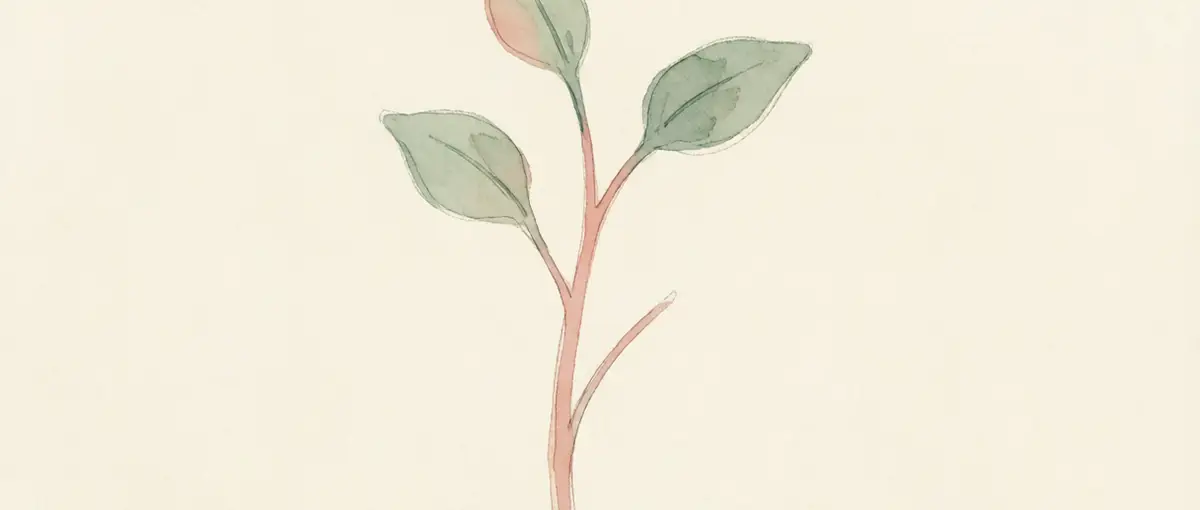
In the Twelve Life Stages, "guan dai" is the second station after "chang sheng." Chang sheng is the first break of soil: tender but alive. Guan dai is the plant grown a little further, branches spreading, a shape forming — like a child old enough for the cap and sash. Not yet fullest, but "alive" has become "formed." In life, guan dai names a stage everyone knows: a thing just poking up, a relationship sprouting, a self wanting to be better, moving from "merely alive" to "taking shape, ready to be shown."
What is Guan Dai?
We misread "taking form" as "still far off," but guan dai's treasure is that first emerging bearing. A seedling from two leaves to a branching stem — you wouldn't say "not a tree yet, so it doesn't count"; it has a shape, only small. So in life: the practiced player finishes a short piece; a relationship reaches friends; a project finds its first frame. None waits for great success. Recognizing guan dai means seeing progress in "not big yet, already formed," not refusing until lush. Too many fix on "not good enough" and reject the just-formed thing. It deserves to be seen, however small.
The guan dai of a thing: from draft to something you can show
A thing's guan dai arrives the first time you "dare to put it out" — the writer finally posts that first piece, the builder sets the rough first version on the table. No finished authority, but that is guan dai: from private "alive" to public "formed." Many stall just before, afraid to show, polishing until the life goes cold. Guan dai happens in "showing it while still green." A held-back piece isn't lacking; it's stuck at "not yet perfect." Let yourself have an imperfect shape first, and guan dai comes. So don't wait for perfection — first claim a showable shape.
Guan dai in a relationship: daring to bring it into the open
A relationship's guan dai arrives when you "finally stop hiding it" — from private liking to appearing together in each other's circles; from a shy "we" to bringing the other before people who matter. The bond moves from private life to public form. Many stall before, afraid to open it: fear it dies in the light, fear "is this serious?" Yet that courage to show is the precondition. Protecting a just-formed bond by bringing it out, with a little less evasion, lets it grow presentable. Hide it first from fear of gossip, and you smother the guan dai yourself. Those who dare are often not unafraid — they fear being stuck at "good only in private" more.
Guan dai in yourself: from "passable" to "actually something"
Guan dai lives in the person, too. Someone who felt "perfectly ordinary," having kept at some small thing, hears others say "you really have something there" — that moment is their guan dai. Still tender, yet the shape of "having something" is born. Much self-growth dies right after forming: a feel for it, then ashamed it isn't professional; a little promise, then bothered it's far from "the impressive ones." Guan dai's patience is first to allow "only just taking shape, not yet made." Protect that bearing and it grows.
Some misread guan dai as "safe to stop" — no. It is forming, not finishing. Those who rush a fixed form or hasten to label often mean well, but good intent isn't kindness to guan dai. Learning to say "leave it, let it grow" is the hardest, most needed restraint an adult can learn.
What guan dai fears most: performing for the audience
Guan dai's easiest trouble is forcing a show too soon: a seedling barely branching, made to flower; a bond shown once, already asking "what do people think of us"; a thing barely peeking, packaged fuller than real. That forcing injures it. Guan dai needs room to grow true, to firm up on its own — not to perform for the audience. Many good things are ruined by "too fast, too full," not "too slow." So in guan dai, don't speed the reveal; hold back from propping, and only shield the wind. A tender shape fears a hurried, prettiness-seeking hand, not slowness. Those who show off are often panicked, not confident — and missing that hurts a just-formed guan dai most.
Don't mistake guan dai for "final form"
Another mistake: reading guan dai as "this far, time to label." Just shape something, rush to define: "this is who I am," "I only do this." A bond just forms, rush to ask "are we settled?" That nails the still-growing thing. Guan dai is "having a shape," not "fixed in form" — lin guan and di wang still lie ahead, far from the lid. To see guan dai is to give that shape room to keep growing, not box it in. Treat it as a beginning, not an end, and you move more loosely.
Guan dai recedes, and returns
In the cycle, guan dai is followed by lin guan, di wang… down through decline, sickness, death, then back from chang sheng. So guan dai isn't one-time: one thing declines, another begins. A phase ends, not over; another round waits elsewhere. This comforts: what you lost won't make "taking form" invalid forever. Any time, restart progress from a small shape. Admitting it recedes lets you dare to show it — knowing it grows again, you stop fearing the first shape blown crooked. Losing a stretch of guan dai isn't "over" — you finished one round; the next waits elsewhere.
In closing: that first shape deserves to be seen
Brought to life, guan dai is the instant of "not big yet, already shaped, fit to be shown." Not mysterious, nor a prophecy; it only reminds you that from "alive" to "formed," this step carries weight. Don't deny it for "not good enough"; don't hide it for "still small." Protect every just-formed shape, and your life will always have new green worth showing.
What does Guan Dai mean in everyday life?
Guan Dai can describe the stage when something has moved from merely alive to having a shape you can show: a project, relationship, or part of yourself is still developing, but no longer only an idea.
How can I show unfinished work without performing perfection?
Name what is ready, name what is still fragile, and invite feedback that matches the stage. Showing a first form is not claiming it is final; it is how a living thing gets clearer.
Want to understand why being seen while growing feels embarrassing?
If you hide every draft until it looks complete, gentle self-exploration can help you let the first shape be visible without turning it into a verdict.
A more modern way to say it
Psychology speaks of "self-efficacy" and "social display": we confirm progress by showing results, and grow from feedback. Guan dai only retells this — "dare to show the first shape, grow sturdy through showing" — in the language of the five elements. It doesn't read your fortune; it reminds you the just-formed shape, though tenderest, most deserves to be seen — don't rush it, don't fake it.
Keep reading: Lin Guan: grown enough to step up and take hold · Shuai: how the breath loosens, little by little, after it has peaked · Si: the moment it stops — and the hiding place of the next turning
Written and reviewed by DustEcho Editorial for self-reflection and cultural inquiry—not counseling, medical advice, or a clinical diagnosis.
Not sure where to begin?