Changsheng: The First Sprout, That Tender Moment When Something Has Just Come Alive
DustEcho Editorial
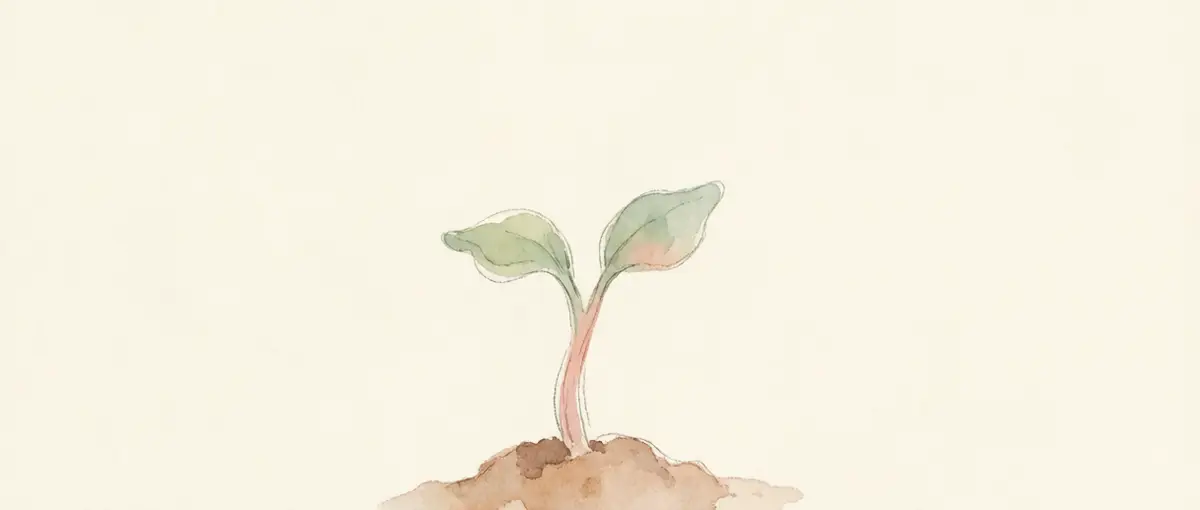
In the Twelve Life Stages — the five elements' qi born, peaking, fading in turn — Birth is the first station. It marks when a strand of qi is conceived and breaks soil: a seed, watered full, first pushes earth aside to show a tender shoot. No leaves yet, still fragile — but it is alive, and the upward direction is set. In daily life, Birth is no mystic fate. It is an experience everyone knows: a thing, a bond, a self just beginning to show life — still tender, still unable to bear the wind, yet already, solidly, alive.
What is Changsheng?
We misread a beginning as "too early to count." But the treasure of Birth is exactly that spark just struck. A two-leaf seedling is alive; it is only small. So it is in life: a person who first feels the stir to write page one; a bond that dares its first true word; a man three days off drink, his eyes clearing. None wait for grand completion to count — Birth is already there. To see Birth is to notice that liveliness while it is small and tender, instead of refusing to admit it until it is a great tree. Too many fix on "not yet done" and dismiss the very life that just broke ground. It deserves to be seen, however small.
In a relationship, Birth is the words finally spoken
Birth in intimacy arrives the moment someone "finally dares to draw closer." Two people outlast the politeness and the testing; one day one speaks the care in the heart and the other receives it. The bond shifts from "politely surviving" to "truly alive." Still fragile, still unable to survive one big fight — but the "alive" has happened. Many stall before Birth, afraid to make the first move: laughed at if they speak, hurt if they near. That courage to break soil is the very condition Birth needs. Protecting a bond just born beats waiting for it to "grow well on its own" — a little less wind, a little less deliberate cold, and it climbs by itself. The reverse also happens: warmth begins, but fearing hurt you withdraw first, and pinch the Birth off yourself. Those who dare are rarely fearless — only more afraid of freezing forever in "politely surviving."
In a task, Birth is the first small move
An undertaking's Birth is seldom a grand plan; it is the first move too small to mention — the runner laces shoes and steps downstairs; the writer opens a blank page. No air of "already done," yet it is Birth: the qi is awake. Many fail waiting to "start once ready," while Birth lives precisely in moving before you are. A stalled project is stuck not because hard but because "I haven't found where to begin." Allow an ugly start and Birth arrives; the rest of the strength rides on that first breath. "Not ready" is no reason to stand still — Birth says the opposite. Because you are not ready, you must move first; readiness is acted into being, not awaited. So begin without waiting for perfection; first catch that spark.
Birth will recede, and it will come again
After Birth come Cleansing, Forming… to Full Bloom, then decline, sickness, death — and the circle starts again at Birth. So Birth is not once-only. One thing dies; another begins at Birth. A stretch of life ends — not the end; another Birth waits elsewhere. This comforts: what you lost does not cancel "beginning" forever. Any moment, a small breaking of soil can restart a little life. Admitting Birth recedes actually frees you to begin — knowing it can grow again, you stop fearing a shoot bent by wind. Lose one Birth and you are not "finished"; you finished one round, and the next waits elsewhere to break ground.
Don't rush to force Birth to ripen
The easiest mistake is demanding fruit the instant it sprouts: pulling up a two-leaf seedling, asking "where is this going" after one true word, fixing on numbers the moment a task starts. Push, and the shoot is harmed. Birth needs "don't disturb" — time, space, freedom from being watched and judged. Many good things die from growing too fast, not too slow. Inside Birth, learn restraint, not speed: let the spark push upward, you only block the wind. A tender shoot fears not slowness but a hand impatient for results, poking at it. Those who force ripening act from anxiety, not love — and cannot tell the two apart will wound the Birth just born.
And the self: the moment one first wants to be better
Birth lives in the person, too. Someone who always thought "I'm no good" one morning thinks "maybe I'll try" — that thought is his Birth. Still too fragile for a laugh of "three minutes, as usual," yet the wish to improve is alive. Many self-changes die just sprouted, pinched by the person: two days of exercise, no result, quit; three days reading, nothing sticks, quit. Birth's patience is to allow yourself "merely alive, not yet made." Guard that tender wish and it can grow.
Some mistake Birth for "just trying casually" — no. Birth is a serious move, only a small one. It differs from going through the motions in whether that move truly lit the qi. Parents, bosses, friends who rush ripening usually mean well, but good intent is not the same as kindness to Birth. Learning to say "slow down, let it grow" to what just sprouted is the hardest, worthiest restraint an adult can learn.
In the end: that spark is the most precious thing
Brought to life, Birth is simply "still tender, still small, yet already solidly alive." Not mystic, not a prophecy of what you'll become — only a reminder that beginning itself carries weight. Don't deny it for being early; don't ignore it for being small. Guard every spark just broken ground, and your life will, crop after crop, stay green.
What does Changsheng mean in everyday life?
Changsheng can be read as the first living stage of a beginning: a project, relationship, or part of yourself has just started to breathe. It is not a promise of success; it is an invitation to notice small life before demanding a finished result.
How can I protect a fragile new beginning?
Give it a small repeatable action, enough time, and less unnecessary judgment. Do not pull up the seedling to check its roots every day. If a new change is tied to serious distress or risk, get practical support instead of relying on symbolism.
Want to understand why tiny beginnings feel too easy to dismiss?
If you only respect outcomes and overlook first steps, gentle self-exploration can help you recognize what has just come alive.
A modern way of saying it
Psychology calls it "tiny starts": change begins with one nearly effortless action, not a grand resolve. Birth merely says "dare to break soil, move first" in the language of the five elements. It reads no fortune — only reminds you that the just-sprouted spark is the tenderest and most precious. Don't rush it, don't pinch it.
Keep reading: Lin Guan: grown enough to step up and take hold · Shuai: how the breath loosens, little by little, after it has peaked · Si: the moment it stops — and the hiding place of the next turning
Written and reviewed by DustEcho Editorial for self-reflection and cultural inquiry—not counseling, medical advice, or a clinical diagnosis.
Not sure where to begin?