Tai: On the Brink of Birth — How the First Stirring of Something New Quietly Forms
DustEcho Editorial
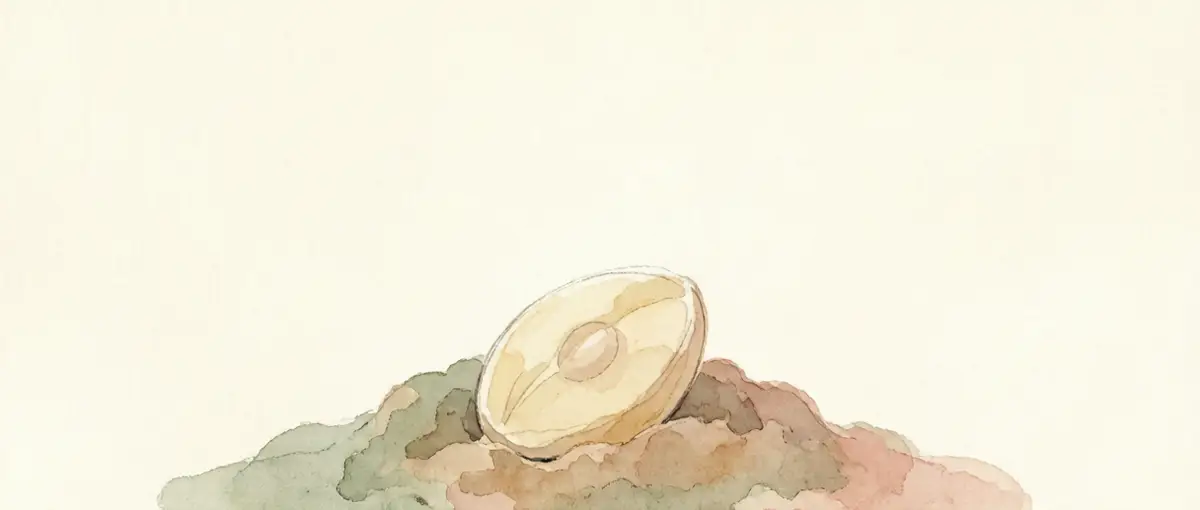
In the "Twelve Life Phases" (十二长生), which traces how the qi of the five phases is born, dies, and turns again, "Tai" comes right after "Jue" (severance) and just before "Yang" (nourishing). Jue is the qi cut off completely, every thread gone. Tai is what forms in the quiet after that cut — a tiny new breath taking shape within, like a seed swelling its first embryo in the soil, or an embryo forming in stillness. Not yet grown, only beginning to be. It is the easiest phase to misread: Tai is not "already having," but quietly holding the possibility of life. In life it names not a fate but a shared experience — the moment a new state, a new relationship, a new self quietly sends up its first tender shoot after the old cycle has ended.
Tai is not having; it is "about to be born"
We often misread "poking through" as "already made," but the plain truth about Tai is: it holds, yet has not grown into form. A seed has swollen its embryo, but not sprouted — only begun to carry that intent. An embryo rests in stillness, but cannot move — only quietly taken shape. Life is the same: a thought just surfaced is not formed; a relationship just showing its head is not defined; a new self just woken in you is not steady. None is "already accomplished." Tai is already there — the new breath is held, and it has begun to sprout. To recognize Tai is to learn, in the moment of "there seems to be something," not to rush, and to know this is only about to be born. Too many fix their eyes on "why is there still no sign" and demand a result, forcing even normal stirring into something half-cooked.
Tai in work: the embryo of a new idea
In career, Tai arrives in the "just surfaced" stretch. A direction still only in your mind — no project, no resources, just a sudden feeling that "maybe this could work." A notion just appeared, not yet talked through. These moments have none of the solidity of "landing"; you may still feel uncertain. But that is Tai — the new breath is held, and it has sprouted. Many get stuck because they force ripening: the moment a thought appears they rush to open a project, pull in people, demand a result, and that tender embryo turns half-cooked. The wisdom of Tai is to protect it first while it surfaces, and let the intent grow slowly — not grab it and fling it down. Protecting that about-to-be-born stretch is more real than forcing growth that will not come. The reverse happens too: the moment it sprouts you think "I can't, I'm overthinking" and pinch it off, and that Tai gets misread as a delusion. Those who dare to protect it are often not indecisive — they know an embryo must swell slowly.
Tai in relationships: the bud of a new bond
In intimate relationships, Tai is the "just showing its head" stage. Two people move from first meeting to that undefinable warmth rising — not yet defined, not yet spoken. The relationship moves from strange to about-to-be-born: not accomplished, but sprouting. Many get stuck by wanting to "force ripening" — the moment there is a little affection they rush to confirm the relationship, claim a title, and press that tender bud so it dares not grow. What Tai calls for is to admit the warmth is still in its embryo, protect it gently, and let it draw its own shoot in time. Protecting a relationship just sprouted is more real than the discomfort of rushing to define it. A little less pressure, and it grows on its own. The reverse happens too: the moment it sprouts you fear "it's impossible" and pinch it off, and that Tai gets misread as an illusion. Those who dare to protect it are often not unsure — they are more afraid of never having let it sprout properly.
Tai in your own state: the rough shape of a new self
Tai is not only in events and relationships; it is in the person. There are days when, quietly, a different self rises in your heart — wanting to be quieter, live another way, try being gentler. This new version of you has not found its footing; it is only a rough shape. A friend says, "you seem a little different lately." That moment is his own Tai. It is not bad, but it cannot survive a cold splash of "there you go again, three-minute enthusiasm." Yet the forming of that new breath has already happened. Many good states die the moment they sprout, pinched off by oneself: denied when they appear, forced to ripen when they shoot up. The patience this phase calls for is first to allow yourself to be "only about to be born, not yet accomplished." Protect that tender not-yet-formed shoot, and it will open into growth.
What Tai fears most is "forcing ripeness"
The problem Tai most easily runs into is protecting when you should, yet forcing instead: opening a project the moment a career surfaced, demanding a definition the moment a relationship sprouted, pushing for a result the moment a state shot up. This forcing turns the very breath that should grow slowly into something half-cooked, because "life" is not forced out — it is nurtured open. Tai needs "first protect, then nourish": give a little room, let that new breath take shape on its own, instead of grabbing it and slamming it down. Many good things are ruined by "unwilling to wait," not by "waiting too long." So in the experience of Tai, what you most need to learn is not to grab results but to hold back from forcing: let the new breath swell slowly on its own, and stay nearby without pinching it. What is feared most is not having no sign, but a hand that says "hurry and become" pressing the tender embryo to the ground again and again. Those greedy for completion are often not proactive — they are anxious; fail to tell the two apart, and you most easily force the just-arrived Tai into something half-cooked.
After Tai comes Yang, but Yang is not pulling shoots
In the cycle, right after Tai comes "Yang" — the new breath is slowly nourished, like a seedling receiving soil and water. This is not a reward; it is the law: once you hold the possibility of life, you must nourish it well for it to open into growth. Recognizing the message this phase carries leaves one unrushed: you know nourishment will follow, that it will grow slowly — not by luck, but because a cycle has reached the position where it ought to be nourished. Many fear Tai passing, reading it as "still no sign, don't celebrate too early," when Yang is only the preparation for another stretch of growth. To admit Tai will sprout is what lets one dare to protect — because protecting is not in vain, but a trade for another way to live. So to pass through a stretch of Tai, there is no need to force ripeness nor to pinch it yourself — you have held it, and opening into nourishment is only a matter of time; the next turn of the cycle waits elsewhere for you to break ground.
Don't read Tai as "still no sign"
Another pitfall is misreading Tai as "overthinking, it doesn't amount to much" — as if not yet grown means it doesn't count. This both presses down the present and misreads the law. Tai is only the about-to-be-born station among twelve; it connects to other stations before and after: before it, Jue cuts it off completely; after it, Yang nourishes it slowly. To read Tai as "no sign" is to miss the whole stretch of growth. To recognize Tai is to take it as a stirring along the journey, not as emptiness itself. Hold it, protect it well, then nourish it cleanly — that is the composure this phase shows.
In closing: that new breath is held, and still swelling slowly
The word Tai, brought into life, is that instant of "about to be born yet not yet born, as if there is something, but not yet formed." It is not mysterious, nor does it predict you will surely succeed. It only reminds you: from cutting to sprouting, this single step carries its own weight. Don't pinch it because "there's still no sign," don't force it because "you want it to become." Catch every stirring moment, and your life will, crop after crop, always have its breaking points and always have its new embryos.
A more modern way of putting it
Psychology speaks of "germinal motivation" and "the period of psychological preparation": after the old cycle is completely broken, a person enters a stage where a new possibility quietly takes shape — a low-key starting point where new goals, new relationships, and a new self are slowly gestating at the psychological level, not yet acted upon, and not mere daydreaming. The teaching of Tai is simply to tell the story of "when qi is severed, it sprouts; when it sprouts, it holds" in the language of the five phases' birth and decay. It does not tell your fortune; it only reminds you: that new breath is held — tenderest, and longest. Don't panic, and don't force it.
Written and reviewed by DustEcho Editorial for self-reflection and cultural inquiry—not counseling, medical advice, or a clinical diagnosis.
Not sure where to begin?