Mu: After It Closes, Set That Breath of Energy Gently Aside
DustEcho Editorial
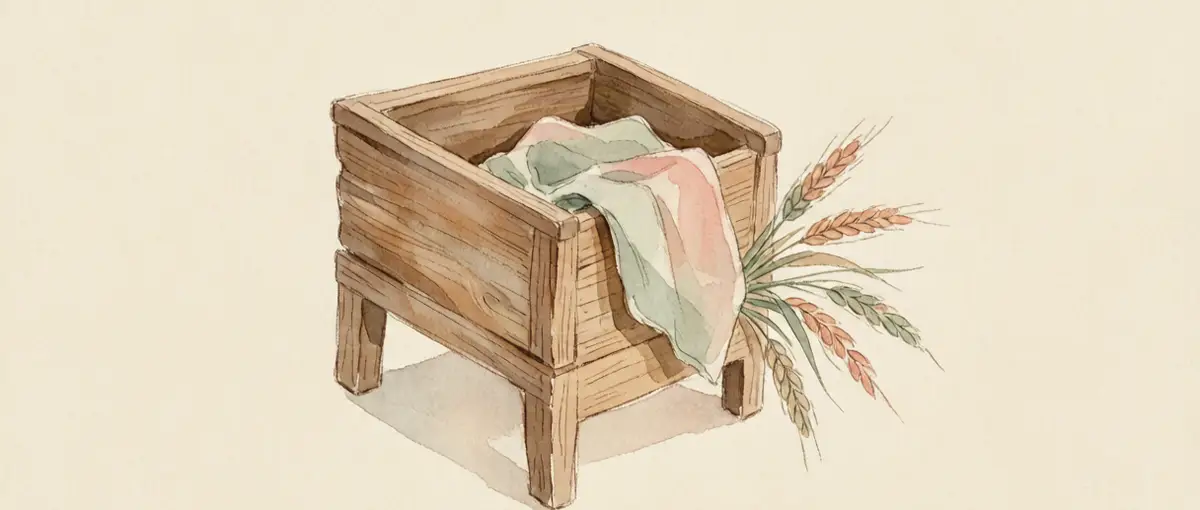
In the "Twelve Life Phases" (十二长生) — the system that describes how the energy of the five elements is born, grows, peaks, declines, dies, is stored, is severed, and begins anew — "Mu" is the station that comes right after "death," the stillness that follows a falling-off. Death is when the energy sinks to its lowest and gathers into quiet; Mu is when that gathered energy is collected and put into storage — like grain into a granary, or an object back into its box. It isn't gone; it's been set safely down. It is the least-loved phase, and the most easily misread: Mu is not a burial, but a careful keeping of a cycle that has run its course. Borrowed into daily life, Mu doesn't speak of fate — it names an experience everyone knows. The moment when a state, a relationship, or a version of yourself reaches its close, and is gathered up and kept, no longer stirred.
What is Mu?
We often misread "putting away" as "being buried." But the clearest thing about Mu is this: it only stores, it does not cover over. Grain in the granary isn't spoiled — it waits for the next opening. An object in its box isn't lost — it rests, secure. Life is the same: a project is officially archived, its files put into the library; a relationship ends in peace, its memories set into the album; a version of yourself finishes, and you gently set down that self. None of this is "being forgotten" — Mu is simply present. That breath of energy has been settled, it's steady. To recognize Mu is to learn, when something "is done," not to dig it back up and turn it over — to know this is only keeping, not vanishing. Too many people fixate on "why isn't it moving," and read a normal settling as a burial, then go digging themselves.
Mu in Work: Archiving the Project
At work, Mu often arrives in the "closing" stretch. A project that ran a long time is finally accepted, archived, moved into the knowledge base; a retired business has its process finalized, its documents put back in place. These moments carry none of the noise of a "launch"; you may even feel empty, but that is Mu — the energy is gathered and stored. Many people get stuck inside Mu because they won't archive: the project ended long ago yet the desk stays piled with drafts; the business retired yet they click in every day to check — and so that closing never truly settles. The wisdom of Mu is to archive cleanly at the close, leaving the space for the next pile, rather than leaving things spread across the floor uncollected. Protecting that settled state is more real than leaving it out uncollected. There's the opposite, too: the moment something is archived they feel "worthless," and rush to open a new pile to fill the gap — and that Mu gets misread by them as abandonment. Those who dare to archive are often not weak; they know a granary is meant to be filled and emptied again.
Mu in Relationships: A Peaceful Close
In close relationships, Mu is often the stage of "keeping it well." Two people move from parting, to quietly setting that love into memory — no longer turning to it every day, no longer telling everyone about it. At this moment the relationship moves from zeroing-out to being set down: not faded, but kept. Many get stuck in Mu because they won't keep: though it's over they keep the chat history on screen to read daily; though they should turn the page they post old photos to their feed — and so the last bit of good between them is left to go stale. What Mu asks is to admit that bond has closed, to store it with dignity, to protect the relationship just now set down — which is more real than turning it over daily and feeling bad. Dig a little less, and it will rest quietly in its box on its own. There's the opposite, too: the moment it's kept they fear "it was all for nothing" and delete everything clean — and that Mu gets misread as erasure. Those who dare to keep well are often not unloving; they're more afraid of never having kept it properly.
Mu in Your Own State: Turning the Page on a Season
Mu lives not only in things and relationships, but in the person themselves. A stretch of someone's days is finished — a period of grinding study, a spell of drifting city life, a stretch of clenched-teeth recovery — and the period is formally closed, that version of self gently set down. A friend says, "that time was really hard for you." In that moment, it is their own Mu. It isn't bad; it can't bear a cold splash like "why are you still bringing that up" — but the settling of that breath has already happened. Many a good state dies the moment it's kept and then dug up by its own self: the moment it's set down they pull it out to over-analyze; the moment it's archived they look back. The patience Mu asks for is first to allow yourself "it's only kept well, not gone." Protect that almost-still, not-yet-still ease, and it will hold steady.
What Mu Fears Most: "Unable to Let Go of Keeping"
The problem Mu most easily runs into is spreading things out when they should already be kept: the career ended yet left; the relationship gone yet turned over; the state passed yet dug up. This digging stirs again the energy that should have rested quietly — because "keeping" is not dug out, it is let go. What Mu needs is "clean archiving" — give a little room, let that breath sit quietly in its box on its own, rather than reaching in all the way to turn it over. Many good things are ruined by "unwilling to keep," not by "keeping too fast." So in the experience of Mu, the most important thing to learn is not to keep turning, but to hold back from digging: let that breath rest in the granary, and just stay beside it without stirring. What's most feared is not being kept, but being taken out again and again by a hand that "cannot turn the page." Those who are nostalgic are often not deep-feeling, but anxious — and failing to tell these two apart, they most easily stir a fresh Mu into a floor of mess.
After Mu Comes "Jue" (Severance) — But That Is Not Vanishing
In the cycle of the Twelve Life Phases, right after Mu comes "Jue" — the energy's line is cut, like a vine clipped, a source stopped. This is not punishment but law: after long keeping, that old tie must be cut clean to free the space. Recognizing the message Mu brings actually steadies a person: you know what comes next will be cut, will be cleared — and that is not failure, but a cycle having reached the place where it should break off. Many fear Mu passing because they take it as "about to be forgotten"; in truth Jue is only the preparation for another round of arising. Admitting Mu will keep things well actually gives a person the courage to keep — because they know keeping isn't vanishing, it's living in another way. So to pass through a stretch of Mu, there's no need to leave things out uncollected, nor to scare yourself — you've kept it well; even the cutting-off is only a cycle completed, and the next seed waits, nurtured elsewhere, for you to sprout.
Don't Read Mu as "Being Forgotten"
Another pitfall is to misread Mu as "no one remembers anymore" — as if putting away equals being erased. This both crushes the present and misreads the law. Mu is only the station of settling among the twelve; it connects to other stations before and after: before it, Death gently closes it; after it, Jue cleanly cuts it off. To take Mu as being forgotten is to miss the whole length of the journey. To recognize Mu is to take it as a stretch of archiving in the journey, not the endpoint itself. Keep well, cut off, then turn cleanly — that is the composure Mu teaches.
A Final Word: That Breath of Energy Is Settled, and Still in the Granary
The word Mu, set into life, is that instant of "finished, kept well, no longer stirred." It is not mysterious, nor does it predict you will surely be forgotten — it only reminds you: from closing to settling, this very step carries its own weight. Don't dig because "it's not moving," don't leave things out because "you still want to turn." Catch each moment of settling, and your life will, season after season, always have its closings and always have its new granaries.
What does Mu mean in everyday life?
Mu can be read as the stage when a finished cycle is gathered, archived, and given a place. It is not erasure or failure; it is the quiet work of closing a project, relationship, or former identity without reopening it every day.
How can I close a chapter without pretending it did not matter?
Name what happened, keep the lesson or evidence you need, and create a small ritual of completion. If grief or the ending still feels impossible to carry, qualified support can help you close safely rather than forcing yourself to be “over it.”
Want to understand why putting something down feels like losing it?
If you keep digging up what is finished to make sure it mattered, gentle self-exploration can help you let the archive stay closed.
A More Modern Reading
Psychology speaks of "closure and ritual": when a person ends an identity, a relationship, or a direction, they complete the psychological "keeping well" through archiving and farewell rituals — a necessary step to step out of an experience and free up psychological space, not a loss of ability. The teaching of Mu is only to say, in the language of the five elements' birth and death, this matter of "energy gathered is stored, stored is at peace." It doesn't read your fortune; it only reminds you: that breath of energy, settled, is most natural and most at ease — don't panic, and don't dig.
Keep reading: Yang: Only After Soaking Up Earth and Water Does the New Sprout Slowly Take Shape · Fanyin: Just as you breathe easy, things flip to the other side · Fuyin: Some hurdles come back as if they were looking for you
Written and reviewed by DustEcho Editorial for self-reflection and cultural inquiry—not counseling, medical advice, or a clinical diagnosis.
Not sure where to begin?