Muyu: The First Thing After Something Comes Alive Is to Be Washed Clean
DustEcho Editorial
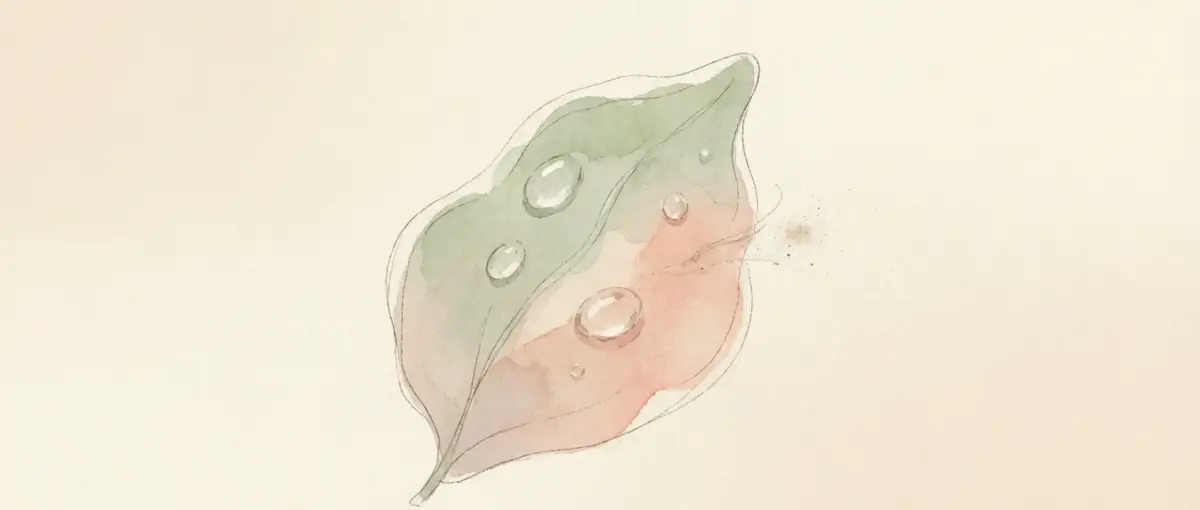
In the "Twelve Life Phases" (十二长生), "Bathing" (沐浴) is the stage right after Birth (长生) and right before Taking Shape (冠带). Birth is the energy breaking ground and coming alive; Bathing is that newly-alive energy washed for the first time — like a newborn washed clean of blood and afterbirth, a fresh leaf shaking off old dust, or a cicada that has shed its shell and must air out its soft body. It is not growing another inch; it is shedding the old, hanging out, and meeting the light. The common misreading: Bathing is not "you must be clean to deserve to live"; it is the baptism that naturally comes after you are alive. In life it names no fate — only the days when something new has just come alive, is pushed into the light, washed of the old, and aired while still vulnerable.
What is Muyu?
We misread "new" as "already good," but the truth is plain: Bathing washes, yet it does not move up a level. A washed baby is still a baby, freed only of the afterbirth; a shaken leaf is still a fresh leaf, now only in the light. Life is the same: a direction just come alive, seen and judged for the first time — not "already made it," but Bathing arriving, the old shell washed. Many get stuck through shame: just alive and already in the light, feeling "still ugly, still tender, unfit to be seen," wanting only to shrink back. The wisdom is to bear the washing when it lands, and let that old layer fall — not to scream "I'm not ready" while wrapping back up. Enduring the wash beats shrinking back unwashed. The reverse: just washed and afraid of "being looked down on," one puts on maturity early, and the shell never gets clean. Those who bear it are not thick-skinned; they know new things are meant to meet the light.
Bathing in Career: The First Air-Out of a New Direction
At work, Bathing arrives in "just unveiled, not yet steady on your feet." A direction finally set in motion, spoken of, shown, questioned — none of this is "already stable"; it is Bathing, pushed into the light and washed. Many get stuck keeping up appearances: the moment they unveil, they rush to look "I had it all planned"; the moment they are questioned, they rush to argue "I'm not wrong." What Bathing asks is to admit this new thing is still being washed — bear it gently, let it dry and harden on its own. The reverse: just washed and afraid of "showing weakness," one flees, and the Bath is misread as humiliation. Those who bear it are not fearless of shame; they are more afraid of never having met the light properly.
Bathing in Relationships: The First Wash of a New Bond
In intimacy, Bathing is "just confirmed, first time in the light." Two people move from "us" to being known by friends, asked about by family, sized up by acquaintances — the relationship moves from nurtured to washed; not made, but brought to the light. Many get stuck keeping up a polished front: just together and afraid of "being laughed at," of "not being sweet enough," they perform harmony in public. What Bathing asks is to admit the relationship is still being washed — bear it gently, let it slowly withstand being seen. The reverse: just washed and afraid of "not being good enough," one breaks it off, and the Bath is misread as a trial. Those who bear it are not lacking in reserve; they are more afraid of never having been properly seen.
Bathing of Your Own State: A New Self's First Meeting with the Light
Bathing is not only in things and relationships; it is in the person. There are days when a different you has just surfaced and is seen for the first time: you try to be gentle, and someone says "you've changed"; you loosen up, and someone sizes you up. This new self has not dried and hardened; it has only been washed. A friend says "you seem different lately." That moment is his own Bathing. It is not bad — it cannot bear the sting of one "what are you putting on" — yet that new energy meeting the light has happened. Many good states die right after their first Bath: just seen and afraid of "not being real," just washed and shrinking into the old shape. The patience Bathing asks is to allow yourself to be "only being washed, not yet hardened." Bear that trembling in the light, and it will dry.
What Bathing Fears Most Is "Wrapping Back Up"
The easiest problem is to wrap up when you should bear: a career just unveiled and you shrink, a relationship just in the light and you perform, a state just washed and you retreat into the old shell. The moment you wrap, that energy which should dry gets smothered — "hard" comes from airing, not wrapping. What Bathing needs is "wash first, then air" — give a little light, let the old self fall, rather than shouting "I'm fine" while wrapping back in old clothes. Many good things are ruined by "refusing the light," not by "too much light." So in Bathing, learn not to fake being fine but to hold back from wrapping: let the baptism pass, stay nearby without shrinking. What is feared most is not being seen, but a hand that says "I'm still not good enough" wrapping the new body back into the old shell. Those who wrap back are not ashamed but panicked — and failing to tell the two apart wraps a just-arrived Bath into a smothered sprout.
After Bathing Comes Taking Shape — But the Cap Is Not Worn from Nothing
Right after Bathing comes "Taking Shape" (冠带) — that washed and dried energy takes form and dons its cap. This is not a reward; it is a law: only after being washed and aired can it have shape. Recognizing Bathing's message makes one calm: next there will be form, there will be dignity — not by luck, but because a cycle reached where it is meant to be washed. Many fear Bathing passing because they take it as "being laughed at, just don't mind it"; in truth Taking Shape is only another stretch of growth forming. Admitting Bathing will wash makes one dare to bear it — bearing is not in vain, but an exchange for a cleaner layer. So to go through Bathing, no need to wrap back nor fake being fine — bear it, and wearing the cap is only a matter of time, while the next turn of life awaits your breaking ground elsewhere.
Don't Read Bathing as "Unfit to Be Seen"
Another pit is misreading Bathing as "still ugly, unfit for the light" — as if washed means not good enough. This presses down the present and misreads the law. Bathing is only the washed station among the twelve; it connects to others: before it, Birth breaks ground; after it, Taking Shape gives form. Reading it as unfit to be seen makes you miss the washing all along the way. To recognize Bathing is to take it as days when the old shell is washed away — not shame itself. Bear it, air it well, then cleanly don the cap; that is the composure it teaches.
In Closing: That New Energy Has Been Washed, and Is Still Slowly Hardening
Bathing, when it lands in life, is that instant of "just come alive, pushed into the light, washed of the old, aired in vulnerability." It is not mysterious, nor does it predict you will surely succeed; it only reminds you that from alive to formed, this washed stretch has its own weight. Don't wrap because you are "still tender"; don't pretend because you are "afraid of being seen." Bear every baptism as it arrives, and your life will, crop after crop, always have new green and meet the light.
What does Muyu mean in everyday life?
Muyu can be read as the vulnerable washing stage after something new has come alive: a new direction, relationship, or version of yourself is being seen before it has fully formed. It is not a verdict of unfitness or a chart calculation.
How can I protect a new beginning while it is still tender?
Choose who gets access, limit unnecessary judgment, and let the new thing develop before asking it to prove itself. Being seen can be part of growth, but exposure should still be chosen.
Want to understand why being visible while changing feels shameful?
If you keep wrapping yourself back up after one awkward reaction, gentle self-exploration can help you stay open to safe feedback without abandoning your pace.
A More Modern Way of Saying It
Psychology speaks of "self-disclosure" and "adaptation to periods of vulnerability": when a new goal, relationship, or self has just come alive, a person goes through a fragile transition of being seen, evaluated, and forced to shed the old shell — not shame, but the baptism required for taking form. The teaching of Bathing only says "energy lives then is washed, washed then takes form" once more, in the language of the five phases' birth and decay. It does not read your fortune; it only reminds you that this new energy is being washed, tenderest yet longest — don't wrap, and don't pretend.
Keep reading: Yang: Only After Soaking Up Earth and Water Does the New Sprout Slowly Take Shape · Fanyin: Just as you breathe easy, things flip to the other side · Fuyin: Some hurdles come back as if they were looking for you
Written and reviewed by DustEcho Editorial for self-reflection and cultural inquiry—not counseling, medical advice, or a clinical diagnosis.
Not sure where to begin?