Shuai: how the breath loosens, little by little, after it has peaked
DustEcho Editorial
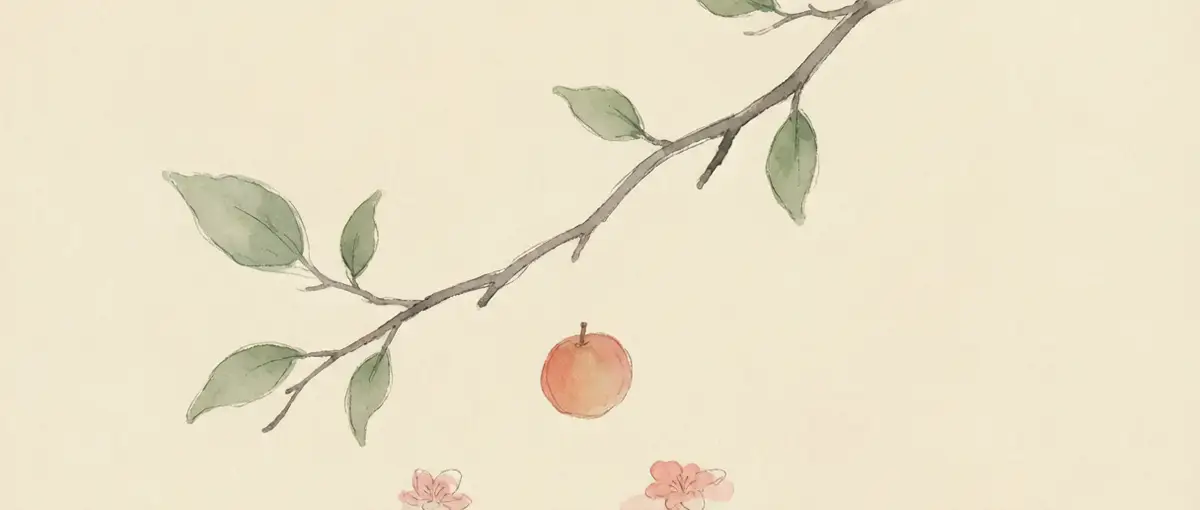
In the Twelve Life Stages, shuai is the station right after diwang, the summit. Diwang is the flower fully open; shuai is that abundance beginning to descend. The plant has shifted from straining to grow into slowly gathering in. It has not gone bad. The fullest force in it has simply loosened.
Brought into life, shuai is not fate but an experience everyone knows: a state, a relationship, a self, moving from fullest to a little spent, a little loose.
What is Shuai?
We often misread going downward as something going wrong. But shuai sits exactly after the extreme of flourishing. A flower at its height will naturally wilt; the wilting does not make it bad. Life is the same: things settle after their peak, relationships soften, energy gives way to the usual self. None of this means it is over. It means shuai is here—the breath has fallen from the top, naturally.
To recognize shuai is to learn, when you are not as intense as before, not to panic—this is the turning, not a failure. Too many treat a normal dip as an alarm.
Shuai in work: from the climb to the plateau
At work, shuai arrives after the peak. A thing pushed to center stage loses its heat; a surging metric stops rising and moves sideways. That is shuai—the qi has fallen back to the ground.
Many get stuck because they want to charge back to the top: they pile on more, refuse steadiness, and burn away the remaining momentum. Its wisdom is to catch yourself as you come down and reset the rhythm to the everyday, rather than dragging the summit along by force. Protecting the descent is more real than stiffly refusing to wilt.
The reverse happens too: the moment you dip, you panic you will be forgotten, and a little shuai balloons into a crisis. Those who can let it level out are not ambitionless—they know the peak was always going to pass.
Shuai in relationships: from thick to thin
In close relationships, shuai shows up as not quite so clingy. Two people move from instant replies to each having their own business, and the time together grows loose. At that moment the relationship has fallen from its thickest to the everyday—not faded, but descended.
Many get stuck wanting it always that sweet: one side manufactures warmth, the other proves they still care, and both end up exhausted. What shuai asks is to accept that the thick part will naturally turn tender; protecting the relationship as it lands beats holding the line by force. Ease up on the grasping, and it settles into warm congee on its own.
The reverse again: the instant it loosens, you fear they have stopped loving you and retreat first, misreading that little shuai as the end. Those who can let it fall are not unafraid of thinning—they are more afraid of never having thickened properly at all.
Shuai in your own state: from full charge to the usual
Shuai lives in the person too. For a stretch someone sleeps well and has drive for everything; then, slowly, they return to ordinary—friends stop saying you have been amazing, and you stop pumping yourself up. That moment is their own shuai. It is not wretched, yet the breath has already begun to fall.
Good states often die the moment they land, dismissed by their owner: the instant it levels you decide you are useless; the instant it steadies you rush to relight. The patience shuai asks for is first to permit yourself that you have only returned to normal, not regressed. Protect that settled breath, and it will hold.
What shuai fears most is refusing to let go
The easiest mistake is to keep pushing when you should gather in: expanding a career past its surge, stirring a thinned relationship, burning through a leveled state. That pushing twists the breath that should have fallen naturally, because gathering in is yielded, not forced. What shuai needs is stop when it is good, rest when it is level—a little measure, letting the breath settle instead of hauling on it the whole way.
Much that is good is destroyed by refusing to fall, not by falling too fast. So inside shuai, learn not to keep charging but to hold back from grasping: let the breath sink on its own while you stand guard so it does not leak. The real fear is not the descent—it is a hand that keeps whispering more. The greedy for fullness are often not strong but anxious; fail to tell these apart, and you twist a fresh shuai into sickness.
After shuai comes bing—but don't frighten yourself
In the cycle, shuai is followed by bing—the qi begins to stagnate. This is not punishment; it is pattern. Peak, then fall; fall long enough without smoothing through, and it clots. Recognizing shuai's message keeps you calm: it will turn tender, turn level, maybe catch a little—and that is not failure, only a cycle arriving where it was meant to.
Many fear shuai passing because they read it as finished. In truth bing is only the preparation for another growth. To admit shuai will fall is what lets you dare to be full—because the falling is not vanishing, only a different way of living. So through shuai, neither cling nor scare yourself. You peaked; sinking down finishes one round, and the next life stage waits elsewhere for you to break the soil.
Don't read shuai as regression
Another trap is to misread shuai as I have regressed—as if falling short of your peak counts as loss. This crushes the present and misreads the pattern. Shuai is only the station after the extreme of flourishing, linked to the others: before it, diwang lifted it up; after it, bing gently clots it. To take shuai as failure is to miss the growth all along the way. To recognize it is to treat it as a stretch of withdrawal, not the destination. To have peaked, fallen, and gathered in cleanly—that is the composure shuai teaches.
In the end: that loosened breath is part of the turning too
In daily life, shuai is simply the instant after the fullest, when you have let a little force go and are no longer quite so forceful. It is not mysterious, and it does not prophesy collapse. It only reminds you: from full to loose, this step carries its own weight. Don't panic because you are not as good as before; don't push because you want more. Catch every moment that loosens, and your life will, crop after crop, always have its falling and always have its new green.
What does Shuai mean in everyday life?
Shuai can be read as the easing that follows a peak: energy, attention, or a relationship becomes less intense without necessarily becoming a failure. It is a metaphor for a natural turn, not a prediction that decline is permanent.
How can I handle the period after a peak?
Adjust expectations, recover before demanding a new climb, and ask what the quieter phase is teaching you. If low mood, exhaustion, or loss of function persists, seek qualified support rather than blaming yourself for not staying at maximum intensity.
Want to understand why normal ebb and flow feels like regression?
If every softer season scares you, gentle self-exploration can help you let the breath loosen without treating it as the end.
A more modern way of saying it
Psychology speaks of hedonic adaptation and regression to the mean: a person can reach a moment of fullness, yet slip into flatness after the peak. This is the mind's natural fall from the height, not a loss of ability. The teaching of shuai is only to tell the story of peak then fall, fullness itself is the message, in the language of the five elements. It does not read your fortune. It only reminds you: that loosened breath is the most natural and the briefest—don't panic, and don't yank on it.
Keep reading: Guan Dai: the step from "alive" to "taking shape" · Lin Guan: grown enough to step up and take hold · Si: the moment it stops — and the hiding place of the next turning
Written and reviewed by DustEcho Editorial for self-reflection and cultural inquiry—not counseling, medical advice, or a clinical diagnosis.
Not sure where to begin?