Shi Shang in BaZi: The Need to Express
DustEcho Editorial
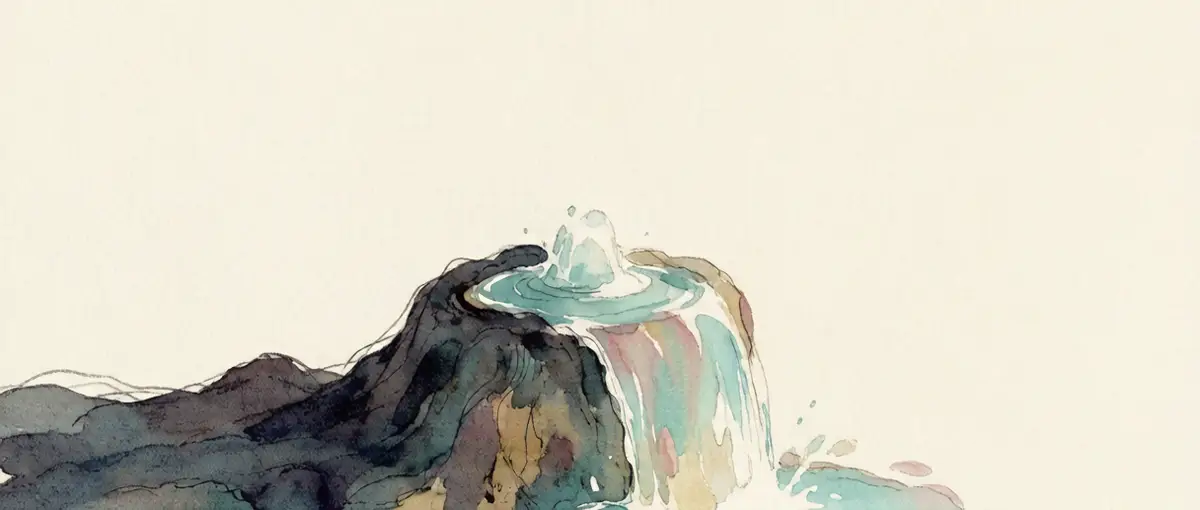
In BaZi, Shi Shang is the combined term for the Output Star and the Talent Star — traditionally associated with expression, creativity, and outward release. It is the force that makes you want to speak, to make, and to pour what you carry inside into the world. When Shi Shang is strong in a chart, that outward-pouring impulse runs especially high. This is not a fortune verdict. It is a description of an experience: something inside is always full — thoughts, words, things wanting to be made — and no matter how hard you press down, it keeps rising. It wants to be spoken, built, or handed over, or else it sits clogged. Not good or bad. Just the force flowing outward from you, quietly dialed up.
It's Not About Talking Too Much — The Waters Are Simply Full
People with strong shi shang often get told they "talk too much" or "can't sit still." But it is not about showing off. The waters inside have simply risen too high. When they reach the brim, they spill — not out of choice, but because there is nowhere else to go. Think of shi shang as a spring that cannot be capped: thoughts surface one after another, words slip out before you can stop them. Staying quiet is not restraint, it is a physical fullness. In conversation, the rhythm comes fast — not from rudeness but because the urge to express surges ahead of politeness by half a beat. Even they find it helpless: they mean to "listen first," but the words are already at the lips. They are not chatterboxes. They are a spring with no shut-off valve.
Words at the Edge, Impossible to Hold Back
The most obvious side is expression. A strong shi shang mind runs like a broadcast that never pauses: see something, want to comment; hear something, want to jump in; the smallest experience demands to be shared. Writing becomes hard to stop. A social media post turns into a long essay. One sentence opens into a chain of stories. This is not showing off. Pouring things out is the comfort zone itself — keeping it inside is more draining than being tired. One friend says the worst thing is a meeting where he is not allowed to speak. That one hour feels like a lid pressed onto a spring, and when it is over, he has to talk for thirty minutes straight just to recover. Not noisy. The spring just needs somewhere to flow.
Hands That Can't Stay Still
There is also the "making" side of shi shang. It is not only about wanting to speak — it is wanting to build, to craft, to turn what lives in the mind into something you can see and touch. Projects come one after another: handicrafts, drawing, tinkering, obsessing. The hands cannot stop. This creative impulse is a gift, but it scatters easily. Today it is writing songs; tomorrow, making videos; the day after, learning pottery. Everything gets started, nothing gets deep. It is not a lack of persistence. The outward-pouring force is simply too urgent to wait for anything to ripen. Like too many spouts on a single spring — water sprays in every direction, but nowhere pools deep enough to form a pond. Much gets made, little settles. The rush to pour out will not even wait for the settling.
When the Flow Is Blocked, It Hurts Worse Than Exhaustion
The hardest part of strong shi shang is being blocked. When there is something to say and no one to hear it, something to make and obstacles in the way, something to pour out and no container — the full force backs up into a swollen, stifling pressure. The workplace makes this clearest: an environment that constantly demands "talk less, follow the process" is nearly draining. Not because of defiance. Because the instinct to flow outward gets forced back into the belly, and by the end of the day, the whole self feels stoppered. They are not troublemakers. They are a spring with a lid screwed tight, water simmering inside, bubbling, making them restless to the bone. If you want quiet from them, give them somewhere to flow first. Once the current finds its outlet, the whole body relaxes — a hundred times more effective than telling them to shut up.
Pouring Out Too Fast for Others to Catch
There is another hidden exhaustion in strong shi shang: when they pour themselves out, the people around them have not yet caught the first wave before the next one arrives. Warm, word-dense, overflowing — to the listener it registers as information overload. They feel wronged: "I just wanted to share." But what the other person receives is: "Too fast. I cannot keep up." This understanding is one of the heaviest burdens shi shang carries. Expression too full spills over into someone else's rhythm, turning goodwill into pressure. The more you reach out, the easier it is to cross a line; once crossed, distance grows. It is not that they do not care. The pouring force forgets that others need a breathing gap too.
It Was Never About Seeking Attention
Strong shi shang often gets mistaken for "wanting the spotlight" or "fishing for validation." It truly is not. Spotlight means wanting others to look at you. Shi shang means wanting to pour what is inside out — who is listening, whether anyone claps, those come second. A long post is not necessarily a bid for likes; the force has arrived, and not writing would be unbearable. Jumping into a conversation is not about stealing the scene; the thought has surfaced, and not catching it would mean losing it. These are far apart: one reaches outward for approval, the other reaches outward to empty itself. Mistaking "emptying" for "seeking attention" is the deepest injustice. What was wanted was never a stage. It was an unblocked outlet.
A Good Outlet Is a Pool That Can Hold You
The most important thing for strong shi shang is not suppression — it is finding the right outlet. The spring needs more than a valve; it needs a pool that can catch and gather: a friend who will truly listen, a notebook within reach, a room where hands can work. When the outlet fits, fullness finds its direction: words go to someone who understands, making lands on something concrete, and what pours out is no longer scattered spray but something that slowly gathers its own shape. They do not need a crowd. They need a place where the spring can flow steadily. Once the pool is there, the spring stops panicking.
It's Not Restlessness — The Outward Drive Is Simply Too Strong
Calling strong shi shang "just restlessness" is unfair. It was never a verdict on character. It describes a tilt in inner forces: the function of expression and creation has been dialed high, while settling and gathering are dialed relatively low. Understanding this lets a lot of self-blame fall away. You do not lack steadiness. You simply need to find the right channel for that force — not by clamping down, but by letting it pour where it belongs. Give it listeners, material, work for the hands, and the unstoppable rush can produce something solid. The real difficulty is not "stop pouring." It is learning to direct the force into depth rather than letting it only splash fast. When the ten parts of surge spare three for settling, the remaining seven pour more steadily, last longer, and no longer fear the blockage.
A Modern Way of Putting It
Psychology speaks of a strong expressive drive or creative impulse — an ongoing need to externalize inner content, with real discomfort when it stays trapped. That describes shi shang remarkably closely. The difference is only this: one tradition sees it as an underlying energy signature; the modern view sees it as tendencies that can be noticed, adjusted, and lived with. Naming it is not about accepting a fate. It is so that the next time you catch yourself jumping into a conversation too fast, there is a little less self-blame and a little more lightness: "Ah, there goes that spring again." Seeing it as a force rather than as who you are loosens so much inner friction. You do not have to cap the spring. You only need to dig it a channel that leads to a pool, so the wild spill becomes a steady stream.
What does Shi Shang mean in BaZi?
Shi Shang describes strong outward expression and creative drive in a BaZi chart. It does not mean someone is attention-seeking or unable to settle. A useful reading asks what channel can hold the current — conversation, writing, craft, work, or a relationship where the person can be heard without having to overflow.
Want to understand your own expressive pattern?
If you often feel full of words, ideas, or things waiting to be made, a personal reading can help you see the pattern with more compassion and context. Start a personal BaZi reading.
Keep reading: Huo-Yan: When the Light Comes On Too Fast, It Also Burns · Jin-Han: When the Edge Is Wrapped in Frost · Mu Wang: That Upward Drive You Can't Hold Down
Written and reviewed by DustEcho Editorial for self-reflection and cultural inquiry—not counseling, medical advice, or a clinical diagnosis.
Not sure where to begin?