Mu Wang in BaZi: When Growth Won't Slow Down
DustEcho Editorial
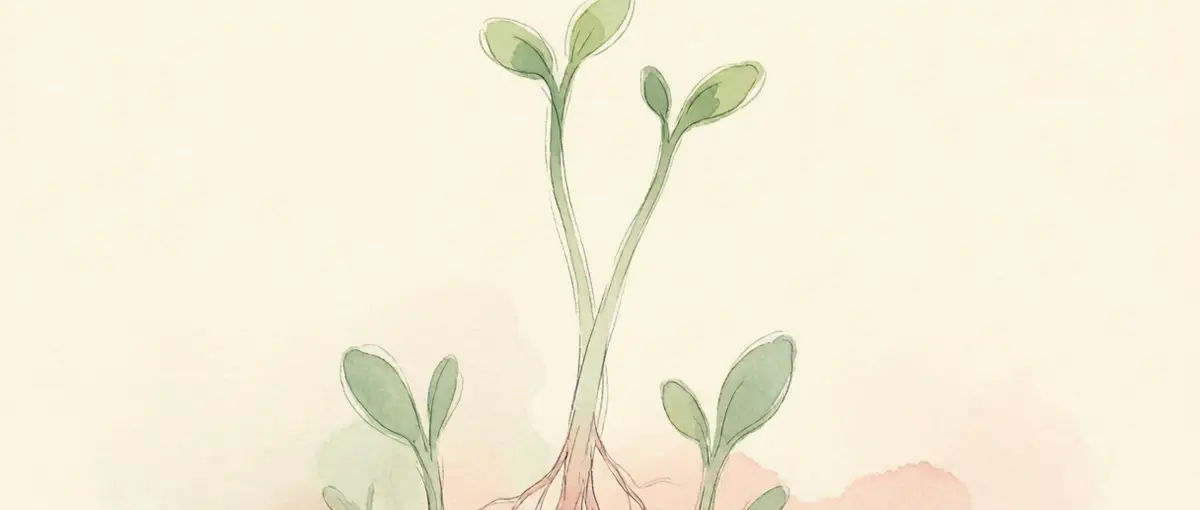
In BaZi, Mu Wang describes Wood energy running especially strong: growth, movement, and ambition that may outpace your roots. It is not a prediction or a character flaw. It is a warm, non-predictive lens for noticing when the drive to start, expand, and move forward becomes difficult to settle. Traditionally, Wood points to growth and upward movement; when that function is turned up high, many people recognize the experience as restless growth — always sprouting, rarely rooting.
That feeling of "I can't hold it back, it has to sprout"
You know this moment: a task wraps, others sigh in relief, but you already can't sit still — you have to take on more, start something else. Not for money or recognition, but because a spring inside keeps pushing — if you don't exert yourself outward, everything feels wrong. What mu wang corresponds to is exactly this state where "upward" has overpowered "settling." It isn't anxiety; it's an excess of life-force. You know you should rest, but the energy won't let you. It pushes you to the starting line but won't tell you where the finish is. So you are always setting out, rarely arriving; always making plans, rarely savoring the breath after one is done. Others see you as energetic; only you know it isn't a choice — the energy rose, and you went along, unable to stop.
When you slow down, you only get more restless
The twist is the reversal: the more empty time, the more panicked. A free weekend should relax you, but you toss and turn thinking "shouldn't I learn something," "shouldn't that be moved forward." This isn't diligence; it's Wood energy too full, with no outlet. Like seedlings in a field growing too dense, robbing each other of light and water, so every one ends up weak. You think you're "striving upward," but sometimes the energy just has nowhere to go and spins in place. To others you look unstoppable; only you know it isn't ambition — when emptiness arrives, the energy rises on its own, impossible to hold back. You've tried to lie flat, but ten minutes later you're up cleaning, replying, scrolling courses — that upward drive, with nowhere else to go, burrows into bits and pieces, leaving you emptier, so it rises again from the emptiness, a cycle with no end.
Grows too fast, but the roots never set
Another side of mu wang is growing fast but rooting shallow. Jumping directions three times a year, cycling through friend groups, signing up for a pile of courses yet mastering none — not a lack of smarts, but an upward drive too urgent to root downward. So you're tall, but a wind makes you sway. In experience, this is a floating of "always starting, rarely settling." You do many things, but looking back you can't grasp which one grew into a part of yourself. You've saved a hundred articles to "read later" but read few; met many people but can confide in few. Lush branches look nice, but the roots underground haven't had time to go deep. You know the problem is "shallow," yet the moment you go shallow, the energy urges you elsewhere, so you forever sway in mid-air, never landing, never piercing the soil.
Everyone else's pace always feels too slow
A mu wang person also carries a hidden tiredness: when you charge forward, those around you are still taking their time, and you can't help wanting to pull them along, give them a push. Not that you're domineering, but the speed of that growth won't let you wait. You urge friends to decide, colleagues to deliver, family to change — the intent is good, but on others it feels like pressure. You feel wronged: "I'm clearly doing this for their good." Yet what the other receives is "you're too urgent, I can't keep up." This misunderstanding is what mu wang most often carries: your vitality spills over onto others' rhythms, turning good will into urging. The more you want to help, the more easily you overstep; having overstepped, the relationship grows distant.
What you fear isn't the tiredness, it's the emptiness of stopping
A layer deeper: what mu wang fears is not busyness, but the emptiness after it ends. The moment everything is wrapped up and no new goal rises to take its place, you suddenly don't know who you're supposed to be. That energy is used to charging forward; when it stops it turns to blankness, like an engine still running but the car in neutral. So you keep piling tasks onto yourself, not out of greed, but afraid emptiness will swallow you. You envy those who "do nothing and stay at peace," but you've tried, and all you hear is that energy roaring in neutral. It's not that you can't stop — it's that you dare not, afraid that once you do, you'll see the self underneath that hasn't yet grown solid.
Once in a while you sit still, and meet a different self
Occasionally you do sit still. One Saturday afternoon, no task opened, you watered the sprout on the windowsill and watched its leaves stand up. The energy didn't urge you, and you didn't dodge it. You discovered you can stop — it's just that when you do, you need some concrete small thing to catch that drive, not a bigger goal, but a leaf, a cup of tea, a person sitting quietly. A mu wang person fears emptiness most, yet once you find soil for that energy, emptiness becomes breathing room. You don't need to extinguish your vitality; you only need to let it come down, onto something visible and touchable. That upward force was meant to break something through the soil, not to lift you into suspension.
It's not that you're frivolous, the energy is just too full
To call mu wang "you're just a frivolous person" is unfair. What it describes was never a verdict on character, but a tilt in inner energy: the function of growth turned up high, the function of settling relatively weak. Understanding this, much self-attack can be let go. You're not lacking in constancy; you only need the right outlet for that energy — not forcing it down, but letting it grow where it should. Give it soil and time, and that upward charge can grow something solid too. The real difficulty isn't "stop growing" but learning to put the drive deep rather than only floating upward. A mu wang person who roots three-tenths of that drive will find the rest grow steadier, last longer, and no longer fear the emptiness.
A bit of a modern take
Psychology describes an overactive "behavioral activation system": people who keep seeking novelty and achievement and feel unwell when idle — close to mu wang. The only difference: metaphysics sees it as a person's underlying energy tone, while the modern account sees it as a set of tendencies that can be noticed and slowly adjusted. Naming it is not to resign yourself to fate, but to let you, in the moment of "can't sit still again," feel less self-blame and more ease — "oh, that drive is up again." Seeing it as a tendency, not your identity, loosens much inner friction. You needn't destroy that upward drive; you only need to find it soil to grow into, shifting it from "scattered sprouting" to "growing solid."
What does Mu Wang mean in BaZi?
Mu Wang means that Wood energy is especially strong in a BaZi chart, symbolically emphasizing growth, movement, and upward drive. In a modern reading, it can describe a tendency toward restlessness or starting faster than you can settle. It is not a fixed diagnosis or a promise about your future; the useful question is how to give that energy roots, rhythm, and a sustainable outlet.
Want to understand your growth pattern more personally?
If this pattern feels familiar, start a personal BaZi reading to explore how the chart language connects with your actual habits, relationships, and choices. The goal is reflection and practical clarity, not a fixed prediction.
Keep reading: Huo-Yan: When the Light Comes On Too Fast, It Also Burns · Jin-Han: When the Edge Is Wrapped in Frost · Ri Zhu: Whether the "I" Inside You Stands Steady
Written and reviewed by DustEcho Editorial for self-reflection and cultural inquiry—not counseling, medical advice, or a clinical diagnosis.
Not sure where to begin?