Lin Guan: grown enough to step up and take hold
DustEcho Editorial
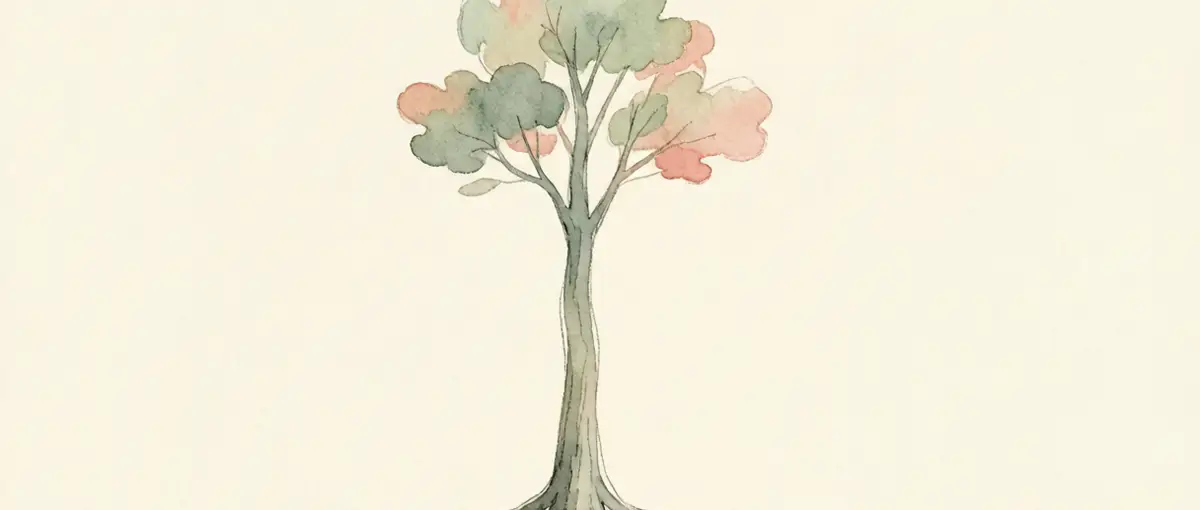
In the Twelve Life Stages, which trace the five elements' qi as it waxes and wanes, Lin Guan comes early—right after Guan Dai. Guan Dai is when something first takes shape; Lin Guan is that shape grown on, standing firm, ready for duty. Not yet the fullest peak, Di Wang, but the qi is steady and strong. In daily life it is a stage everyone knows: a thing, a bond, a self, moving from form to standing up and being able to carry.
What is Lin Guan?
We misread being able to carry as needing more preparation, but Lin Guan's plain truth is: you can go now. A plant roots before it can flower; a person crosses Lin Guan from learning to standing alone. So in life: a newcomer carrying work alone after the internship; a bond facing trouble together; a project finally going live. None wait for perfection—Lin Guan is already there. To see it is to notice you have stood up, rather than waiting for all to be ready. Too many fixate on not being prepared and push away catchable work.
Lin Guan at work: from holding back to catching on
At work Lin Guan often arrives in the instant of truly catching something for the first time. An assistant trained for years is handed a pile of matters and sorts them out without panic; an engineer who gave support owns a module going live alone. No big-shot aura, maybe sweaty palms—that is Lin Guan, the qi stands and carries. Many stall before it, afraid to take on or look weak. Lin Guan happens in taking hold while still shaky; an untaken chance is rarely shortfall but feeling not good enough. Catch one small task and the rest grows along that breath. So don't wait to be fully ready—grasp that first real felt sense of catching.
Lin Guan in relationships: from fondness to shouldering
In intimacy Lin Guan arrives when two people are willing to shoulder things together. Past the doting, when one hits trouble the other stands beside—the bond turns from a good feeling into an alliance able to bear reality's weight. Many stall here too, afraid money or future talk will break it, lingering in moonlight. That step into reality is what Lin Guan needs. Protecting a bond that can just barely carry is more real than floating; dodge less and it steadies. The reverse also happens: a bond just able to face something together, and you withdraw first for fear of responsibility—that Lin Guan is handed back by your own move. Those who dare are often not fearless, only more afraid of staying at sweetness without hardship.
Lin Guan in doing things: from preparation to action
Doing something reaches Lin Guan not in a grand launch but the first time it truly goes up and runs: the account you wanted to write gains readers after the first post; the course you wanted to make opens a first pilot. No fanfare, yet that is Lin Guan—the qi stands and runs. Too many lose by waiting to think it through, while Lin Guan happens in pushing before sure. A plan that never launches is rarely hard; it is stuck at no guarantee of zero risk. Allow an imperfect version to run and Lin Guan comes, steadied by outside response. Lin Guan says the opposite—because unsure, stand up and catch it first. Steadiness is caught, not waited for. So to start, don't wait for the perfect setup; take that first felt sense of being able to carry.
What Lin Guan fears most: not daring to stand up
The easiest failure is shrinking back when you can clearly carry: pushing the task away as it reaches your hand, closing the door as opportunity knocks, dodging when the bond should face things together. That flinch lets the standing qi leak—being able is denied, not grown. Lin Guan asks only: don't dodge, and trust yourself to let that felt sense land. Good states break from standing too late, not too early. So the lesson is not more preparation but holding back the retreat; you only need to reach out. The real fear is an "I am not good enough" hand pressing you back. Those who shrink are seldom unable—only panicked, missing the Lin Guan just arrived.
Don't mistake Lin Guan for the summit
Another mistake is taking Lin Guan as the top. Someone catches one thing and thinks they can relax; a bond weathers hardship and assumes no more storms. That one slack lets the standing qi scatter—Lin Guan is able to carry, not already full. Behind it lies Di Wang to charge toward; no time to rest. To see Lin Guan is to know you have stood and can move on, not reached the end. Treat it as a start, not a summit, and you walk steadier.
Lin Guan recedes, and returns again
In the cycle, after Lin Guan come Di Wang, decline, illness, death, then back to the beginning. So Lin Guan is not one-time: one thing decays, another moves from birth to Lin Guan. One stretch of state ends, not finished—another round waits. This comforts: stepping down never cancels being able to carry; you can restart from any small standing. Admitting Lin Guan recedes gives courage—knowing you can stand again, you stop fearing the fall. So stepping down from one Lin Guan, don't feel useless—you finished a round; the next waits for you elsewhere.
In the end: that felt sense of being able to carry is most precious
In life, Lin Guan is the instant of not yet fullest, yet standing firm, able to catch. It is not mysterious, nor a promise of how much you will carry—only a reminder that from form to standing, this step has its own weight. Don't shrink for not being strong enough; don't push away for being shaky. Guard every fresh felt sense of being able, and your life will always grow new green that can stand.
What does Lin Guan mean in everyday life?
Lin Guan can describe the stage when something has a form sturdy enough to carry responsibility: a project, relationship, or part of yourself can stand up and take hold. It is not a prediction of status or success.
How can I become ready to take on more responsibility?
Start with one clearly defined responsibility, ask what support and authority come with it, and review what you learn. Capacity grows through supported practice, not by pretending you can carry everything alone.
Want to understand why stepping up feels more frightening than preparing?
If you keep waiting until responsibility feels effortless, gentle self-exploration can help you take a supported step without confusing fear with incapacity.
A more modern way to say it
Psychology speaks of competence and role-taking: a person confirms they can by truly bearing tasks, and grows from the doing. Lin Guan only tells that same truth—dare to stand up, grow solid through bearing—in the language of the five elements. It does not read your fortune; it only reminds you that the felt sense of just being able is the emptiest yet most precious thing. Don't dodge, and don't retreat.
Keep reading: Guan Dai: the step from "alive" to "taking shape" · Shuai: how the breath loosens, little by little, after it has peaked · Si: the moment it stops — and the hiding place of the next turning
Written and reviewed by DustEcho Editorial for self-reflection and cultural inquiry—not counseling, medical advice, or a clinical diagnosis.
Not sure where to begin?