Orchid: It Blooms Fragrant Even When No One Sees
DustEcho Editorial
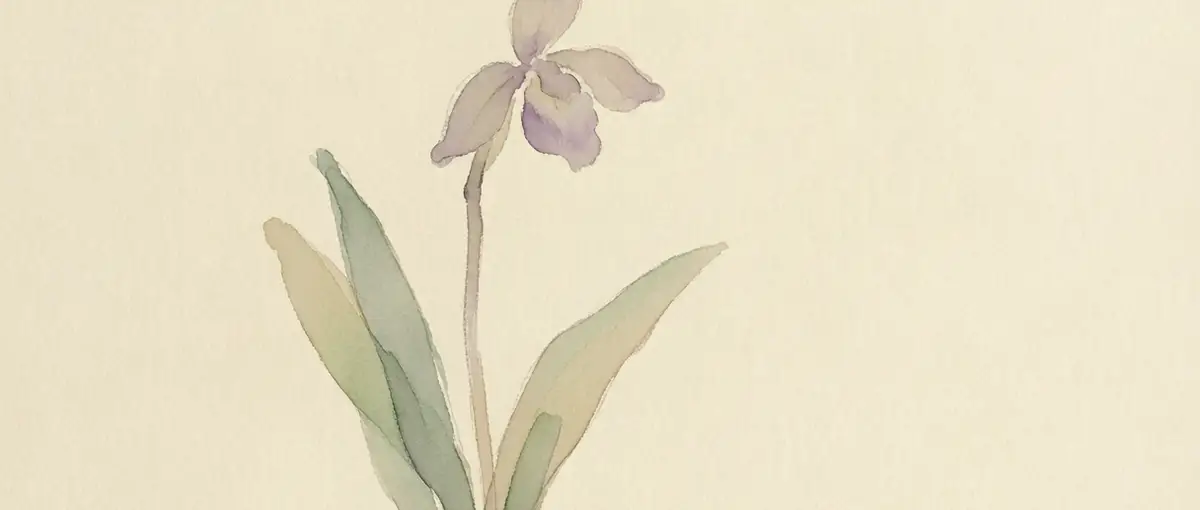
The orchid is the "flower of the gentleman" in traditional culture. Confucius passed through a hidden valley, saw an orchid growing among common weeds, and sighed: the orchid should be the fragrance of a king, yet now it is mixed in with wild grass — through the orchid he spoke of people: the capable are not always placed in the eye-catching spot. Later the saying "the orchid grows in a secluded valley, and does not lose its fragrance for lack of a viewer" became fixed phrasing, and the orchid joined the plum, bamboo, and chrysanthemum as one of the "four gentlemen." This piece will not tell you that "raising orchid boosts scholarship," nor that "orchid governs a destined marriage." We are only looking at where this plant stands in the culture, and at the bit of grounding it still answers to in a person today, when "no one sees."
It Grows in the Ravine, Not Grown for Others to See
The wild orchid sits on shaded slopes deep in the mountains — no one strolls by, no one photographs it; yet it sends up its spikes as it should and breathes out its fragrance as it should. Its existence does not depend on an audience. Too many people today treat "being seen" as the condition of existing: post something, no likes, so delete it; do something, no praise, so deflate. The orchid gently takes this apart — fragrance is its own business, not performed for someone to smell. The things you did seriously that no one knows did not drop to zero worth just because no one applauded. The orchid stands in the ravine, backing up everyone who "did it but wasn't seen": you fragrance yours; not smelling it is between you two.
Its Fragrance Is Faint, Not Pressing
The orchid's scent is not the nose-hitting kind like a rose; it is a wisp you notice only when you draw near, then it disperses into the wind as you walk away. It doesn't grab, press, or force you to smell. This "neither far nor near" measure is a lot like comfortable relationships and decent people: it has content, but isn't clingy; it has presence, but isn't intrusive. Our age is too used to "amplify" and "grab attention"; the orchid goes the other way — turn the volume down, and people are willing to draw near. A restrained fragrance is the one worth smelling long; too strong a scent tires you after a single whiff.
It Doesn't Compete with the Peony for Noise
The peony is the flower king, blooming full and red with everyone gathered round. The orchid doesn't go to that gathering. It doesn't grab a spot in the noisiest batch of spring, preferring to bloom quietly in some still place. This isn't cowardice; it's knowing what goods you are. Many people fret "I'm not red enough," "I'm less lively than others"; the orchid's way is — you don't have to go to everyone's home ground. Find your own shaded slope and bloom quietly, and that's fine too. Noise has its price, quiet has its price; the orchid chose the latter and lost nothing. It just doesn't take "being surrounded" as success.
The Leaves Outlast the Flower in Beauty
Orchid growers often say "leaves are better to view than flowers." The orchid's flowers are only a few, blooming a few days then fading; the leaves stay slender all year, loosely poised, never tiring to watch across a whole year. This is a lot like a person's real foundation: a moment's spotlight fades, but what stands year-round is that unhurried temperament and the bearing of how you do things. Don't live only for the "blooming" days; tend the leaves well, and you look good even when not in flower. The orchid quietly returns "being worth watching" to the everyday — those things that make no sound yet are always there.
Moved to the Study, It Keeps That Same Quiet
The orchid is invited from the mountains to the scholar's desk; soil changed, pot changed, yet the fragrance unchanged, the quiet unchanged. The environment improved, and it didn't float; it was praised, and it didn't grow restless. This "be yourself wherever you are" steadiness is rare. Today people easily change shape once recognized, and lose their bearings the moment they change platforms. The orchid demonstrates — after you are seen, after you are moved to a good place, best keep that secluded quiet; don't forget how you originally lived the moment you take the stage. Not floating when lifted is true quiet; change the instant you're praised, and that quiet was faked.
A Gentleman's Friendship Is Faint as Orchid
Everyone can recite "a gentleman's friendship is as light as water"; swap in the orchid and it's the same: good relationships aren't kept alive by intensity, but like the orchid's scent — faint, sustained, not choking. Too many relationships die of "trying too hard" — clinging every day, controlling every word, upping the stakes each time, finally tiring the other person away. The orchid teaches the relationship's negative space: near yet not entangled, distant yet not cold; that one wisp of scent is enough, no need to pounce. Friendships you can keep light tend to last the longest. It isn't coldness; it leaves each other room to breathe.
Whoever Gathers Orchid Must First Be Willing to Stoop
The orchid grows close to the ground, not shooting upward to grab the eye. If you want to see it, take it, you must first bend your waist. This is rather piercing: many truly good things are not at the height your level gaze sweeps, but down where you must lower your head to reach. We blame "talent unrecognized," but sometimes the viewer simply won't stoop. The orchid doesn't complain; it just keeps fragrant. Whether it's fragrant is its business; whether you stoop is yours. It quietly hands the initiative of "being discovered" back to the person willing to lower their head.
Orchid Stood Already in the "Book of Songs"
The orchid stood already in the "Book of Songs." "The Qin and the Wei, their waters spread wide" — the orchid gathered there was used to sweep away ill fortune; two or three thousand years ago it had already entered Chinese life. It is not a newly risen internet star; it is an old, quiet name. Today everything popular preaches "new," "trend," "explode"; the orchid is the opposite example: it has been "hot" for thousands of years, not by noise but by that quiet which never changed. A thing staying quiet this long is itself harder currency than a moment's noise. The orchid doesn't chase trend; it is itself the kind of good repeatedly proven.
Orchid and Hui, the Ancients Kept Them Clearly Apart
The ancients kept "orchid" and "hui" clearly distinct: the orchid bears one flower on a stem, while the hui can bear several. The orchid seeks few but refined, not leaning on quantity for show. Today everything preaches "output" and "update frequency," as if three posts a day were required. The difference between orchid and hui reminds you: one flower that holds its ground beats ten that only pad the count. More isn't better; it's whether that flower is real. To tend the flowers on one stem down to a single bloom, fragrant enough, comes closer to the orchid's meaning than opening a neckful just for noise.
What does the orchid symbolize in traditional imagery?
The orchid can symbolize quiet confidence, integrity, friendship, and value that does not depend on an audience. It is not a lesson in isolation; it is a reminder that recognition is not the source of worth.
How can I keep working when nobody is watching?
Choose a standard that belongs to you, make the next small piece of work, and let feedback be useful without making it your identity. You can still want recognition while refusing to wait for it before you begin.
Want to understand why your value feels unreal without applause?
If every good thing needs an audience to count, gentle self-exploration can help you notice the fragrance that was already yours.
To Write Orchid Is to Write a Confidence That Lives Without an Audience
We won't write "a room with orchid grass surely turns your fortune," nor "how many orchid blooms decide good or ill luck." What we write is this: when you're not under the spotlight and no one applauds, does that bit of good in you still hold? This old image of the orchid, crouching in the ravine, standing on the desk, watches everyone who "did it but wasn't seen" — the fragrance is yours, not performed for someone to smell; no one applauds, and you still can, blooming quietly, blooming with every right. It isn't telling you to admire your own fragrance in isolation; it's reminding you: your worth need not wait for an audience to stamp it.
Keep reading: Kan: Water is always there, so learn to stand in it · Kun: It never steals the spotlight, yet everything rests upon it · Li: It shines because it first found something to cling to
Written and reviewed by DustEcho Editorial for self-reflection and cultural inquiry—not counseling, medical advice, or a clinical diagnosis.
Not sure where to begin?