East: The Direction That Greets Every Morning
DustEcho Editorial
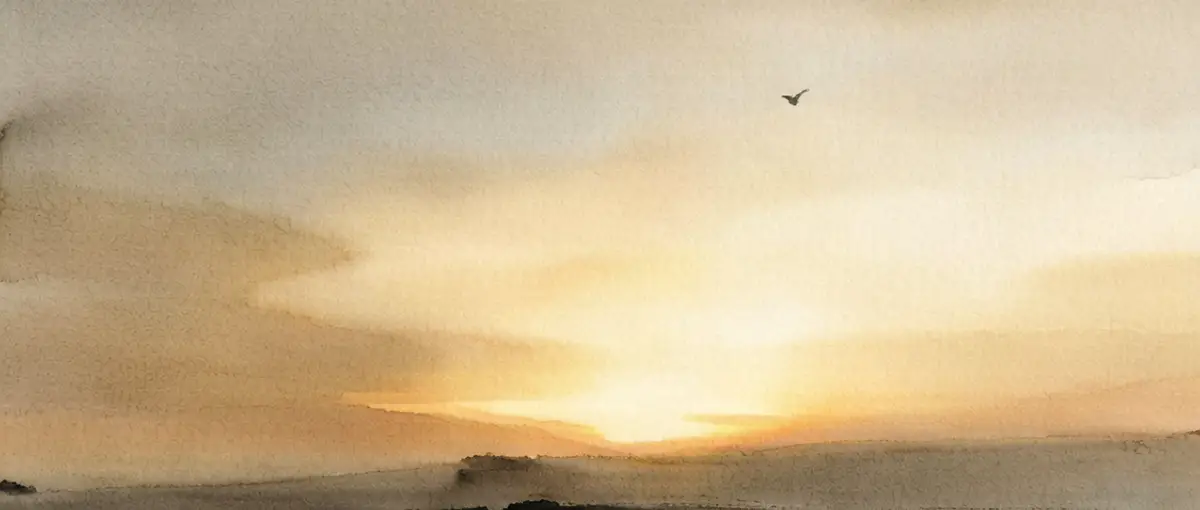
To the ancients east was never blank space atop a map. It was the direction of sunrise, where a day begins. Speak the word and what stands behind it is "beginning." East is not the left — it is where everything may start again.
What is East?
Modern readers find direction on a phone map: north up, west left, east right. The ancients knew east by the sky: wherever the sun rose was east. So east carried warmth and certainty. Whoever reads the road from the sky will not call east merely "the left."
Why the ancients placed the beginning in the east
The sun rises in the east — the plainest reason. Light comes, night recedes, work begins. In an agrarian world this mattered most: when the eastern sky brightened, labor found its reason. East and beginning were bound. The emperor sacrificed to the sun in the east; houses faced south to keep the morning light there. East became the start.
The most honest moment of the day is at dawn
Just awake, mind not busy, the heart feels clear. The eastern light is not yet tasks or lists. East gives space, not efficiency. What would not yield often loosens while you wash or pause by the window. Not magic — only that you have stopped performing. Facing east is the day's honest moment with yourself.
We are always waiting for an east wind
"All is ready; only the east wind is lacking." The phrase makes the east wind the final push. But what is it? Timing — a force you cannot control yet keep awaiting. Our generation waits differently: for an offer, a reply, a sign. When the wind fails, the boat stays still. But east says turn the bow before you can catch it.
Setting out is itself turning toward the east
Many stall on not being ready. But east never asks for readiness. The hard part is never the distance, only the first step. Walking east does not guarantee dawn, yet with your back to it you never meet your morning. East sets a low bar: you need not win — only move.
East also means uncertainty ahead
Do not picture east as gentle. To walk east is to turn from the known toward what has not happened. Ahead may be light, or fog. Its beauty is that it promises no outcome — only that a new day began, and whether it is good is yours to walk into. Many prefer the dark. East does not coax; it shines.
Why purple qi from the east is counted as fortune
When Laozi left the pass, the keeper saw purple qi from the east and knew a sage was coming. Its luck: good things arrive from the direction you were not watching, when least expected. East is the open side. Keep your door facing east and you meet the unexpected more often. Fortune is probability, and posture.
To face east is to give your back to the known
It sounds risky, yet only by turning your back to what is behind can you look ahead. East forces this turn. Many dare not, because behind them pile things not put down — a relationship, an attachment, an apology. But standing sideways, no one moves. East will not tidy your past; it only shines ahead.
Some beginnings ask for no readiness
Writers know this best: wait for inspiration and you get procrastination. The eastern sun waits for no one. It rises like a wordless coach, teaching that beginning deserves its own direction. You need not solve the whole plan first; tread the road out as you walk. East makes starting a daily act — not a heroic feat.
Do not enshrine east as a signpost
Some turn facing east into ritual: the dawn run, the journal, the fixed hour. That enshrines east and loses its point. East is the excuse that lets you move, not a rule to make you anxious. Miss a day and the sky will not fall. Its best state is to sit there while you forget it — until stuck, you turn and find it waiting.
What does east symbolize in traditional imagery?
East is associated with sunrise, beginnings, movement, and the first direction of attention. It does not guarantee success or function as a ritual instruction; it can simply be a reminder that starting is a choice made in the present.
How can I make a new beginning when I do not feel ready?
Choose the smallest visible first step: open the document, send the question, walk outside, or put one tool within reach. Readiness often grows after movement rather than before it.
Want to understand why beginning feels harder than planning?
If preparation has become a way to postpone turning toward the day, gentle self-exploration can help you make one honest start without demanding certainty.
Leave east by the window
If life allows one orientation, give it to east. Not because it is best, but because it is honest: it arrives on time. It shines by the window, reminding you that no matter the night, today holds one new direction. You need not bow; only turn and do the thing deferred. East charges no admission — only your turning.
Keep reading: Li: It shines because it first found something to cling to · Qian: Heaven never stops moving, so it never grows old · Pine: The Colder It Gets, the Less Willing It Is to Turn Yellow
Written and reviewed by DustEcho Editorial for self-reflection and cultural inquiry—not counseling, medical advice, or a clinical diagnosis.
Not sure where to begin?