Huan Yun in BaZi: When a Life Cycle Is Changing
DustEcho Editorial
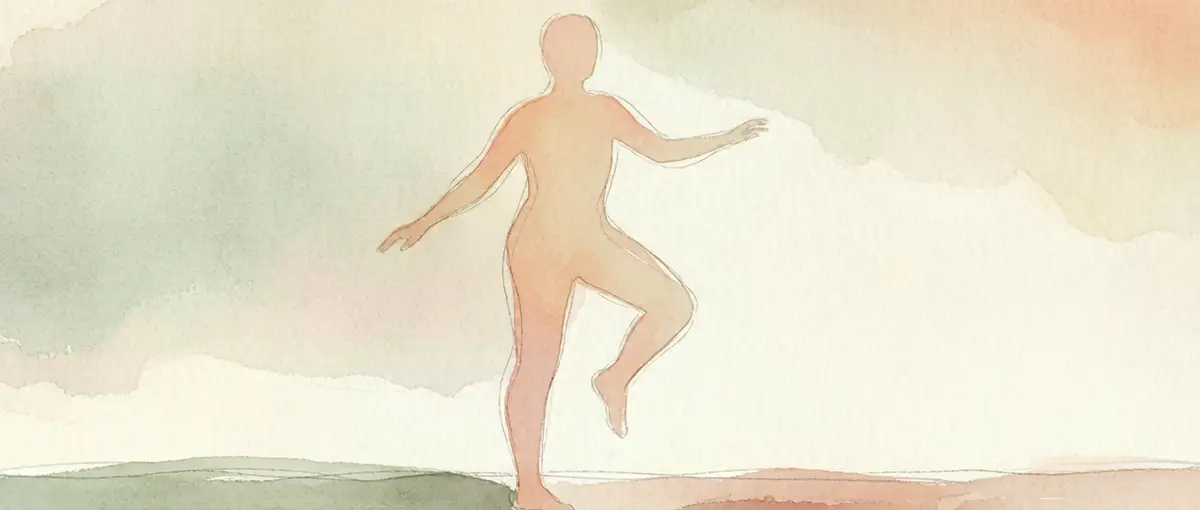
In BaZi, Huan Yun describes the in-between phase when one major ten-year cycle is ending and the next has not fully taken hold. It is not a prediction that your life is going wrong. As a warm, non-predictive lens, Huan Yun names the uncertainty of changing chapters: old methods stop working before the new direction feels stable, and finding your footing takes time.
You have probably known this unsteadiness: the old methods suddenly stop working, yet the new direction has not grown into shape; the relationships around you, the work in your hands, your own sense of who you are — all of it feels like standing on the seam between two boats, unable to reach either side. It is not that something has gone seriously wrong with you. It is that you happen to be caught between two stretches. The ancients placed this suspension of "the old chapter fading, the new not yet arrived" under the word Huanyun.
What does Huan Yun mean in BaZi?
Huanyun is often read as "the weather is about to turn," as if it were forecasting some great turning point. But its truest part is not the change itself. It is the seam — the vacuum between two stretches, the awkward zone where you are neither fully in the last chapter nor truly inside the next.
This experience is wearying: you are not entirely without footing, because the old life is still coasting on its inertia; you do not yet have a new support either, since the new rhythm has only just begun to surface in the distance. You are caught in the middle, the old half withdrawn and the new half arrived, both feet unsteady. What Huanyun corresponds to is this sway of "being stuck on the seam," not some clear turning point. It is not saying your fortune is about to turn. It is saying: you are standing between two stretches, and between them, swaying is simply how it goes. You have not hit a bug. You have simply walked to the exact top of the seam where chapter meets chapter.
Why People Sway Most During Huanyun
People sway most during Huanyun because the supports on both sides weaken at once. The old inertia is leaving; you are still in the habit of meeting things the old way, yet it gradually stops working. The new force is arriving, yet you have not yet learned its temper. So you lose the support of both sides at the same time.
What is more hidden is that the body and emotions often know "Huanyun is happening" before the mind does. You may grow tired for no reason, lose sleep, lose your touch with things that used to come easily — and yet be unable to say what exactly is broken. This sway is not you being fragile. It is you, between two stretches, temporarily without solid ground to stand on. The experience of Huanyun is often first shouted out by the body on your behalf — it notices earlier than your reason that the ground beneath you is changing. Someone changing jobs, with the old post handed over and the new one not yet begun, spent those two or three weeks unable to sleep and with a churning stomach, yet a check-up showed nothing wrong; once the new environment settled, the symptoms vanished on their own. He later laughed and said his body had known first that "I am between two stretches," while his mind kept stubbornly insisting "I'm fine."
Its Shape: Loosen First, Connect Later — Not a Clean Cut
Huanyun is most easily imagined as "a snap and the page turns." In truth its experience is this: the old force loosens first, the new force connects later, leaving a vacuum in between. For a stretch of time you will feel "unable to exert yourself" — not because you have lost your ability, but because the old handholds have loosened and the new ones have not yet been passed into your hands.
This is also why people panic during Huanyun: you think you have regressed, when in fact you are simply at the handoff point of two stretches, and some emptiness is only natural there. Understanding the shape of Huanyun is understanding that "this emptiness in the middle is normal" — it is not a malfunction, but the gap that any handoff must leave. You do not need to fill it at once. You only need to know that this seam will close. You have not stopped. You are only passing through a seam that every transition must cross. It is like moving house: those few days when the boxes are piled in the living room are the messiest, yet no one decides the home is falling apart because of those days — you know it is only not yet put away, and once it is, it is still the same home.
What People Tend to Get Wrong in the Gap of Huanyun
In the gap of Huanyun, people most easily make two opposite mistakes. One is to rush to fill the old holes with new methods — finding the old distasteful, they shove it all away at once, only for the new to fail to catch and the old to break first. The other is to cling desperately to the old script — clearly it no longer works, yet they keep forcing it, afraid that letting go means total suspension.
Both, in truth, come from the same fear: fear of that seam. But the seam is the very shape Huanyun has. The more eagerly you try to smooth it away, the more it jabs at you. What Huanyun reminds you is this: this emptiness is not proof of your failure, but the necessary passage of a handoff. You need not rush, in the seam, to prove you are still steady. You only need to admit — yes, I happen to be between two stretches right now, swaying for a while is no shame. I have seen someone, in the empty window of Huanyun, sign up for three courses at once and switch through three ways of living, trying to fill that seam with "busyness," only to grow more exhausted; and I have seen someone cling to an old contract, clearly the other party had grown weary, yet still forcing "let's try again." Both were afraid of that seam — yet the seam does not vanish just because you stop looking at it.
How to Keep Company with It
Treating Huanyun as "the middle of a move" is the most freeing comparison for keeping company with it. In those few days of moving, the home is certain to be messy — boxes stacked, things unfindable — yet you do not conclude your home is finished, because you know it is only not yet put away.
Huanyun is the same. Allow yourself these days to be "a little messy": the old recedes slowly, the new arrives slowly, and swaying in between is normal. Do not rush to define the new chapter, and do not linger in the old one refusing to leave; give that seam some time to close on its own. You do not need to hand over a certain answer during Huanyun. You only need not, because of the swaying, doubt that you cannot stand steady — you are not unsteady, you are simply between two stretches, and between two stretches, swaying is simply how it goes. Give that seam some patience, like waiting for glue to dry: the more you pick at it, the more it cracks. The old chapter will go, the new chapter will come, and you only need not lose yourself in the seam. When your feet are planted again, looking back, that sway was only evidence that you were changing position, not proof that you could not stand.
In Closing
The dignity Huanyun gives a person is that it puts a proper name to that seam: swaying is not your problem. It is a problem of position.
Want to understand a transition in your own chart?
If you feel caught between an old chapter and a new one, start a personal BaZi reading to explore the timing with context and self-reflection. The goal is practical clarity, not a fixed prediction.
So there is no need to rush to prove anything in the gap of Huanyun, nor to think less of yourself for being unable to exert force for a moment. The old chapter will truly turn, the new chapter will truly connect, and that seam that made you sway will at last close. The gentlest part of the word Huanyun is that it remembers: you are not regressing, you have simply happened to walk between two stretches — and every change of chapter must first pass through such a swaying seam. So if you are swaying now, do not rush to label yourself "unsteady." You are only walking on the seam; when your feet are planted, you are still the same you.
想接着读:大运:走着走着,整段日子的气就换了 · 流年:明明还是你,偏偏这一年格外不一样 · 沐浴:在某人面前、终于敢把盔甲卸下来的那一刻
Written and reviewed by DustEcho Editorial for self-reflection and cultural inquiry—not counseling, medical advice, or a clinical diagnosis.
Not sure where to begin?