Why do I always feel like I have to be the responsible one?
DustEcho Editorial
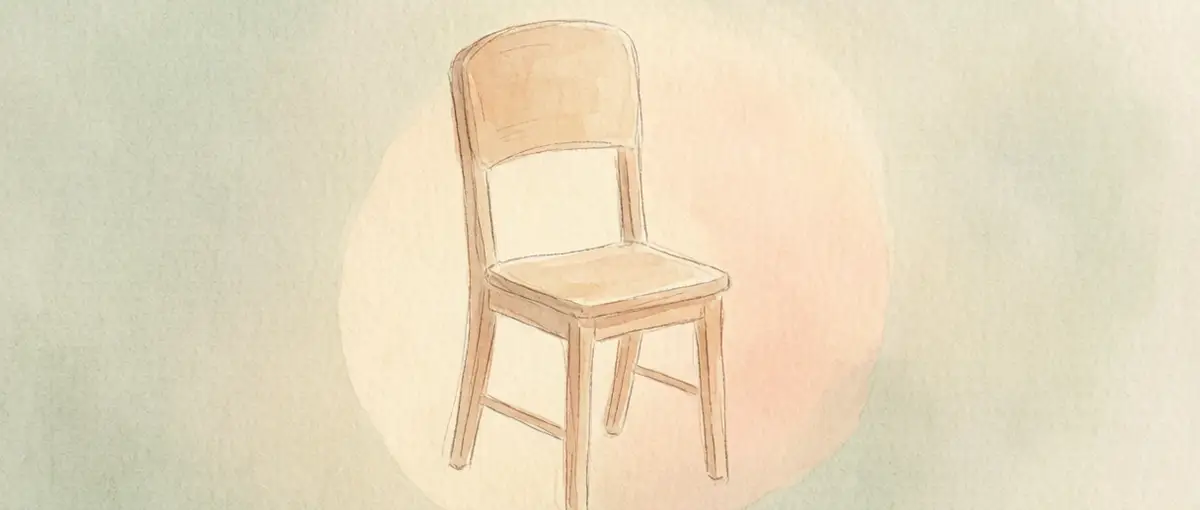
You are not born "the responsible one." You became it — quietly, early, and likely without ever deciding to. Somewhere along the way you learned to occupy a particular chair, the one that stays empty while everyone else heads for the door, and you have sat in it so long that standing up now feels less like a choice and more like a small betrayal of the room.
Picture the meeting that just ended. The whiteboard still carries half-erased flow arrows. The projector cable trails across the floor. The action items live in four different notebooks, claimed by no one. People stand, gather their bags, and chat about where to get lunch. You stay. No one asked you to. You simply felt that someone has to, so you wiped the board, powered down the equipment, collected the scattered tasks into a shared document, and sent the message: "Synced — please take a look." You weren't resentful doing it. You barely noticed you were doing it. It had already become a posture you learned before you learned to think about it.
This feeling — that you must be the one everyone can count on — is common at work, yet most people never think it through. It gets misread as a personality trait: you're naturally responsible, you're reliable, things are safe in your hands. But personality is a stable preference. "Someone has to" is a position. You were not placed in that chair at birth. You learned to occupy it in some early enough situation — maybe as the first child who grew up fastest at home, maybe as the new hire in a first job where no one trained you and you had to step up alone. Sit in a position long enough and it hardens into identity. This is the same tree that bears the fruit of feeling like everything at work depends on you: early on, you decided that depending on others is riskier than depending on yourself.
Why does it always land on me?
Because you didn't only take the task — you took the premise underneath it: if no one does this, everything falls apart. In any collaboration there are always fuzzy edges. Who turns off the lights? Who follows up? Who steps forward when something goes wrong? Most people keep a mild dullness toward those fuzzy edges and only move once someone speaks. You are different. You are unusually sensitive to those gaps, like a machine that automatically scans for boundaries and fills them the moment it finds one. The person who can't let go of control at work is often exactly this scanner — the need to control and the need to cover for others usually come from the same source.
The problem isn't that you do these things. The problem is that you treat them as yours by default. Over time, the people around you also learn to treat you as the universal patch. Not because they're lazy — because they discover the gap always gets filled, so they gradually stop bothering to ask "whose is this, really?" With every fill, you train their expectations. It has less to do with whether you're responsible and more to do with the fact that you can't sit with an empty space. Responsibility means a willingness to carry the consequences. You swallow even the empty spaces that belong to other people — including, often, the emotions you've taken on as your own.
Do I really have more of a sense of responsibility than other people?
Not necessarily. Responsibility is: this thing should be done, and I'm willing to carry what comes of it. The "responsible one," though, carries an extra layer — even when it isn't yours to manage, you manage it, because leaving it hanging there makes you uncomfortable. The first has a boundary. The second does not. Boundary-less carrying looks beautiful at first, like a reliable tenderness. But over time it becomes chronic depletion: you carry for others the part they should carry themselves, so they lose the chance to practice, and you accumulate a pile of exhaustion that was never yours to begin with.
Here is a small distinction you can practice. When an ambiguous task drifts toward you, ask yourself one question first: was this assigned to me, or is it merely related to me? What's assigned, you take. What's merely related, you only need to give a nudge — you don't need to take it over. Being dependable does not mean growing other people's parts onto your own body. Many people can't tell these two apart, and so they carry other people's lists as their own weight, all the way down the road.
| The "responsible one" | The truly responsible person |
|---|---|
| Fills the gap the moment it appears | First judges whose gap this is |
| Fears "if no one does it, it collapses" | Knows that even if it collapses, someone owns the fix |
| Often carries past the boundary | Carries only within the boundary |
| Tired, but can't say where the tiredness lives | Tired, and clear about which square it lives in |
What happens if I stop sitting in that chair?
This is the question that makes the chest tighten. Many people don't dare rise from that chair, not because they love sitting, but because they're afraid that the moment they stand, everything falls into chaos. But consider this: the scene looks like "only you can hold it" precisely because, for so long, you occupied the position and others had no need to grow. You step back half a pace, and others may not collapse — they may simply be meeting, for the first time, the need to find a chair of their own.
Of course, in reality there are genuine messes that no one else will pick up. The distinction is simple. If it's a structural gap — the team was always short-staffed, the process was always broken, the resources were always missing — then this isn't your personal chair problem. It's a place the system should patch, and one person sitting in it will never fill it. If it's a habitual gap — others could actually do it, they've just grown used to waiting for you — then you step back a pace and the other person usually steps forward a pace. Separate these two, and you stop mistaking every weight for your own.
There's a more hidden layer. Some people sit in this chair because, apart from "being needed," they aren't quite sure how else to confirm their place. When you stand in a relationship or a team mainly by being useful, putting down the patch feels like putting down your only support — and you wobble for a moment. This is close to the person who feels guilty the moment they rest, and to the one who only feels safe when busy: once your sense of worth is tied to output, stopping takes courage.
That chair is not your name
Being "dependable" can be a choice. It should never be a kidnapping. You can wipe the board today and not wipe it tomorrow. You can cover for this project and only do your part on the next. The chair is always there, but whether you sit, and for how long, is yours to decide. The moment you start separating "related to me" from "mine to be responsible for," you'll find that many gaps you thought only you could fill are simply waiting for you to let go — and someone will catch them.
You don't have to be the responsible one forever to prove you deserve a seat at this table. The table already has a place set for you, and it won't be taken away just because you don't stand up to clean now and then. Next time a meeting ends, try leaving a step before everyone else. The whiteboard might wait until tomorrow. And tomorrow, someone will handle it — or, it will turn out, it never mattered that much.
- The "responsible one" is a position you learned to occupy, not a fixed part of your personality.
- Responsibility has a boundary; covering for others past that boundary is depletion, not virtue.
- Before acting on a gap, ask: was this assigned to me, or is it merely related to me?
- Not every gap is yours — some are structural (the system's job) and some are habitual (someone else can step up).
- The chair is always there, but sitting in it is a choice you can make or set down, any day.
How do I stop feeling like I have to be the responsible one at work?
Before you fill a gap, ask whether it was assigned to you, whether the team can wait, and who would normally own it. If the answer is unclear, make the ownership visible instead of silently taking the task: "Who is taking this? I can help with one part, but I can't own the whole thing."
Is it bad to stop being the reliable one?
No. Reliability means making clear commitments and keeping them, not accepting every unclaimed task. Leaving a habitual gap visible can help the team distribute work more honestly; it does not erase the value of the work you have already agreed to do.
Want to understand why being needed feels necessary?
If responsibility has become the way you secure your place, gentle self-exploration can help you loosen the role without losing your care or standards.
Written and reviewed by DustEcho Editorial for self-reflection and cultural inquiry—not counseling, medical advice, or a clinical diagnosis.
Not sure where to begin?