How to Stop Saying "Sorry" When It Isn't Your Fault
DustEcho Editorial
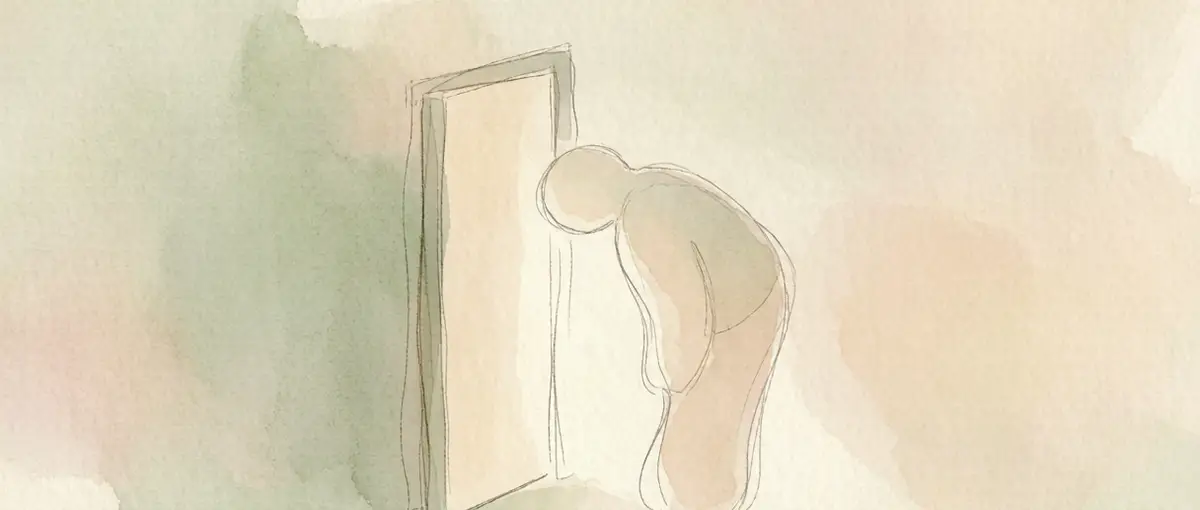
The fix is not to stop caring about other people — it's to stop using "sorry" as a reflex to shrink yourself. When you apologize for things that aren't your fault, you train everyone around you (and yourself) to read you as the one who's always wrong, and you quietly hand over responsibility you never earned. You can hold the moment, meet someone's feelings, and stay upright all at once.
A coworker sends the wrong file to the group chat, and out comes "Sorry, I should have reminded you." You bump into someone in the elevator — they weren't steady either — and you're the one bending down first with "Excuse me." A product has a bug, a customer complains, and your reply opens with "We're so sorry for the inconvenience" — even though the fault was never yours to carry. None of these is a real confession. They're a habit wearing a confession's clothes.
This reflex of apologizing first and thinking later is something a lot of people carry. It moves faster than thought, like a spring-loaded door: the moment someone pushes, you bow automatically. The problem is that, over time, you start shrinking in places where you did nothing wrong, as if you don't know how to face someone else's displeasure without first admitting fault. You're not unusual. Plenty of people who look composed at work have the same spring door inside them — they just smile calmly outward while folding themselves very small within. The longer that door stays sprung, the harder it is to remember the height you used to stand at, and the harder it is to believe that staying upright is actually safe.
Why do I apologize when I've done nothing wrong?
The most common reason is that you've turned "sorry" into the cheapest tool for keeping the peace. Say it first, and the other person's irritation seems to melt by half; the conflict gets pinned down before it can build. So your brain learns a trick — rather than wait for the other person to blow up, I'll confess first and snuff the spark at the source. This is the same trap described in why I only set boundaries when I'm angry: you're not unaware of your boundaries, you're just afraid to set them calmly, and so you use apology to avoid the confrontation instead of stating where you stand.
There's another layer: fear of the silence. When you say "sorry," you're really filling one or two awkward seconds of dead air, as if without a soft word the scene would crack open. That's the same mechanism as the over-explaining in why I over-explain when I say no: you're afraid the other person will misread you as not caring, so you sweeten the moment with extra words you don't owe anyone.
Deeper still is self-protection when your sense of self-worth runs low — lower yourself first, and no one can easily blame you. You'll see the same posture in why I try to be liked by everyone at work: trading likability for safety, as if being liked is the only thing standing between you and being rejected.
And then there's the inertia that builds from seniority and status stacked together: newcomers are quicker to apologize so as "not to seem offensive," and over time the apology turns into an invisible safety card that no one feels comfortable tearing up. But wear that card long enough, and people really do start to cast you as "the one who's always apologizing," and the spring door becomes part of your professional identity.
Does saying sorry first actually prevent conflict?
In the short term, it looks like yes. One "sorry" lets the other side exhale, and the conversation goes on. But in the long term, it's digging a hole between you and yourself: the more often you lower your head for faults you shouldn't own, the harder it is for others to see where the real responsibility lies, and the harder it is for you to trust that you did nothing wrong.
The more troublesome part is that over-apologizing quietly rewrites how others read you. A person who says "sorry" all the time gets read as "this really is my business," and so the work that was never yours and the blame that was never yours slide right over on the soft words you handed out. This connects directly to how to stop taking on others' work: you apologize first, and the other person conveniently leaves the ball in your hands, because you've already signaled you'll catch it.
So what it avoids is not the conflict — it's that one uncomfortable moment of facing "I can be in the right." In other words, you buy a little temporary calm with a single "sorry," at the cost of confirming, again and again, "I really am the kind of person who's at fault." That math is a loss over time, because the cheap peace you bought keeps getting more expensive.
What can I say instead of "sorry"?
The good news is that in most situations you only need a fitting substitute, not a confession. The phrases below can hold the moment without taking the blame onto yourself:
- "Thank you for your patience" — when someone has waited, you thank their patience rather than confessing fault.
- "I can see why that's frustrating" — you meet the emotion without admitting causation.
- "Let me help look into how we can fix this" — you turn toward action instead of assigning blame.
- "Got it — I'll follow up" — a neutral handoff, neither submissive nor aggressive.
Notice that a substitute line isn't about turning cold. Empathy and confession are two different things: you can fully catch the other person's feelings without laying the cause at your own feet. A user tangled up by a bug wants "someone is handling it," not "someone is at fault." The care is real; the blame is not yours to give away.
Try a small exercise: for the next week, before every "sorry" you're about to say, pause three seconds and ask yourself, "Did I actually do something wrong?" If the answer is no, swap in any one of the lines above. You'll slowly notice that the guilt in why I feel guilty after setting a boundary comes from the same place — you assumed that not bowing counts as an offense, when in fact it's just you standing at your own height.
Here's a quick reference you can keep in mind:
| When you feel like saying | Try saying instead |
|---|---|
| "Sorry I'm late" | "Thanks for waiting" |
| "Sorry, this is my fault" (when it isn't) | "Let's look at what happened" |
| "Sorry to bother you" | "I appreciate you taking a look" |
| "Sorry for the inconvenience" | "I understand this is frustrating" |
How do I stop the spring door from snapping shut?
The door snaps because the movement is automatic, and automatic things beat thinking every time. So the work is to put a thin wedge of pause between the push and the bow. You don't need a dramatic overhaul — you need one small delay that gives your thinking brain a chance to vote.
Start absurdly small. Pick the most meaningless "sorry" in your day — the one you say to a chair you walked into, or to a friend for texting first — and let that one go. Prove to yourself that the world doesn't end when you don't apologize. Then let the wedge widen: a "sorry" at work that you didn't mean, swapped for "thanks for your patience." Each time you choose the level gaze, the spring loses a little tension, and the door gets easier to leave open.
Save "sorry" for the times it genuinely belongs — the real mistakes, the real harm, the moments you actually owe someone an acknowledgment. For everything else, you deserve to finish your sentence in a level gaze. Next time your hand reaches for those three words, stop — maybe what you really wanted to say was "I'm listening."
Take it slowly. Unlearning a verbal habit that's hung around for years doesn't need to happen in a day. Start with tomorrow's most trivial "sorry," and trade it for a plain, grounded "I'm here."
How do I stop apologizing when it is not my fault?
Pause before saying sorry and ask whether you caused actual harm or are trying to soften someone else's discomfort. If you did not cause the problem, name what happened without taking blame: "Thanks for your patience," "Let's look at what happened," or "I understand this is frustrating." Save an apology for real responsibility, not for taking up reasonable space.
Want to understand the pattern behind your reflex?
Use self-exploration to notice when you shrink yourself to keep the peace, and what a steadier response could look like.
Written and reviewed by DustEcho Editorial for self-reflection and cultural inquiry—not counseling, medical advice, or a clinical diagnosis.
Not sure where to begin?