Why do I feel guilty the moment I rest?
DustEcho Editorial
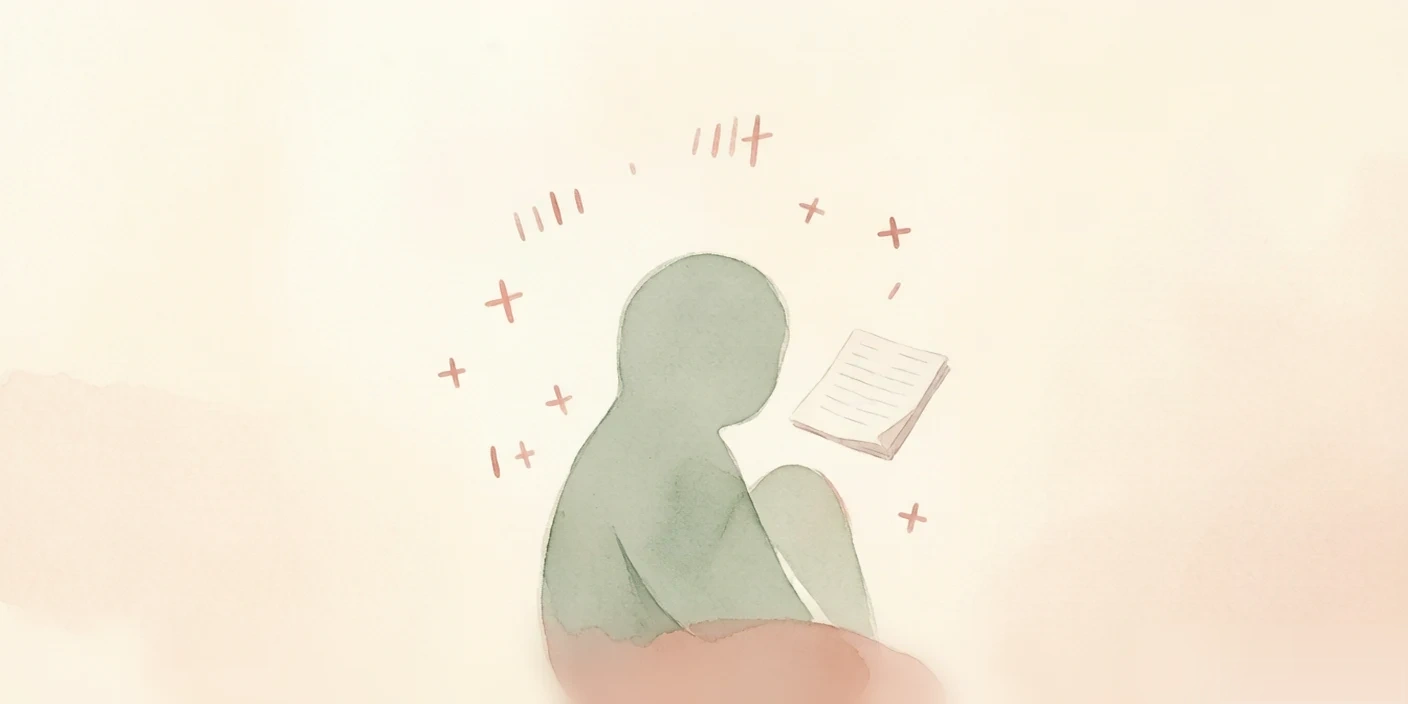
Finally the weekend came. You switched your phone to silent, lay down, intending to do nothing. But ten minutes in, your chest starts to tighten — a vague panic, as if something important had slipped your mind. You've done nothing wrong, yet you feel like you've skipped class.
This panic has impeccable timing. The harder you'd fought to get some free time, the louder it gets.
That guilt tends to show up the moment you finally let go
Think about it: it usually doesn't arrive when you're flat-out busy. Then you have no attention to spare for it. It picks the exact moment you're about to stop, after you've ticked the last task off, just as you're about to give yourself some space.
It's as if a voice says: everyone else is still online, how dare you clock out first?
You've tried reasoning with it: I've been working hard all week. But the voice doesn't listen. It holds to one rule — if you're not producing, you're wasting. So you can't even lie down in peace; you scroll until your eyes ache, yet you won't let yourself truly sleep, because "doing nothing" alone already makes you uneasy.
There's a bookkeeper in your head that never clocks out
Underneath, behind this guilt, stands a strict bookkeeper.
It works day and night, breaking your day into line items: what you did counts as income; sitting still counts as expense. It never allows a "surplus" — to it, rest isn't income, it's a deficit.
This bookkeeper mostly didn't start in adulthood. Maybe you grew up hearing "idle hands are the devil's workshop" or "lazy people amount to nothing"; maybe your family used "look how hard so-and-so works" to remind you not to stop; maybe you learned early that only by never stopping could you earn a passing "good enough." Over the years you trained yourself into a supervisor who draws no salary — you have to file a report just to catch your breath.
So it isn't really counting what you've done; it's making sure you "keep counting." As long as the ledger is open, you're safe; the moment it closes, you panic.
What you fear isn't rest — it's "falling behind if I stop"
Look one layer deeper. What many people truly fear isn't rest itself, but the second you stop, you'd see how exhausted you already are.
Being busy is good cover. As long as you keep moving, you don't have to face what efficiency has papered over — resentment at where you are, confusion about direction, or just plain tiredness you can't put into words. The moment you fully stop, all of it surges up. So you'd rather sit with mild discomfort than face the void of stopping.
There's another fear: falling behind. The world keeps hinting: one step slow, and you're out. You keep yourself wound in a "ready to go at any moment" state, and even rest feels like a state of readiness for battle. As if letting go for one second means someone behind you overtakes you, or some invisible standard strikes you off the list.
The two fears stack, and rest turns from "recovery" into "risk."
The more afraid you are to rest, the more you need it
Here's the twist: the more you feel "I don't deserve to rest," the more you actually need it.
Run long enough at a deficit and the ledger won't balance itself — it only sinks deeper. You think pushing through is being responsible, but by the end, efficiency, mood, and judgment all quietly depreciate. When you finally collapse, the loss dwarfs the time you saved.
And guilt doesn't disappear because you did more. It's a bottomless demand: you finish today, it changes the standard tomorrow. As long as you trade "output" for "peace of mind," it will always have something to collect.
So the problem isn't that you don't work hard enough. It's that you made "working hard" the only thing that lets you feel safe — and that thing can't actually give you safety.
How do I stop feeling guilty when I rest?
Start with a short rest window that does not depend on how much you finished. When guilt appears, name it as the old output ledger rather than proof that you are doing something wrong. Let the pause remain unproductive; recovery does not need to justify itself before it begins.
Why do I feel anxious when I finally stop working?
Stopping removes the distraction of tasks, so feelings and unfinished thoughts can become noticeable. That does not mean rest is unsafe or that you must immediately solve everything. Stay with a small pause, write down what can wait until tomorrow, and let your body learn that stopping does not cause collapse.
Want to understand why rest feels like a rule you are breaking?
If your inner bookkeeper only credits output, gentle self-exploration can help you build a kinder definition of enough.
Rest isn't stolen — it's something you were always meant to have
I'm not going to tell you to "learn to lie flat." That's too empty, and you couldn't do it anyway.
Next time that "I shouldn't stop" thought appears, just don't obey it right away. Try seeing it as the bookkeeper doing another round — what it calls "waste" isn't fact, it's just that it hasn't clocked out in so long it forgot you're human too.
You can run a tiny experiment: this week, pick a short window, produce nothing, and don't apologize to yourself. Don't fill it with your phone, don't "make it up later" to atone. Just let that time belong quietly to you.
You'll find the world didn't collapse because you stopped for half an hour. And that part of you, always wound tight, might finally get to breathe — a little.
Keep reading: Why Can't I Sleep When I'm Exhausted · Why do I feel drained even when I didn't do much · Why do I feel more tired after I rest
Written and reviewed by DustEcho Editorial for self-reflection and cultural inquiry—not counseling, medical advice, or a clinical diagnosis.
Not sure where to begin?