Why do I feel more tired after I rest
DustEcho Editorial
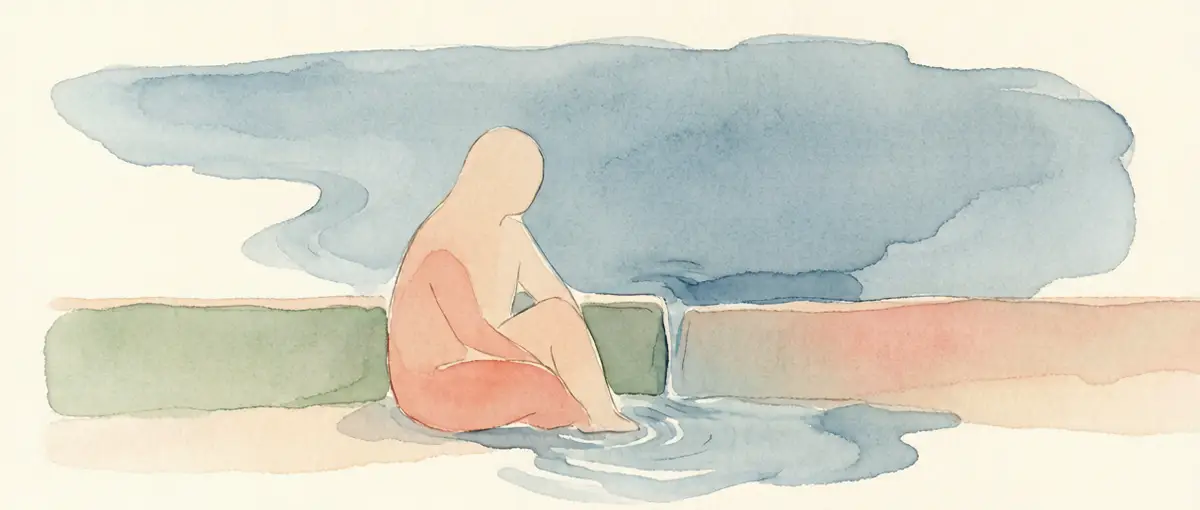
Last weekend I deliberately kept a whole day empty — went nowhere. But when I got up that evening, my shoulders were heavier than after a workday, and my head felt wrapped in fog. I stared at the ceiling: didn't I just rest? Why does it feel like someone beat me up?
This "more tired after resting" puzzle is more discouraging than plain exhaustion. It makes you doubt whether rest works at all.
Only when you stop can the body finally complain
When you're running nonstop, your body is actually sending signals the whole time: a sore back, heavy eyelids, a tight chest. But you have no bandwidth to receive them, so you press them down layer by layer, propped up by coffee and willpower. That doesn't mean the tiredness vanished — it means it got held down.
The moment you truly sit, truly lie down, that held gate loosens. The tiredness you'd been suppressing floods up. So when you feel "more tired after resting," the rest didn't cause it — the rest simply let you feel the tiredness that was already there.
Your "rest" might be quietly draining you
Then there's the sneakier kind. You think you're resting: scrolling, lying down to binge a show, mindlessly flipping through social feeds. But none of that is light — the screen light jabs your eyes, the algorithm tugs your attention, other people's lives crash in frame by frame. Your body isn't moving, but your mind is jogging the whole time.
That kind of rest is like pulling a plug and plugging it back in; the machine never really turned off. The next day the battery is no fuller, and on top of that you carry the frustration of "I rested and still didn't recover."
Rest is something you practice
We tend to treat rest as "doing nothing," but rest that actually recharges is usually "doing something different," not "letting the mind idle." A ten-minute walk, washing one dish, swaying to music — small things with a bit of bodily feel loosen the nerves far better than collapsing in front of a phone.
You can also try "acknowledge first, rest second." The first thing when you sit isn't to flee the tiredness, but to tell yourself: yes, I'm tired right now. Say the sentence you've been swallowing, and the body's clench often loosens by an inch on its own.
Why do I feel more tired after I rest?
Rest may be revealing fatigue that work and adrenaline kept below your awareness. It can also fail to restore you when the body is lying down but the mind is still planning, scrolling, or monitoring. Try a short, low-input pause and let the tiredness be information rather than evidence that rest is broken.
How can I feel less tired after resting?
Reduce the hidden work inside the break: mute messages, stop rehearsing tomorrow, and choose one quiet activity with no performance goal. Do not judge the rest by whether you feel instantly energized. If unusual or persistent fatigue continues, discuss it with a qualified health professional.
Want to understand what your tiredness is saying when you finally stop?
If rest makes the suppressed exhaustion visible, gentle self-exploration can help you build recovery that includes your nervous system, not only your calendar.
What's tired often isn't muscle — it's the switch that won't let go
By day you're actually bracing the whole time: answering messages, taking tasks, watching for where things might go wrong. That tension isn't only in the body; it lives in the nerves too. In rest, that switch doesn't necessarily flip off — it just shifts from "responding outward" to "calculating inward": tomorrow's meeting, the person you didn't reply to, a low hum of unease. The body lies down, but the nerves are still on duty.
So "more tired after resting" isn't always rest failing — sometimes the posture of rest is right while the switch is still lit. Real rest starts with letting that switch clock off, even for ten minutes: no planning, no fixing, no rehearsing what comes next.
You're not bad at resting, and you're not naturally fragile. You've just gone too long without letting your body finish the sentence "I'm tired." Give it a little time; as the gate settles, real ease can finally get in. Don't judge a rest by whether you bounced back at once. The switch takes time to fall; like a bubble that sank to the bottom, it needs a moment to float back up.
Tonight, first allow yourself to solve nothing
If you still feel tired tonight, don't rush to analyze "why." Try something with no purpose: zone out a while, play an old song, watch the window. These produce no result — and it's exactly that "producing nothing" that gives the switch, still lit, a chance to quietly die. Rest isn't a reward; it's the breath you already owed yourself.
Keep reading: Why do I feel emptier after being around people · Why do I turn every rest into a countdown · Why do I feel guilty the moment I rest?
Written and reviewed by DustEcho Editorial for self-reflection and cultural inquiry—not counseling, medical advice, or a clinical diagnosis.
Not sure where to begin?