Why Can't I Seem to Stop Even When I'm Already Exhausted
DustEcho Editorial
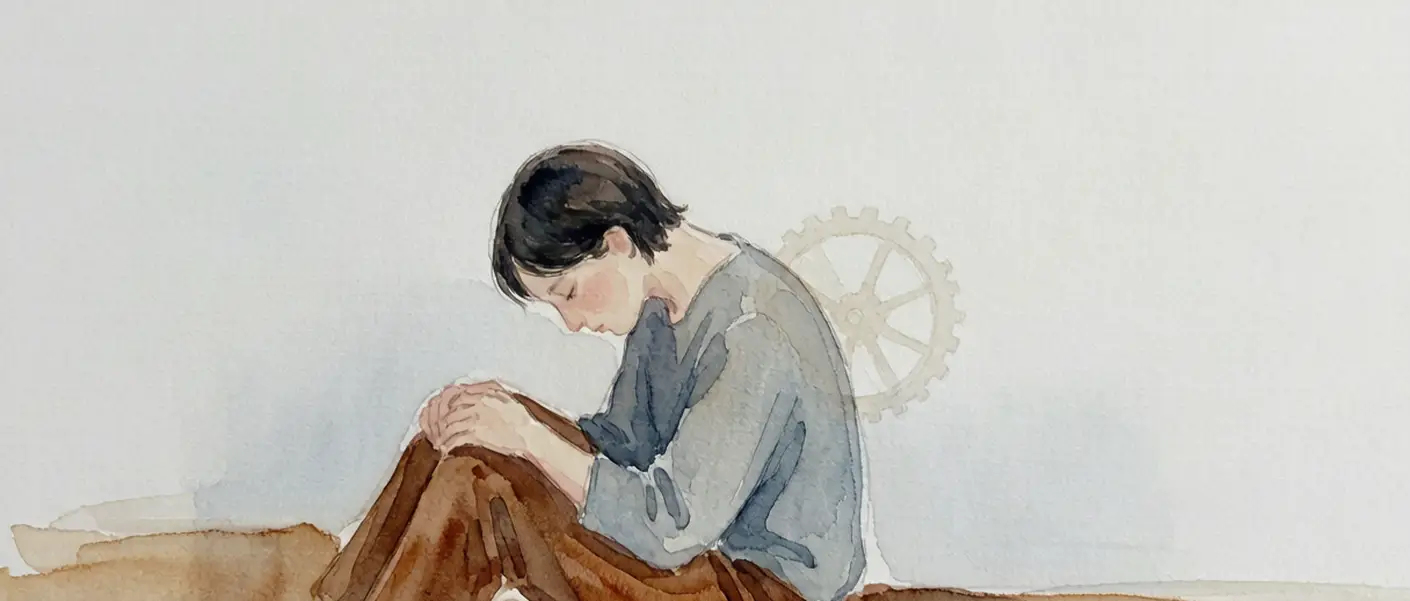
You know that moment: you're already slumped on the couch, phone put down—yet the small engine in your head is still idling. Nothing urgent is happening; it's just that the quiet of "doing nothing" suddenly feels a little unsettling. So you pick up the phone again, open the laptop again, go finish that thing that wasn't actually urgent. Afterward you're more tired, but at least that wave of panic is covered up.
This isn't you being lazy, nor you being diligent. It's a loop so many people sink into when exhausted: clearly already worn out, yet unable to stop.
Why can't I stop working even when I'm exhausted?
You may keep working when exhausted because stopping brings up guilt, anxiety, or the fear that you will fall behind. Work then becomes a way to avoid that discomfort, even after your body has run out of fuel. The problem is not that you do not understand rest; the work-and-worry loop has made rest feel unsafe.
Is it really because there's still work left?
We easily explain "can't stop" as "too much to do." But think back—those nights you really couldn't close your eyes were mostly not because three items remained on the list, but because once you truly went still, things usually covered by "being busy" floated up: maybe emptiness, maybe dissatisfaction with yourself, maybe that vague unease of being left behind by the world.
Moving is sometimes a very effective anesthetic. As long as your hands are doing something, your mind doesn't have to touch what only surfaces when you stop. So the more exhausted you are, the more likely you are to take on new things—not because they're needed, but because stillness is too unbearable.
Why does your mind keep flooring the gas after your body quit?
This body is actually more honest than you think. Tight shoulders and neck, sleepless nights, unexplained stomach discomfort—all of it is holding up a sign: enough, stop first. But the cognitive layer often doesn't listen. We quietly equate "rest" with "waste," and "stopping" with some kind of danger signal—as if the moment we stop producing, we'll be removed, left behind.
So a twisted state appears: the body has already shut off, but consciousness is still pressing the gas for it. You lie there, but the internal gears haven't stopped. This "present but not powered off" idling drains more than the work itself.
We've made "being useful" the only source of security
Looking deeper, people who can't stop often secretly believe one thing: I'm only worth keeping around as long as I'm still turning. The moment I stop producing, I'm nothing, replaceable. This belief may never be spoken aloud, but it keeps running in the background, like an uncontrolled script.
So it shows up as: the more exhausted, the more I must prove I can still carry it; the more empty, the more I fill the schedule. Not that I don't know I'm tired—it's that the instant of "not being needed" is scarier than tiredness itself. A machine can idle because no one told it that stopping is also a function.
What can I do when I cannot stop even though I am tired?
Choose a deliberately small stopping point: close one tab, put one tool away, or set a ten-minute transition before the next task. If exhaustion is persistent, affects your health or functioning, or feels impossible to interrupt, a qualified healthcare or mental-health professional can help you assess what is keeping the loop going.
Want to understand why stopping feels unsafe?
If rest immediately turns into guilt or another task, gentle self-exploration can help you separate being useful from being worthy.
You can try putting "shutting down" on the schedule too
I'm not telling you to learn to rest—that kind of advice only makes you more anxious. What I mean is: you can first put "doing nothing" on your schedule like a meeting, and give it a place free from judgment. Not a reward, not a sin—just the standby state a machine is supposed to have.
For example, today allow yourself ten minutes of producing nothing. No replying to messages, no tidying, no thinking "am I wasting this." Just be stopped. If panic hits in that instant, don't rush to cover it with another task—look at the panic, tell yourself: I'm just on standby right now, not broken.
You don't have to fix this ever-turning machine right away. But at least you can first recognize: what can't stop is not you as a person, but a script draped over you that you yourself may not even agree with. And a script can, once, not be executed.
The day you truly stop, don't immediately grab something new, and don't feel awful about it—that's not you getting lazy, that's you finally switching the machine back to standby. Standby isn't a malfunction; it's the precondition that makes going on possible.
Keep reading: Why do I feel drained even when I didn't do much · Why do I keep counting the hours till quitting time · Why do I feel guilty the moment I rest?
Written and reviewed by DustEcho Editorial for self-reflection and cultural inquiry—not counseling, medical advice, or a clinical diagnosis.
Not sure where to begin?