Why Can't I Get Excited About the Things I Used to Love
DustEcho Editorial
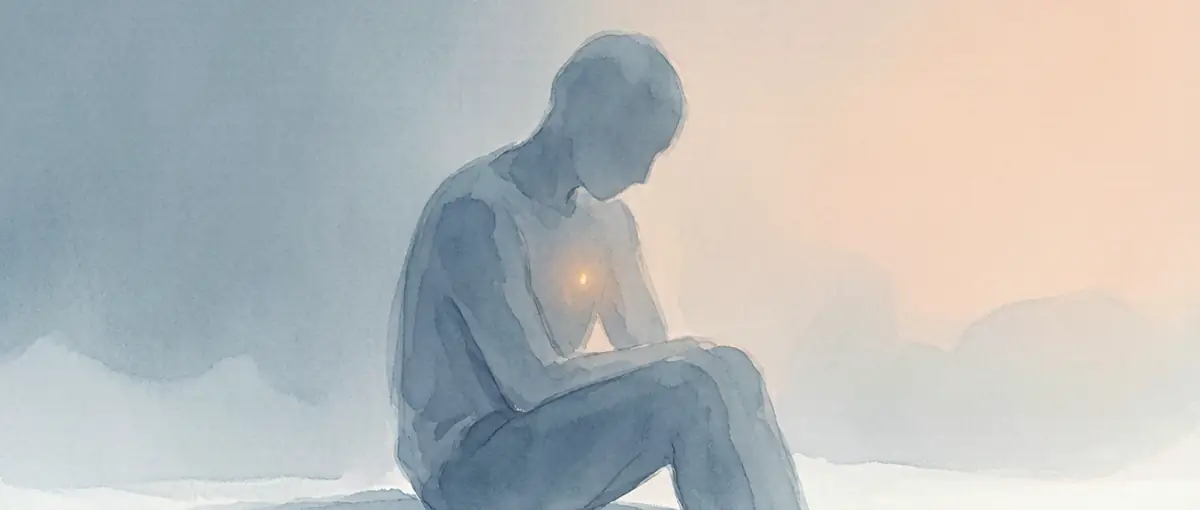
A friend texts you about something you used to love going to—a gathering, a scene you'd always show up for. Half a year ago you'd have shouted "I'm in!" Now you just stare at the screen and think, eh, too tired. Not the tired of the body, but the kind where even the wanting has been siphoned out. And a little panic creeps in: I wasn't like this before.
You scroll back through old posts, when a tiny thing could make you happy for days. Now good news and bad feel the same, muffled, like there's a pane of glass between you and it. It's not that you've changed or gone cold. The small fire of wanting inside you got quietly drained by something.
It's not that you don't want to—it's that wanting got expensive
We like to call this "lazy" or "burned out." They're different.
Lazy is knowing what you want and just not moving. This is not being able to summon the want at all. It's not that you lost interest in the thing—your whole start-up cost got pushed too high, like a phone at 1% battery, hesitating even to power on.
This isn't a personality flaw. For a stretch of time you overdrafted your wanting—into work, into things you had to carry, into all the "shoulds" that brought no joy. The balance in the account was long ago drawn down to nearly nothing.
You're not numb, you're just out of charge
Earlier we said "feeling nothing" is like a pane of frosted glass—a curtain you pulled to avoid getting hurt. What you have now isn't a curtain. It's the lamp with its plug pulled—not refusing to shine, just no power.
So don't scare yourself with "am I becoming numb?" Numbness is a defense; you can feel yourself hiding. This emptiness is plain depletion—you're still concerned about what's happening to you. That concern itself proves the wire is still there; it just can't carry current right now.
Resting sometimes empties you more
Here's the twist: you'd think two days off would bring it back, but when you actually stop, you feel emptier.
Because usually you're propped up by "scheduling," "planning," "rushing"—those things are like crutches that make you look like you're still walking. Pull them away and you realize you're not standing that steady. And rest doesn't auto-recharge—someone deeply depleted might lie down three days and recover only a sliver, nowhere near "full."
That's when it's easiest to make the mistake of urgently trying to "fix" yourself: sign up for a class, force yourself out, demand to be happy. But swiping an empty account only overdrafts it further.
Don't rush to get the spark back
If this is where you are now, don't treat it as a malfunction to be solved on the spot.
Start with something tiny: admit the spark is temporarily gone. Don't call yourself "boring," don't force yourself into the noise. Like a phone at 1%, you don't jam the screen mid-charge demanding it turn on—you set it on the charger and go do something else.
Now and then a small thing lights up on its own: a breeze, an offhand line, an old tune. Don't analyze why now, don't clutch it for more. Just let that faint light stay.
The spark wasn't something you lost—it was spent, slowly. For it to come back, it has to be charged slowly too. You don't need to become that easily-lit person again right away. You only need, while it's still dark, not to panic, and not to rush to prove you're still glowing.
Why can’t I get excited about things I used to love?
Stress, exhaustion, grief, low mood, or a long stretch of obligation can make familiar pleasures feel distant. Start with gentle exposure rather than forcing enthusiasm, and seek support from a qualified professional if loss of interest persists, spreads, or affects daily functioning.
Want to understand where your wanting has gone?
If even good things feel behind glass, gentle self-exploration can help you make room for a small response without demanding the old spark back on schedule.
Keep reading: Why do I feel guilty for enjoying anything at work · Why do I feel relieved when a meeting is cancelled · Why do I make my rest into another job
Written and reviewed by DustEcho Editorial for self-reflection and cultural inquiry—not counseling, medical advice, or a clinical diagnosis.
Not sure where to begin?