Huagai in BaZi: What Solitude and Difference Can Mean
DustEcho Editorial
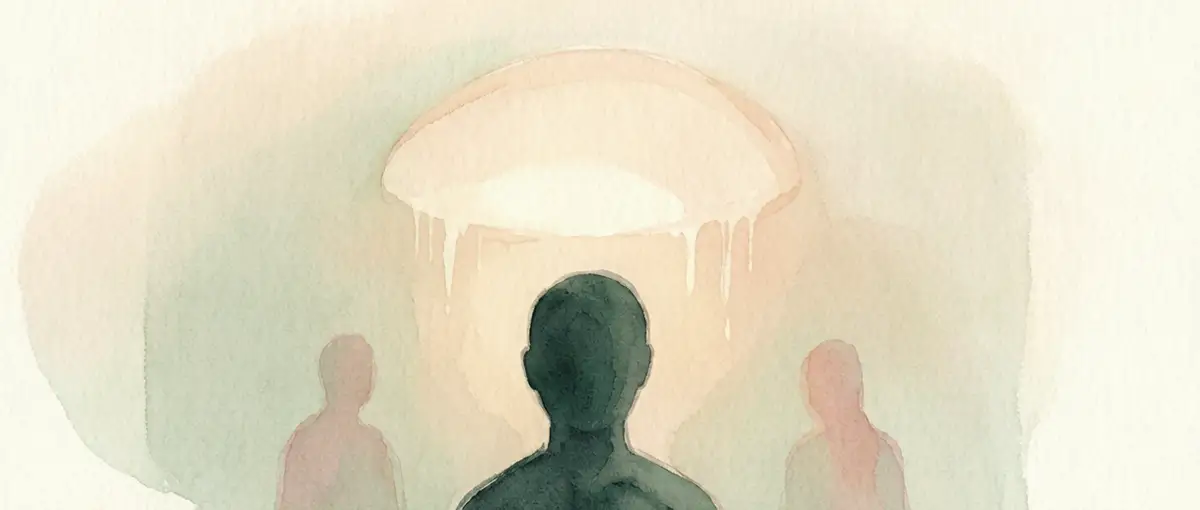
In BaZi, Huagai is traditionally linked with artistry, solitude, and standing apart. It does not mean you are destined to be alone or that being different is a flaw. Read as a warm, non-predictive lens, Huagai names the experience of protecting an inner world that not everyone understands, while still wanting relationships that respect your pace and depth.
You probably know someone like this. The things they love, others don't get. The jokes they make, others can't pick up. The details they notice, others find boring. It isn't that they're putting on airs — they're genuinely deep inside a world of their own. While everyone else chases the popular show, they're listening to some obscure album; while others trade gossip, they're flipping through a book no one has heard of. They're not admiring themselves in isolation — it's just that the flower blooms where most people never walked.
For those with a heavy huagai, "being special" comes with two faces. On one hand, that specialness is what they treasure — a taste, a craft, a way of seeing the world, the very ground of how they differ from others. On the other hand, being special also means being hard to fully understand. People tell them "you think too much," or "what's so good about that," until, bit by bit, they learn to fold that part away and enjoy it alone.
In relationships, what they fear most is being pulled toward "ordinary." A well-meaning friend says "don't take it so seriously," "good enough is good enough," "everyone does it, just go along" — words meant as comfort, but to them they sound like an erasure of the very thing that makes them them. They aren't being stubborn; there are things they genuinely care about. They aren't being proud; there are pleasures they simply can't bring themselves to trade for something lesser. Few people can appreciate that specialness — but one is enough.
They're also often mistaken for "putting on a show." In truth they mostly have no desire to perform at all; they just live too sincerely. They can hear layers in a song no one else notices, see care in a painting no one else sees, find an angle on a thing no one else reaches. That sincerity reads as out-of-place in certain rooms, but to them it's simply how they meet the world. You find them fussy; they find the world too careless.
Their loneliness often arrives precisely when they're being watched. On stage they're talking about what they love, people applaud below, yet no one really catches the layer they meant. A crowd calls them "you're amazing," but no one asks "why do you love this?" Being seen and being understood are not the same thing, and those with a heavy huagai are usually seen far more than they're understood. So the bigger the crowd, the thicker the glass between them and it — the noise belongs to others; the quiet is their own.
Creating, crafting, digging deep — that's how they keep company with themselves. The phrase ties huagai to talent, and such people usually have one thing they "fall into and lose all track of time": writing something, drawing something, tinkering with something, grinding some obscure interest down to its bone. It isn't escaping people; it's where they come fully alive, on their own frequency. Don't laugh at them for "going down another rabbit hole" — at the tip of that hole lives the truest version of themselves.
They also tend to draw in people who "want to fix them." Someone likes them, yet keeps trying to pull them out of "their world": "stop doing these useless things," "be realistic, can't you," "what's going to become of you like this." The words start from a good place, but what lands is a demand to hand over the part of themselves they treasure most. They're not refusing advice; there are just things they can't bear to throw away. The person who can hold that specialness is the one who truly gets close.
That "specialness" is sometimes a weight. Others envy how clear and decided they seem, yet can't see the loneliness behind the clarity — because they're clear, they find it hard to settle; because they have convictions, they're often told "don't be so stubborn." They don't refuse to settle on purpose; it's that certain compromises, once made, would make them dislike themselves first. This persistence leaves them alone, but also leaves them real. Caught between the two, they mostly choose to be alone.
Walking alone isn't having no one with you; it's that the ones with you have to get it. Those with a heavy huagai aren't friendless — their friends just have to be "on the same wavelength." They can talk with one person till late at night, and say nothing in a room of ten. That kind of tuned-in company is worth far more than crowded small talk. So their social circle looks small, but its quality is high — the ones who stay are the ones who can catch that specialness. Don't count their friends; watch whether their eyes light up when they're with them.
The hardest part is not letting them hide their specialness clean away, just to "fit in." People around them love to say "you're too much on your own," "make some ordinary friends," "stop living in your own world." But that "own world" of theirs isn't escape — it's where they actually live. Drag them out and they become a silent shadow among the crowd; let them back in and they're whole again.
Their world, outsiders can't enter — yet the door is open. Those with a heavy huagai aren't barring the door; it's that the view inside is too personal, and most people turn around at the threshold. They don't force anyone to stay. The ones who make it in are usually people lit up by some "specialness" of their own — the same seriousness about an obscure hobby, the same stubborn care for one thing. Such meetings are rare, but when they come, they go deep. So their world looks lonely, but the door has always been open; it's just that the visitor has to be "on the right frequency" to reach the inside.
Special people are also afraid of being "too much to deal with." Don't assume they're always at peace. Now and then those with a heavy huagai doubt themselves: am I asking too much? Am I hard to be around? Should I tuck that specialness away, so more people stay? The doubt usually surfaces late at night. Luckily, most times they talk themselves through it — a specialness tucked away isn't becoming easier to be with, it's losing yourself. So in the end they plant that flower back where it was, even if fewer people see it.
They're not unsociable; it's just that the group's topics often don't connect. When those with a heavy huagai go quiet, it's mostly not pride — it's that they genuinely can't get a word in on the current subject. Others gossip, compare pay, chase the trend; they're wondering whether to finish the tune they've been listening to for half a year. Not looking down on those topics — their mind is simply elsewhere. Talk about what they know, and they come alive at once — words tumbling out, eyes bright. So don't blame them for killing the mood; blame the room for never reaching the part they're warm about.
In the end
Huagai, at bottom, is a layer of distance born from being special. It is not pride, and it is not pity — it's just that some people are meant to walk alone on their own frequency. If someone like this is beside you, don't keep trying to pull them back to "normal"; and if you are such a person, don't apologize for being "too special." A person can make a whole, vivid world of their own, and that in itself is a kind of skill. At bottom, the solitude of huagai is not the grievance of being misunderstood, but the quiet of having made yourself clear to yourself. And if you are such a person — don't be quick to smooth that specialness away. That is the part of you that is most you.
What does Huagai mean in BaZi?
Huagai is traditionally associated with artistry, solitude, and a sense of being different in BaZi language. It is not a fixed label for loneliness or social failure. A useful modern reading asks how your need for depth and space can coexist with relationships where you feel understood rather than forced to become more ordinary.
Want to understand your need for space and connection?
If feeling different has shaped the way you relate to people, start a personal BaZi reading to explore the pattern with context and self-reflection. The goal is practical clarity, not a fixed prediction.
Keep reading: Peach Blossom: the quiet warmth that draws people close without a word · Tianxi: the small gladness that turns up when you can least afford it · Bathing: The Moment You Finally Dare to Lay Down Your Armor in Front of Someone
Written and reviewed by DustEcho Editorial for self-reflection and cultural inquiry—not counseling, medical advice, or a clinical diagnosis.
Not sure where to begin?