Hong Luan in BaZi: What Relationship Anticipation Can Mean
DustEcho Editorial
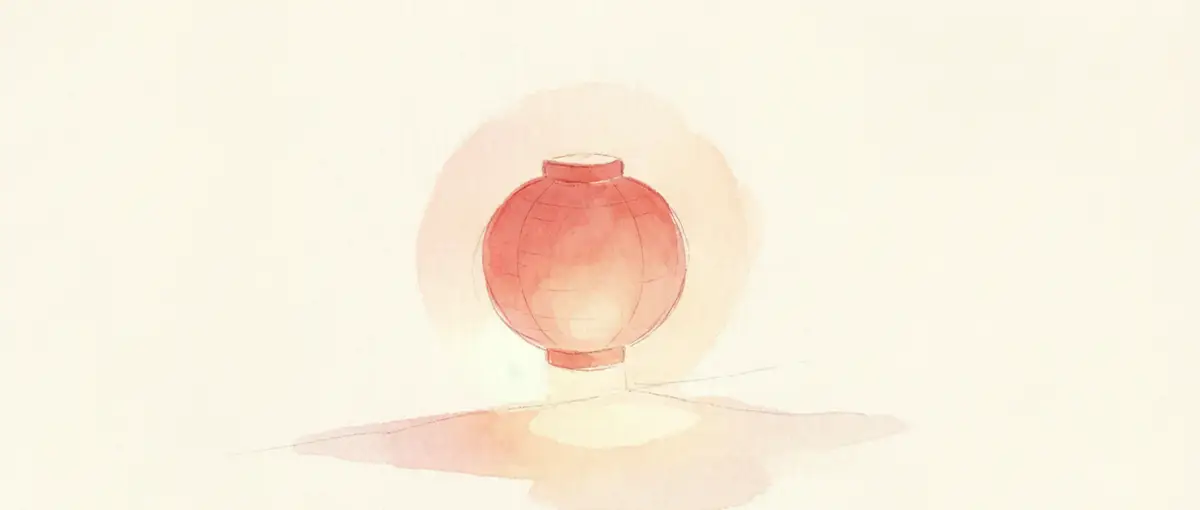
In BaZi, Hong Luan is traditionally linked with relationship joy, marriage, and happy news. It is not a guarantee that a partner or wedding must arrive. Read more gently, it names the anticipation and seriousness that can arise before a connection becomes clear: you care for yourself, make room for closeness, and still keep enough boundaries not to rush toward just anyone.
What is Hongluan?
Hongluan is often summed up as "when the hongluan star moves, happy events come to your door," as if its arrival obliges you to register the marriage, throw the banquet, run through every step. But back in the experience, hongluan is closer to a life junction being switched on: you suddenly feel it's time to take a person, a thing, seriously. It isn't a destined arrangement but a kind of inner readiness — you're prepared, and so the once-plain days gain a weight worth looking forward to. What hongluan moves isn't the result called "marriage"; it's that long-absent seriousness with which you meet a relationship. It lights a lamp, not a script already written.
When it moves: you start writing someone into your future
The clearest trace of hongluan is that you begin, without quite meaning to, to write someone into your "later." The "let's get together sometime" you used to say offhand suddenly wants a concrete date. The weekends you once couldn't be bothered to plan, you'll now keep open for the other person. Even things you were fine doing alone, you start imagining "if he were here." This isn't losing yourself — it's the first time, inside a relationship, you feel that "two" is more worth anticipating than "one." Hongluan is this loosening, the slow drift from "me" toward "us" — not violent, but clear, like a door pushed open a crack and light spilling through.
Why we both long for it and fear it: joy carries weight
Hongluan brings joy, and it brings fear. Because seriousness means risk — the more earnest you are, the more you dread the letdown. Many people feel hongluan stir and pretend nothing's happening, afraid that if they take it seriously, a breakup later would only hurt more, so they turn deliberately cool. Others rush to lock the relationship down, wanting to nail this joy in place with a promise on paper, just to calm themselves. But the joy of hongluan was weighted from the start; it doesn't grow lighter because you're afraid. What it points to is not force, but the courage to stay sincerely kind even inside uncertainty. Fear is normal. Just don't let the fear snuff out the joy.
Don't turn hongluan into a KPI: catch it when it comes, and lose nothing if it doesn't
Modern people easily convert hongluan into anxiety: "everyone else is married, why hasn't my hongluan shown up?" Then matchmaking and finding a partner become tasks to rush through, like meeting a quota. But hongluan isn't a punch-clock. The more you stare at whether it's coming, the more it seems to play hide-and-seek with you. When it hasn't moved, live your own life solidly, so that when hongluan does come you can catch it. And when it moves, don't treat it as a metric you must complete. Happy events are the icing, not the pass line of life. You are whole, and only then does hongluan mean something more. If it never comes, you are not a half-finished person.
Hongluan arriving doesn't mean the worries are over
Another misunderstanding is thinking that once hongluan moves, everything after is sweet. But in reality hongluan only gives a relationship the courage to begin; the adjustments, the fights, the compromises that follow are none of them skipped. It lights the lamp at the entrance, not the lighting for the whole road. So when hongluan moves, don't mythologize it — simply walk in calmly. A truly good relationship isn't held up by a single star but walked into being, day by day, by two people willing to go together. What hongluan gives you is a starting point, not an end; a footing, not a guarantee.
Hongluan and taohua are not the same: one is weather, the other a junction
It's easy to confuse hongluan with taohua, but they are two different things. Taohua is everyday allure, the effortless drawing-near, like fine weather that arrives when it pleases. Hongluan is the seriousness of a junction, the preparation of "I'm going to take this seriously." You can have abundant taohua yet no hongluan — plenty of company around, but no one truly stepping into your future. You can also have hongluan stir while taohua stays ordinary — not much drawing admirers, yet certain of one person. So don't measure the depth of hongluan by the noise of taohua. When it's time for the lamp, the noise can't help.
When hongluan moves, leave the door open for the other person too
Seriousness is not pressure. Many people, the moment hongluan stirs, pile on all its weight — asking every day "what are we," "do you even love me" — and the other person, crushed by that seriousness, wants to retreat. Real seriousness is earnest yet not clingy: you write the person into your future, but you also leave them their place in the present; you've lit the lamp, but the other person must want to push the door open themselves. Push too hard and even the brightest lamp is only harsh. What hongluan points to is a state where both people are ready — not you alone rushing to set the whole stage and finish the other's script. You rush to hand in the paper, and the other person only wants to flee; going slowly isn't being unserious, it's leaving seriousness enough room to breathe.
When it hasn't come, what you're nurturing isn't waiting
When hongluan hasn't stirred, the worst thing is to spend your days "waiting for it." The more you leave yourself empty and depleted, the more important it seems, and the more tempted you are to grab just anyone to fill the gap — ending up in a relationship you didn't truly want. Not stirring is precisely your chance to make yourself solid: live your work, your friends, your hobbies with real savor, so that when the lamp truly lights, you walk in as a whole person, not a hole urgently needing to be filled. In the end, what hongluan points to is usually people who can stand on their own even without it.
Hongluan is not a matter of comparison
Don't measure your hongluan against someone else's. Some feel it at twenty, some not until forty; stirring late doesn't mean worse, only that everyone's junction differs. Happy events keep no standard timetable — light your lamp at your own pace. Comparing with others only turns joy into anxiety: "people my age are all married, why haven't I moved?" Hongluan was never a contest. It's your own lamp, lit at the moment that belongs to you. Another's lamp, however early, doesn't light your road; when yours lights, it's exactly right.
In closing
Hongluan is not fate's verdict, but life's small echo to those who take it seriously: you deserve to be well treated, and you deserve to treat a person with real care. When it comes, don't panic and don't rush to define it; when it doesn't, don't fret — first live your days into a shape you like. What hongluan teaches is never how to hurry a marriage, but how to be serious in a relationship without losing yourself — this seriousness outlasts any result. It also reminds you: a happy event isn't a check-in, nothing you must announce to everyone. You lighting the lamp quietly carries more weight than rushing to proclaim it. That lamp will light, sooner or later; and what you must do is first raise yourself to stand steady, so that when the time comes you have the footing to walk in.
What does Hong Luan mean in BaZi?
Hong Luan is traditionally associated with relationship joy, marriage, and celebratory news in BaZi language. A non-predictive reading does not treat it as proof that a relationship will happen on a schedule. It is more useful for reflecting on readiness, hope, care, and the boundaries that help a connection stay healthy.
Want to understand your relationship timing more personally?
If you are trying to balance hope with self-respect, start a personal BaZi reading to explore the pattern in context. The goal is reflection and practical clarity, not a fixed prediction.
Keep reading: Guasu: the quiet that feels right when you'd rather sit apart from the noise · Huagai: Why the ones who are a little too special so often end up alone · Bathing: The Moment You Finally Dare to Lay Down Your Armor in Front of Someone
Written and reviewed by DustEcho Editorial for self-reflection and cultural inquiry—not counseling, medical advice, or a clinical diagnosis.
Not sure where to begin?