BaZi Chart Interpretation: Finding the Missing Support
DustEcho Editorial
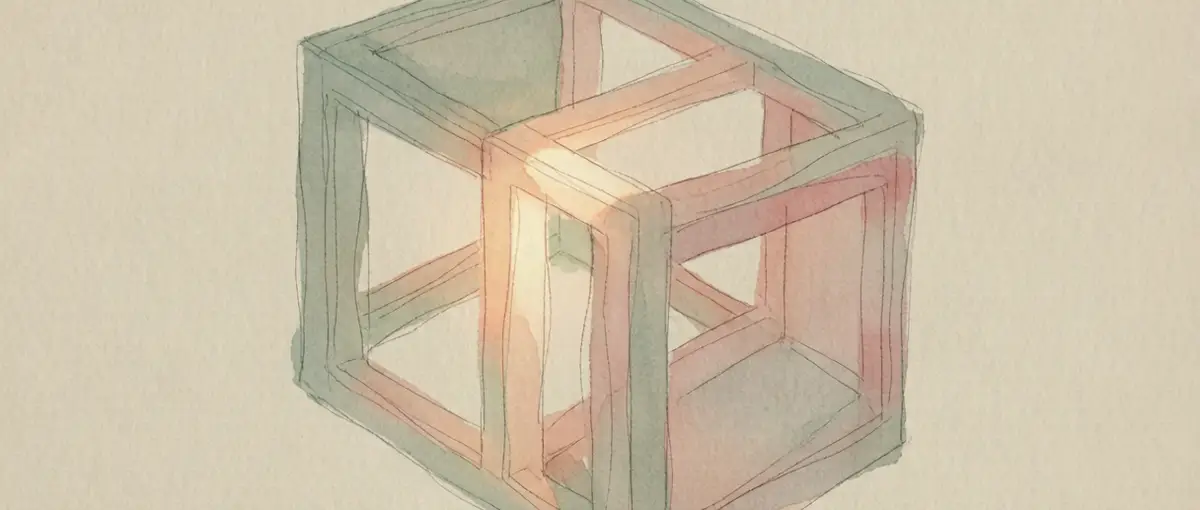
In a gentle BaZi chart interpretation, the "yong shen" is the one element the whole chart most lacks and most needs. It is not a character verdict but a "tendency of qi": the energy that, once it arrives, moves the chart from imbalance toward flow. A house stands on one load-bearing beam; a machine won't turn for want of one part. The yong shen is that beam, that part. Brought into life, this is a plain observation: each person and situation has its one missing thing. Fill it and the system runs smoother; leave it empty and no matter how hard you push, something feels off.
In BaZi chart interpretation, start with the bottleneck
Most people fill gaps and only grow tired. The yong shen runs the other way: it points only at the gap that "comes alive the moment you fill it." Life is full of such moments—someone sharpens their skill yet won't ask for resources; a devoted couple is missing just the words "I care about you." Not big problems, but that unmade move keeps the whole board twisted. This is why some hardworking people fall a breath short: they fill what they are good at while the real gap sits empty. Recognizing your yong shen means stopping the scattershot filling and finding the point that jams everything. Finding it helps more than ten unrelated tasks. A writer with polished prose keeps failing to place a piece—the problem is "not daring to submit." His yong shen is "send it out"; no amount of prose practice supplies it.
In a relationship, what your needed supply looks like
In intimate relationships, everyone's yong shen differs. Some lack "being affirmed"—a partner's "you did great" lets their whole body unclench. Some lack "space"—watched too closely they retreat; given room they draw near. Miss it and you love as you wish to be loved: you give company and he feels suffocated; you give freedom and she feels neglected. Neither is wrong; the two beams sit in different places. The easiest way to tend a bond is to see first what the other lacks. A relationship that fills the right one move feels far looser than one where both pour in effort yet keep missing. Often a fight is not about not caring—it is that both push where the other is not lacking, while the real gap goes untouched.
At work, where is your load-bearing beam
Work has a yong shen too. Some are stuck on "nobody sees me"—capable but in the corner, needing exposure and a voice at key moments. Some have skill yet drown in trivia; lacking "delegation and boundaries," handing off the small stuff frees the real work. Many grind yet skirt the gap: they are one moment of being seen, one of being entrusted, away. A designer with solid technique stalls on "can't present"—one round of expression practice and every project passes; his yong shen is "being understood." Someone drowned in trivia only flails in the mud; one grant of authority and they spring back. Their yong shen was never "try harder." Promotion is sometimes not "doing more" but "filling the part of you no one has seen." Seeing it is not playing politics; fill the jamming point first, then the rest gains leverage. A year of blind effort beats less than the one right move.
The yong shen shifts with circumstance; it is not nailed down
The yong shen is not a fixed block for life. The same person, in different years and situations, lacks different things. Early in your career you lack "being seen, being given a chance"; after a family you may lack "space to breathe"; at mid-level you lack "being in charge, not drowned in trivia." Treat it as a permanent answer and you miss what jams you now. Asking "what exactly am I stuck on right now" helps more than clinging to an old answer. Fill the present gap and the board lives; pummel an old one and you only drift further off. To admit the yong shen changes is to admit you keep moving—which is simply what being alive looks like.
Finding your yong shen is also making peace with yourself
Many resist "I lack something," feeling that a gap equals inadequacy. But the yong shen does not judge your lack; it only points the way—fill the missing move. Admitting you lack a piece is not weakness; it frees your strength from "pretending to be whole" and concentrates it where things jam. Someone who feels "not good enough anywhere," once they swap vague self-attack for "I just lack being understood," relaxes: not that I am no good, only that one spot went unfilled. Finding the yong shen turns fuzzy self-reproach into one concrete, actionable sentence. It also spares a foolish act: stop tormenting yourself to "get better in every dimension" and first ask what one move you most need to fill.
Do not force-find a yong shen that does not exist
The opposite trap is to think you "lack everything," grab for supply everywhere, and tangle things worse. In the five elements the yong shen is usually one type, at most two—more is not better. Life is the same: someone who wants "affirmation, space, money, freedom" mostly fails to see the one move that jams them, merely grasping in anxiety. Real self-possession admits "what I lack most is just that little bit"; fill it and the rest loosens. Wanting everything equals no yong shen, and the board stays scattered. Admitting you lack just that one move, rather than greedily grabbing all, makes it easier to bring the board to life.
In closing: fill that piece and the board comes alive
Brought into life, the yong shen is the point of "one fill and it flows." It is not mysterious nor fate-deciding; it gathers your attention from scattered "where am I not good enough" into the precision of "which move am I stuck on." Find it, fill it, and the whole board often comes alive—and all you may need is that one light move.
What is yong shen in a BaZi chart?
Yong shen is the useful support a BaZi chart appears to need most. It should not be treated as a guaranteed lucky element or a one-line answer about your future. In practice, it is a prompt to ask what would restore balance, capacity, and movement in this particular chart and in this particular season of life.
A more modern framing
Psychology speaks of "key resources" and "bottlenecks": a system turns not on average level but on the shortest board, the most lacking resource. The yong shen simply retells "find the bottleneck, fill the key" in the language of the five elements. It does not teach fortune-telling; it only reminds you not to exert too much force in the wrong place.
Want to understand your own chart?
If the idea of a missing support feels familiar, a guided reading can help you connect the language of yong shen to your real questions instead of leaving it as a glossary term. Start a personal BaZi reading when you are ready.
Keep reading: Changsheng: The First Sprout, That Tender Moment When Something Has Just Come Alive · Convergence and Surrender: one force gathered to a single point, one released to the flow · Di Wang: the Fullest Breath, and the Sign It's About to Turn
Written and reviewed by DustEcho Editorial for self-reflection and cultural inquiry—not counseling, medical advice, or a clinical diagnosis.
Not sure where to begin?