Ji Shen in BaZi: What Quietly Drains Your Good State
DustEcho Editorial
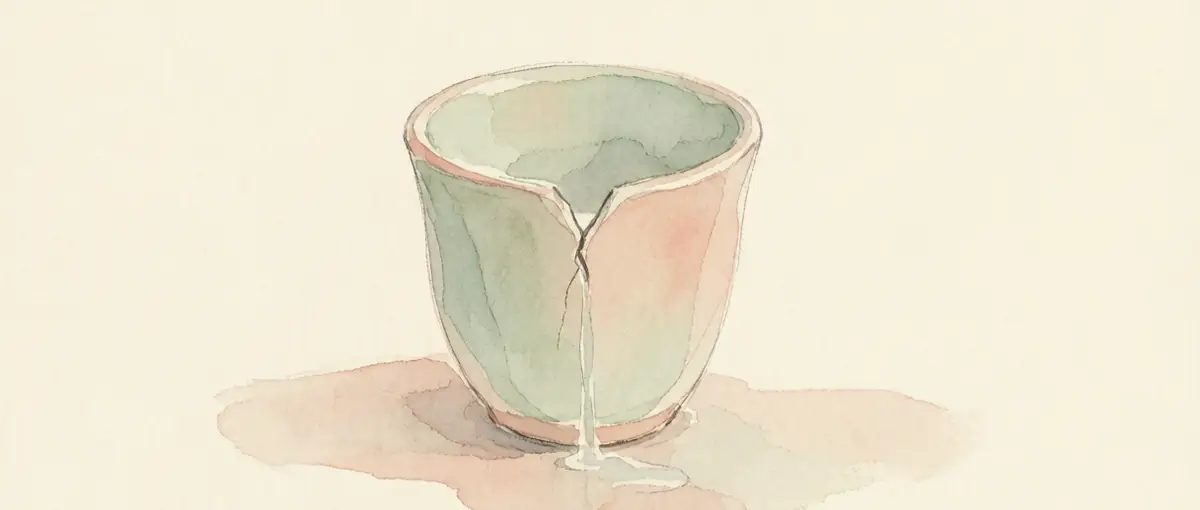
In BaZi, Ji Shen is the name for the kind of energy that clashes with and drains your Yong Shen — the support you need most. It is not a villain or a prediction of disaster. Brought into life, it points to the people, things, or habits that are not necessarily bad, yet make the good state you just recovered feel sticky and heavy the moment they appear.
Not bad — just out of step with your setup
The ji shen is easily misread as a "disaster star" or a "villain," but in the traditional frame it's only defined against the yong shen, which is the supply you need. The ji shen is the energy that washes that supply away. In experience it's more like something out of tune: not inherently vicious, just twisted against what you need most right now. Someone who just quit staying up late and got their energy back may be threatened less by a person than by the old friends who always pull him into late-night plans — not bad friends, but a scene that leaks away the energy he'd just recovered. Someone who just secured a quiet life may be threatened by the group chat that keeps manufacturing urgency. The first step is swapping "who is harming me" for "what is draining my energy." The first makes enemies; the second reveals the drain.
In close relationships, who drains you the moment they come near
In intimate relationships, the person who makes you shrink and tense up the moment they come near often matches that drain. Some fear being questioned repeatedly; a casual "can you even handle it" from a partner bleeds away half a day's confidence. Others fear being swept into someone's emotions; when the other collapses, they collapse too. This isn't to say the other is bad — your two energies are simply twisted against each other, and the steadiness you'd just built gets scattered by their rhythm. Seeing this is as practical as cultivating your yong shen — not reforming the other, but leaving yourself a buffer. Know which interactions drain you, and don't plunge in when you're weakest. Treat the ji shen as a reminder, not evidence: it tells you where to protect yourself now.
At work, which environment quietly eats your state alive
The workplace ji shen shows up as an environment where you do things yet feel emptier the more you do. Someone who needs focus, dropped into a team that fights fires daily and bombards with messages, keeps the ability but loses the energy. This isn't "you're not good enough" — the room is leaking your energy. Trapped there, many try harder, and the harder they push the emptier they get, because they replenish in the wrong direction. Recognizing it means asking "is my state being held up or eaten," not only "am I not pushing hard enough." Change what should change, set the boundaries that should be set. Some misread it as "tempering" and resist three years, only to find what got spent was their most vigorous stretch of energy. See it sooner, lose less.
Your body names the ji shen before your mind does
The most honest signal often isn't in your thoughts but in your body. You did no heavy work, yet after seeing a certain person or sitting through a certain meeting you're exhausted as if drained dry; you arrive somewhere and your stomach clenches, your shoulders rise, you can't sleep deeply. The body makes no moral judgment; it only reports that this energy is draining you. Treat the body's tension as a reminder — not telling you to avoid everyone, but asking what is draining you right now. The body recognizes the ji shen a step before the mind; listen to it and save yourself much self-doubt.
The ji shen moves — it isn't nailed in place
Like the yong shen, the ji shen doesn't stay fixed for life. The same person fears a different energy in different seasons: early in work, "no one to guide me"; after a family, "drowned in trivialities"; leading a team, "hollowed-out decisions." Treating it as a permanent label makes you miss the force actually draining you now. So ask yourself regularly "what am I most afraid of being disrupted by now" — more useful than clutching an old judgment. The ji shen changes, which means you're moving too. Protect the present energy over resenting past drains.
Don't turn everyone into a ji shen
The easiest misuse is this: the more afraid you are of being disrupted, the more you mark everyone as "someone who'll drain me" and retreat into an island. But most drains aren't intent — they're a mismatch of rhythm, occasion, timing. Someone who always appears when you're tired isn't necessarily your ji shen; maybe you two just aren't on the same frequency. Recognizing the ji shen is to see which interaction drains you, not to label anyone a villain. Treat the ji shen as a map, not a weapon, and you'll feel looser.
When the ji shen shows up, you don't always have to dodge
Recognizing it doesn't mean detouring forever. Many drains can't be avoided — that relative who drains you, that chore you must do. What the ji shen teaches then isn't to flee but to "suit up before you go": knowing it will drain you, fill yourself up first, and replenish the moment you're done, so you never settle accounts running empty. Treat it as weather, not disaster, and you'll fear it less. Dodge what should be dodged; meet the rest with your guard up. That is the real benefit of seeing it.
In closing: seeing clearly what drains your energy
In life, the ji shen is the person, thing, or environment that makes the situation you'd just gotten on track feel sticky the moment it appears. It isn't mysterious; it only shifts your attention from the self-attack of "how did I mess up again" to the concrete question "what is draining my energy." Seeing it isn't about eliminating anyone; it's learning to protect your good state when you should. Seeing the ji shen and seeing the yong shen are two sides of one coin: one tells you where to replenish, the other where to protect.
A more modern way to say it
Psychology speaks of "draining relationships" and "emotional labor" — patterns that steadily consume a person's psychological resources. The ji shen framing simply retells "identify the source of drain, protect your energy" in the language of the five elements. It doesn't teach fortune-telling; it only reminds you that your good state is precious — don't let the wrong environment quietly drain it away.
What does Ji Shen mean in BaZi?
Ji Shen describes a chart relationship or life pattern that works against the support you need most. It does not mean a person or situation is permanently bad. A useful interpretation asks what repeatedly drains your energy, what boundary would protect you, and how to replenish before you meet the same pressure again.
Want to understand your energy boundaries more personally?
If you keep losing a good state around the same people, habits, or environments, a personal reading can help you name the pattern without turning anyone into a villain. Start a personal BaZi reading.
Keep reading: Changsheng: The First Sprout, That Tender Moment When Something Has Just Come Alive · Convergence and Surrender: one force gathered to a single point, one released to the flow · Di Wang: the Fullest Breath, and the Sign It's About to Turn
Written and reviewed by DustEcho Editorial for self-reflection and cultural inquiry—not counseling, medical advice, or a clinical diagnosis.
Not sure where to begin?