Why does my body stay tense when I'm safe?
DustEcho Editorial
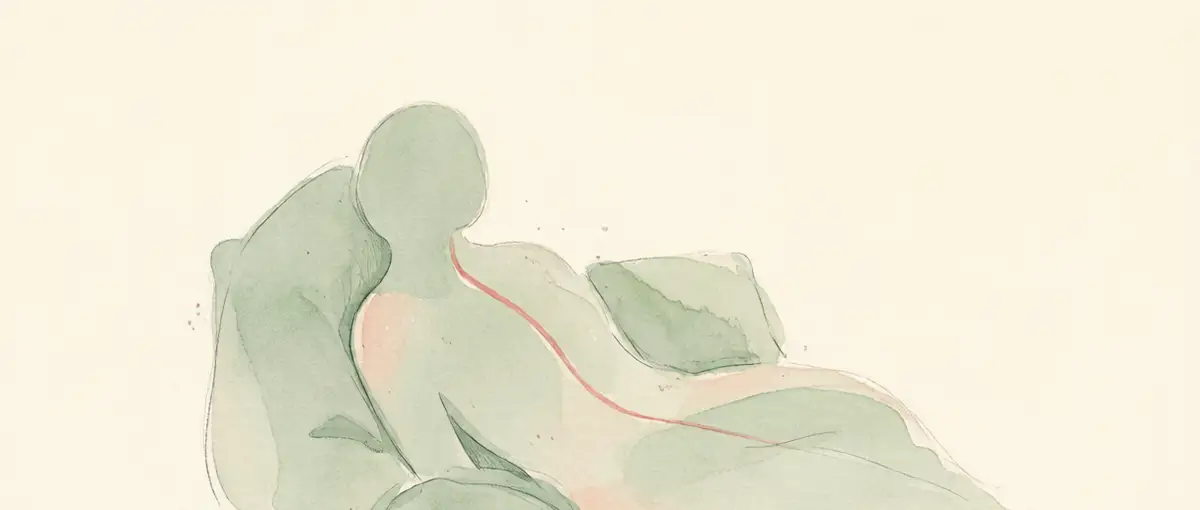
Have you noticed how, even after you're home, the door locked, the outside quiet, your shoulders are still hunched, your jaw still clenched, a string in your chest still pulled taut? The more you tell yourself to relax, the tighter it gets.
This isn't you being dramatic, and it isn't a lack of willpower. Your body has simply set "tense" as the default gear.
We live in an environment that keeps rushing us: replies within seconds, work turned in early, surprises caught immediately. Over time the nervous system learns to keep "battle ready" as the norm. It can't tell whether you're actually in danger or just sitting on the sofa scrolling your phone. Until it gets a clear signal that says "you can stand down," it keeps the gear engaged.
So you're safe, but your body never got the memo. It's like an actor who doesn't know the play is over, still standing on stage, muscles braced, breath shallow, ready to go on at any second.
The hardest part is that the more you try to relax, the less it believes you. Because "I must relax" is itself a new command, a new kind of effort. The signal you send the body is "hurry, loosen up," and what the body hears is "another task," so it tightens further.
This isn't the same as anxiety. Anxiety is a specific worry living in your head; here the body just keeps spinning while the mind is oddly empty. Like a car stopped, engine still roaring — you can hear it, but you don't know how to switch it off.
To loosen that string, "don't be tense" does nothing. What the body needs is something slower than a command: for its rhythm to be met. Put your attention on the feeling of your feet on the floor. Lengthen the out-breath on purpose. Let the shoulders drop on their own — not by order, but by permission.
Try setting aside a few minutes each day to do nothing you "should," just sit, and let the body confirm: there's no message to answer now, no fire to put out, this place is safe. One confirmation isn't enough; it needs repeating. The body has a slow memory; only through round after round of calm can the default gear shift from "battle ready" back to "on standby."
A lot of people know this feeling: a hot bath, a massage, and for a moment the body lets go — but step outside and the shoulders come right back. Because that release was passive, borrowed; the body hasn't learned it yet. The real fix isn't one thorough relaxation, but letting the body taste "safe" more and more, until it trusts that it's allowed to be this way normally too.
So don't chase that "totally relaxed" ending. That just turns into another task. Shrink the goal: today, just let the clenched jaw loosen half a millimeter; let the shoulders drop once at a red light. These small, unforced loosenings are the signals the body can actually hear.
Don't blame yourself for not being able to let go. That string held on for you for a long time. You're grown now, and the world isn't as dangerous; you can teach it, bit by bit: it's okay, you can slow down.
If one day you notice you can sigh deeply again, that your shoulders drop on their own, don't be surprised. It's not that you suddenly learned to relax; it's that the body finally, bit by bit, believed: the lights here can go off, the alarm can stand down. You're owed this ease without bracing. Go slow — it learns fast; it's just that you never gave it the chance before.
Why does my body stay tense when I’m safe?
Your body can keep an old alert setting even when the present is relatively calm. Check for current risks, then practice small signals of safety—longer exhales, a supported posture, and predictable routines—without demanding instant relaxation. Persistent pain, severe tension, or other concerning symptoms deserve medical attention.
How can I relax when nothing is wrong?
Aim for one percent less bracing rather than total calm: unclench your jaw, lower your shoulders, or notice the chair holding you. If tension is persistent or disrupts sleep and daily life, a qualified professional can help you explore it.
Want to understand why safety still feels like a state of emergency?
If your alarm stays on after the danger has passed, gentle self-exploration can help you teach the body through repeated, small experiences.
Keep reading: Why do I feel drained even when I didn't do much · Why do I feel guilty the moment I rest? · Why do I feel more tired after I rest
Written and reviewed by DustEcho Editorial for self-reflection and cultural inquiry—not counseling, medical advice, or a clinical diagnosis.
Not sure where to begin?