Why Am I Afraid to Show My Anger to the Person I Love Most
DustEcho Editorial
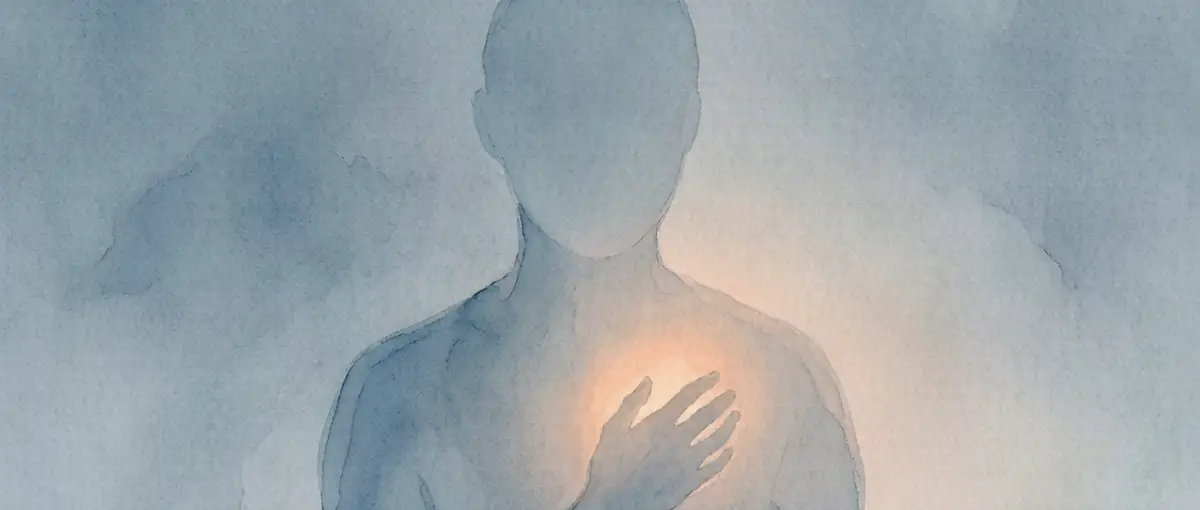
A friend told me about something small not long ago. She and her boyfriend had made plans to go out for the weekend, but he overslept and didn't wake up until afternoon. If a colleague had been late, she'd probably have texted back with a cold face; but with the person in front of her, she just smiled and said "It's fine, let's do it another day," then felt a little down for the rest of the day.
She said, "Am I just too passive?"
I thought about it and said: you're not passive—your anger just picks its people.
Why can you get mad at strangers but not the ones you love?
You've probably had moments like this: when the delivery is wrong, you snap right back at the rider; when someone cuts you off in traffic, you honk; when a coworker throws you under the bus in the group chat, you don't hold back. Your anger is fully intact, working just fine.
But the moment you're in front of the person you care about most, it's like someone pulled the plug. He forgot your anniversary, he spoke with a sharp edge, he promised and didn't follow through—any one of those would have made you blow up with anyone else, yet with him, you swallowed it.
Not because you have a good temperament. Because in front of him, getting angry has quietly been recalibrated into a "high-risk operation."
Why did you tag anger as a crack in the relationship?
Hidden in how you understand intimacy might be an unspoken equation: the moment I get angry, he gets hurt; the moment he's hurt, he leaves; the moment he leaves, I have nothing left.
That equation runs so smoothly your body doesn't even wait for you to confirm it—it presses your anger down for you first. And so you learn a very light smile, called "It's fine."
But after the smile, where does that unspent fire go? It doesn't disappear. It just shifts from "at him" to "at yourself"—you start getting angry at yourself: why did I swallow it again, why am I such a coward, why can't I even say one hard word.
The "Good" You Guard Is Thin as Paper
You probably think not getting angry is protecting the relationship. But the bit of "good" you're guarding is often thin as paper.
Because it isn't real calm—it's a performed "It's fine." You temporarily put away your true self and put on a "I'm easy to get along with" face, thinking that makes the relationship safe. But paper can't wrap fire; the longer you hold it in, the more a small thing someday can make you suddenly explode—and at the moment you explode, the other person is baffled: is it really that big a deal?
So not getting angry didn't make the relationship more stable. It just deposited the conflict into a fixed term, with interest, to be repaid sooner or later.
The Old Map Still Points to the New Road
You might say: but I learned from some relationship that the moment I expressed dissatisfaction, the other person went cold, so I got used to swallowing my anger.
That's not untrue. You did learn from some relationship that "anger equals danger," but the person in front of you now may not be that person back then. You're still using an old map on a new road—the map shows a cliff, but the ground under your feet has long been flat.
Something more real: you're afraid anger will push him away, but the version of you that never gets angry is also slowly pushing away the real you. He fell for the person who's always OK, not the person who also feels wronged, also holds her ground, also says through red eyes "what you just did really hurt me."
You Don't Have to Become Short-Tempered Overnight—Just Say the Anger Smaller
I'm not telling you to pick a big fight with him next time; that's too scary.
Just next time the fire flares up, try not to snuff it out immediately. First recognize it: oh, I'm angry, not because he's bad, but because this really got to me.
Then pick a not-too-bad moment and say the anger smaller—not "you always do this," but "that thing you just said, it hurt a little." You'll find that for someone who truly wants to keep you, your anger isn't an eviction notice—it's a signal: it tells him you're here, you're real, you're willing to let him see.
You always thought not showing anger in front of the one you love is tenderness. But for the person who wants to understand you, a relationship that can't even hold your anger isn't really close.
How can I express anger without hurting someone I love?
Name the specific moment and the impact instead of turning it into a verdict: “When that happened, I felt hurt and need a pause.” Anger can be information about a boundary; it does not have to become an attack. If expressing anger feels unsafe, prioritize support and safety before confrontation.
Want to understand why anger feels dangerous in close relationships?
If you swallow every sharp feeling until you disappear, gentle self-exploration can help you give anger a smaller, safer voice.
Keep reading: Why Do I Make Jokes When I Want To Be Honest · Why Can't I Speak Up About What I Need · Why Do I Tell People What They Want To Hear
Written and reviewed by DustEcho Editorial for self-reflection and cultural inquiry—not counseling, medical advice, or a clinical diagnosis.
Not sure where to begin?