Tianfu: the steadiness that holds life together
DustEcho Editorial
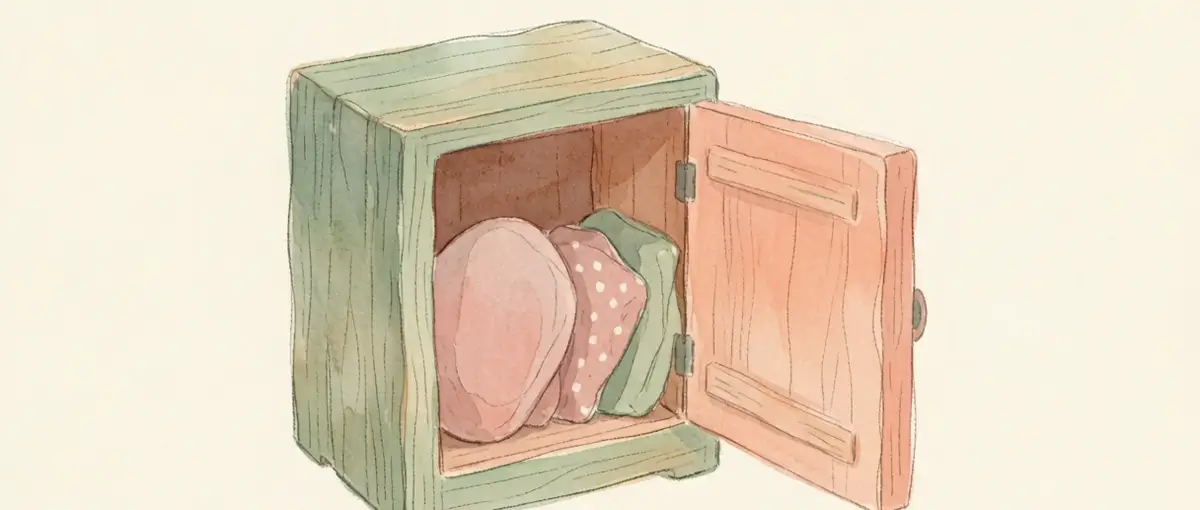
There's always someone like this around you. When you're panicking, you go to them — they may not hand you some brilliant idea, but they somehow make you feel, "It's okay, things will hold." Not because they're so capable, but because they've settled their own life so thoroughly. You move to a new place, and quietly they've helped you organize the cabinets. When you lose your footing, they hand you a written checklist.
In fortune-telling, Tianfu is not a promise of "wealth and honor" — it's a capacity to maintain: to settle what you already have, to hold life together. It is not aggressive, not reckless, but steady. Like a warehouse with a door, where you can put things away and feel at ease.
What does Tianfu mean in Zi Wei Dou Shu?
Tianfu is traditionally read as a symbol of steadiness, security, and the ability to care for what is already in your life. In everyday terms, it can describe someone who creates stability through planning, reliability, and quiet follow-through. This is a reflective interpretation, not a promise of wealth or a fixed prediction.
How can I keep steadiness from becoming stagnation?
Treat stability as a place to rest, not a reason to stop moving. Keep one small, low-risk experiment open alongside your routines, and let yourself be supported too. Explore the pattern gently if you often feel valued for holding everything together but unsure what you want for yourself.
Its two sides
One side is reliability. With Tianfu strong in you, you save, you plan, you take care of people — the grounded presence in a relationship that lets others feel safe. They treat you as their backup, and you rarely let them down. Sweet words aren't really your style, but when they need you, you're there; when they're falling apart, you stay steady. This kind of steadiness is the quiet confidence many people long for and can never quite find.
The other side is how easily you settle into the comfort zone. Being so good at holding things together, you sometimes hold back your own curiosity and drive too, turning "steady" into "still." Not that you can't move — you just can't be bothered, and you're afraid that moving will only make a mess. You guard a full storehouse of safety, yet forget that the warehouse door can also open to let new things in.
In relationships
In relationships, you move quietly and get things done. You don't steal the spotlight, but you're always there when needed. The security you give isn't loud or dramatic — it's the kind that says, "I've always been here, and life goes on as usual."
It's easy and relaxing to be with you, but don't take yourself for granted — and don't let others do it either. Steady people get tired too; you just don't say it. You've grown used to being "the one who won't fall," so even complaining about being tired feels superfluous. Show a little vulnerability to the people around you now and then — tell them you worry about them — and they'll quietly exhale. It turns out you, too, can be something other than an everlasting support.
With money
With money, you're the maintaining type. You don't earn fast, but you keep and organize well. You like the feeling of "having a cushion" — you save, you plan, and you're not easily swept away by the latest trend.
To you, money is a tool to steady life, not something to prove anything with. So you'll gladly spend on family but hesitate to spend for the sake of face. Only now and then a reminder is in order: a cushion held too tight can also become a constraint that keeps you from moving. Money is meant to hold life up — not to lock you inside the warehouse.
At work
At work, you settle the back end. Processes, files, backups, the safety net — you handle them all thoroughly. You may not be the one charging at the front, but the team falls apart without you.
Only now and then remind yourself: being steady isn't the same as never stepping forward. Fight for what should be fought for; show what should be shown. You can hold things together, but you also have to let people see that you do. Even if you guard the rear perfectly, if no one knows it was you holding it up, opportunities slip right over your head. You deserve to be seen, not only needed.
How to live with it
To live with your own Tianfu, first affirm the value of that steadiness. Being able to live life steadily is a skill, not mediocrity.
But don't let steadiness become an excuse. You can hold life together — and you can also try holding the occasional impulse. Steady and curious aren't a choice of only one. Open the warehouse door now and then, to let new things in. You don't have to shut off every thought of trying something, just to "avoid mistakes."
In closing
The good of Tianfu is that it gives people a place to land when they're drifting. Only don't forget: the landing point isn't there to keep you standing still — it's there so that, once you've rested enough, you can keep going. You're so good at holding others up; you should also allow yourself, once in a while, to be held by someone else.
A modern psychological perspective
This "maintaining plus holding the line" tendency relates to the need for security and a preference for a sense of control. It stands in direct contrast to "always keeping one foot out the door" — Tianfu is that foot finally planted firmly on the ground, no longer ready to run at any moment. It also connects with "always saying 'I should'": Tianfu lives "I should be steady" as daily routine — grounded, yet now and then tied up by the "should."
If you also often hesitate between "steadiness" and "wanting to move," these pieces might catch you:
Written and reviewed by DustEcho Editorial for self-reflection and cultural inquiry—not counseling, medical advice, or a clinical diagnosis.
Not sure where to begin?