Shang Guan in BaZi: Talent That Won't Stay Quiet
DustEcho Editorial
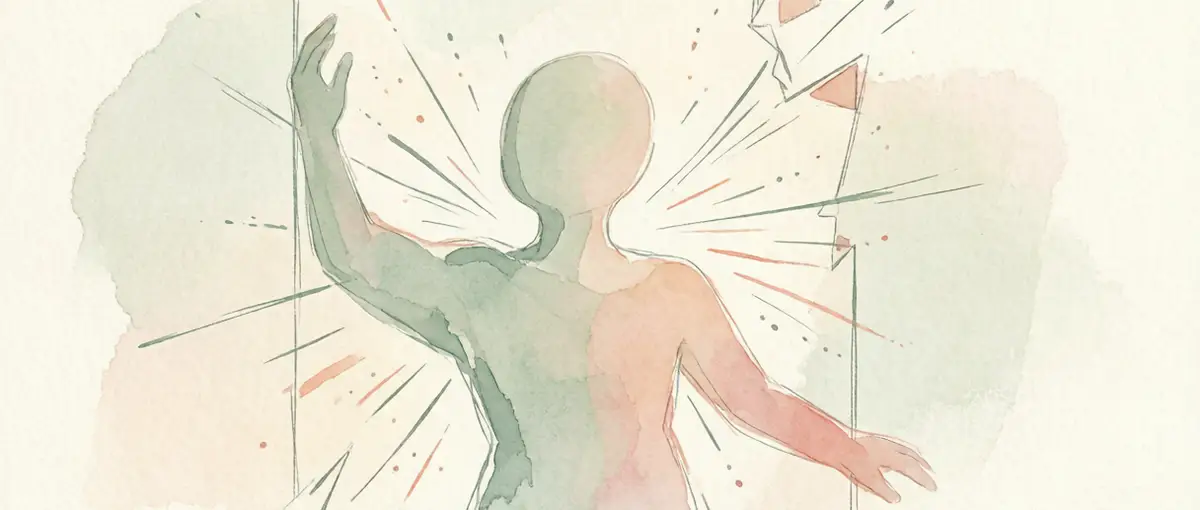
In BaZi, Shang Guan — often translated as Hurting Officer — describes talent, truth, and expression that resist being bottled up. It is not a verdict that someone is difficult or disloyal. It names a strong outward current: the need to say what is real, make what is possible, and challenge a rule that no longer makes sense.
Some people tuck their edge away; a person with heavy Shang Guan can't. He can't hold anything in — good or bad, praise or critique, it's at his lips the moment it forms. Not to sting on purpose, but "bottling up" hurts him worse than being scolded. Talent must show; opinions must be heard; if a rule is unreasonable, he's the first to flip the table.
You probably know someone like this too: the hardest person in the meeting, and also the one most likely to say the truth. Everyone dodges, everyone endures — only he goes pop and pokes the window paper through.
What is it?
A person with heavy Shang Guan meets the world through "expression." He doesn't swallow his thoughts; he lets them burst out. Talent, opinion, emotion — all spread open. To him, hiding is waste, bottling is grievance.
The difference from Qi Sha is key: Qi Sha is "carrying" — bearing pressure and moving forward, turning force inward into armor; Shang Guan is "flipping" — tearing down what he dislikes, spraying force outward as expression. One turns inward into a shell; the other turns outward into a voice.
So the base color of Shang Guan isn't "thorn" but "truth" — truthful truth, and principled truth.
Its two sides
The truthful side is precious. He doesn't pretend. Hypocrisy doesn't survive three sentences with him. Talent, insight, temper — all laid open. Those close to him are often refreshed by this "not hiding" — it's been too long since they met someone without a mask.
The shadow side comes from this mouth too. Critique easily becomes attack; freedom easily becomes willfulness. He hates being managed, especially "who made you the boss" management — even when the other side is right. Only after the jab does he realize it landed hard, but the face can't be taken back.
He isn't bad; he's fast. So fast that the filtering step got skipped.
In relationships
What he wants is equality and freedom; what he fears most is being controlled, being hijacked by "for your own good." In intimacy he's direct, but also hurtful — wanting to say "I care about you," it comes out "you're doing this wrong."
His lesson is to say "what I disagree with" well, instead of bottling it or jabbing it back. Learning "I oppose you, but I don't deny you" lightens the relationship a lot.
In wealth
Money isn't his goal; it's a byproduct of talent. He earns through the knack of "I'm different from others" — unique taste, unique view, unique craft. He spends on interest without a blink, and feels nothing for "what everyone else buys."
He scorns speculation arbitrage, but is good at "selling his talent at a price." To him money is the receipt of talent being claimed by the world, not a number accumulated.
At work
He can't stand rigid rules and mindless management. He fits specialist roles, freelance, anything "where skill speaks." He's a source of innovation and a management headache — give him a stage and he shines; give him shackles and he tears down the set.
He isn't unable to cooperate; it's that cooperating with "senseless cooperation," every cell rebels. Finding a superior who can stomach his offenses matters more than butting heads.
How to live with your Shang Guan
First, accept your truth — it's expensive. But you can hone two things: one, separate "true" from "harsh" — an edge is a blade, not a saw; the former is clean, the latter only wounds; two, practice "I oppose you, but I don't deny you" in relationships, letting expression land instead of exploding.
In closing
Shang Guan isn't a troublemaker. He simply refuses to stuff a living person into a standard mold.
If Shang Guan is heavy in your chart, you may feel this impulse of "words at the lips can't be stopped, hands itch at what I dislike" more often. It stings, but it also pops many lies of fake peace. The world, actually, needs a few people who won't shut up.
A modern psychological lens
The "talent that can't stay hidden, truth that won't be reined in" that Shang Guan describes has close echoes in psychology:
- Why I tell people what they want to hear — Shang Guan's reverse is the habitual swallowing after long enforced silence.
- Why I feel like I'm faking it at work — the discomfort of being scrutinized, the exposure that comes with showing talent.
- Why I keep one foot out the door in relationships — beyond truth, there's also catching the other's heaviness.
What does Shang Guan mean in BaZi?
Shang Guan is traditionally associated with expression, talent, critique, and resistance to rules that feel false or limiting. It does not mean someone is destined to offend others. A useful reading asks how to keep the truth while improving the delivery, so the same sharpness can become craft, leadership, or honest connection.
Want to understand your expressive and career patterns?
If your talent often arrives before the room is ready, a personal reading can help you find channels where your voice is heard without having to harden it. Start a personal BaZi reading.
Written and reviewed by DustEcho Editorial for self-reflection and cultural inquiry—not counseling, medical advice, or a clinical diagnosis.
Not sure where to begin?