Shi Shen in BaZi: Enjoyment, Creativity, and Ease
DustEcho Editorial
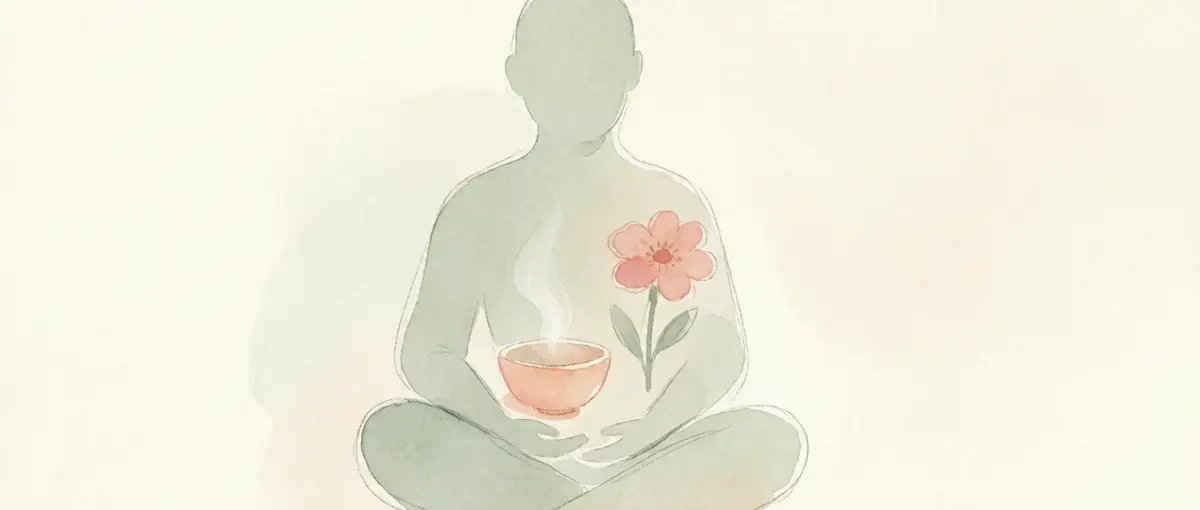
In BaZi, Shi Shen — Eating God — describes the ability to meet the world through enjoyment, creativity, and generous output. It is not laziness or a promise of comfort. Read gently, it names the person who makes what they love, shares it, and often softens a room — while needing to notice when enjoyment has quietly become escape.
Some people meet the world by "solving it"; a person with heavy Shi Shen does the opposite — his way is "enjoying it." He has his own "life grammar": make the things he likes, share them, and the world softens.
You probably know someone like this: a gathering goes cold without him, not because he talks a lot, but because he slowly warms the room. He may not be the most excellent, but being with him isn't tiring.
What is it?
A person with heavy Shi Shen meets the world through "output." He doesn't pull energy back to mull it; he makes it and gives it. Food, works, punchlines, even just a relaxed state — all are his language.
The difference from Pi Yin is important: Pi Yin closes the world down and figures it out alone; Shi Shen opens the world up and contributes himself. One turns inward into an island; the other spreads outward into a warmth.
So the base color of Shi Shen isn't "greed" but "appreciation" — savoring, valuing, enjoying life itself.
Its two sides
The relaxed side is charming. He isn't very tense, knows how to amuse himself and make others comfortable. To him relationship is more a "work" than a "task." He can make you feel: so being together can be this light.
The shadow side comes from this softness too. When he should be firm, he can't; under pressure his instinct is to dodge — using enjoyment to escape what he should do. He also tends toward "good enough," stopping one breath short of precision. He does many things happily, but stops at "not bad" instead of reaching "really good."
He isn't lazy; he's soft. So soft that when it's time to close the deal, his hand loosens and it scatters.
In relationships
He's the relaxant of any relationship. In a social setting, his presence loosens the air a notch. But he avoids conflict: rather than face a rupture head-on, he'll bottle it or laugh it off.
In intimacy, what he gives is "being together is comfortable," but not always "I'm really listening to your pain." He's good at keeping you laughing, not at sitting with your crying. It isn't that he doesn't love — he mistakes "heaviness" for something to dodge.
In wealth
Money isn't a tense subject for him. He'll spend willingly on what he likes, not into miserly saving. He earns through craft, expression, or "turning what he likes into something he can sell" — content, flavor, taste. He's bad at arbitrage calculation, but good at keeping money moving, through himself and through others.
He feels zero burden "paying for others," and zero pull toward "paying for face." To him money is a medium, not a medal.
At work
He fits roles that use creation and expression: content, design, food, improv, anything "output-driven." What he fears most is rigid control and a nine-to-five line — that smothers his spark.
Give him space and he grows surprises; cage his process and he fights back with slacking. He isn't incapable of carrying weight; it's just that carrying "meaningless weight," every cell in him protests.
How to live with your Shi Shen
First, accept your relaxation — that's a gift, not a flaw. But you can tighten on three things: one, tell "enjoyment" from "escape" — the latter drops you at the moments you should actually step up; two, in relationships, try swapping "I'll make you laugh" for "I'll hear you out" a few times — heaviness is part of closeness too; three, push what you love one inch deeper, and it stops being pastime and becomes your footing.
In closing
Shi Shen isn't about playing. It's the ability to believe "living can be good." These days, people who can taste life are actually rare.
If Shi Shen is heavy in your chart, you may feel this loop of "do what I love → the world softens" more often. It isn't sharp, but it's solid — like a pot of soup simmered just right: not dazzling, yet you want to keep drinking it.
A modern psychological lens
The "meeting the world with enjoyment and output" that Shi Shen describes has close echoes in psychology:
- Why I feel like I have to earn my rest — collapsing the moment he rests isn't laziness, but a rebound release after long suppression.
- Why I keep preparing instead of starting — Shi Shen's reverse is the tension that "being seen outputting" jams what should have flowed out.
- Why I tell people what they want to hear — the conflict-avoiding side of Shi Shen sometimes covers heaviness with lightness.
What does Shi Shen mean in BaZi?
Shi Shen is traditionally associated with enjoyment, creativity, food, expression, and the ability to make life feel more spacious. It does not mean someone should avoid effort. A useful reading asks where pleasure gives you energy, where output wants a deeper form, and where lightness may be covering something that needs attention.
Want to understand your creativity and work patterns?
If you know how to make life warmer for others but struggle to stay with difficult steps, a personal reading can help you see both sides of that ease. Start a personal BaZi reading.
Written and reviewed by DustEcho Editorial for self-reflection and cultural inquiry—not counseling, medical advice, or a clinical diagnosis.
Not sure where to begin?