The Green That Has Not Yet Ripened
DustEcho Editorial
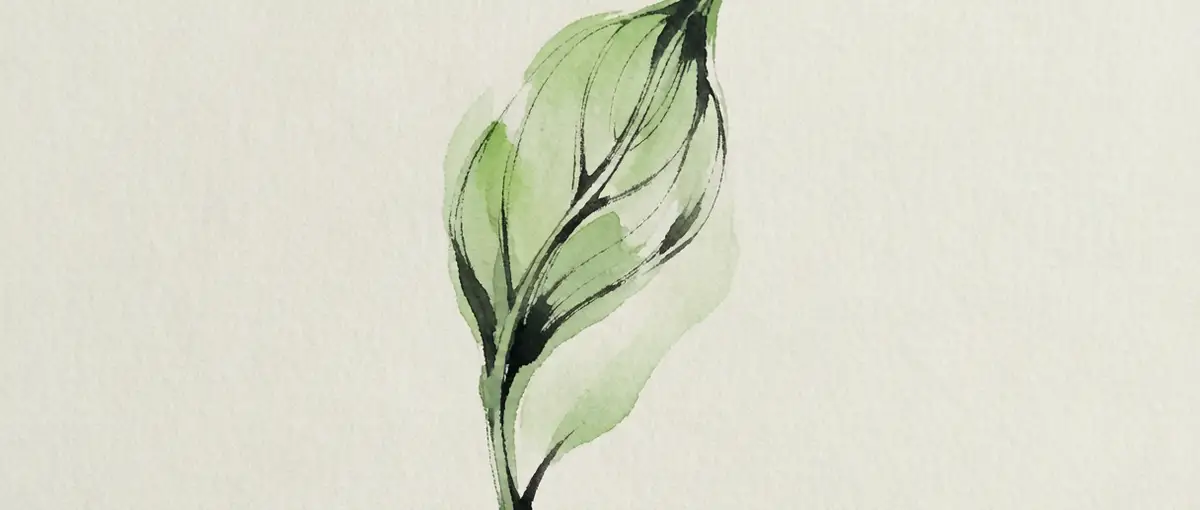
Qing is the color of the East, of wood, of spring — yet more than a color. It dwells between blue and green: the tender shoot, the first dawn light, the rising stage in "blue born of indigo." We speak of youth and greenness, of names in history. Behind qing stand beginnings, the not-yet-ripe, the act of becoming. Not full, yet most remembered.
What is The Green That Has Not Yet Ripened?
Ask ten people what qing is and you get ten answers — sky-blue, grass-green, ink-black hair. Its ambiguity is the charm: it will not settle, it drifts. A growing thing cannot be pinned to one color. Qing refuses definition because it has not finished growing.
Why qing is the color of the East
In the five elements, East is wood and its color qing. Spring's first sprouts are qing — the color of birth itself. East is beginning; qing is the look of beginning, marking all not yet fixed but already moving. When we see qing we sense more is to come; it does not end.
Born of indigo, yet deeper than indigo
The phrase began with dye: blue drawn from indigo runs deeper than the plant. Later it meant a student surpassing the teacher. Here qing is rising — not a final color but one mid-evolution. To stay qing is to keep absorbing, keep changing. The danger is reaching "pure as fire at its bluest" too soon and welding yourself shut. Qing's goodness lies in admitting it has not yet arrived.
Youth is a word for beginnings
Youth binds qing to spring — firsts and birth, that softness before life weighs down. What we miss is not the age but the state where all still felt possible. Qing tells us: you need not be young to feel young. So long as you begin something uncertain, qing lives in you. It is a mindset, not a number.
Greenness is not a flaw
Unripe fruit is sour, astringent, a wince at the bite. But greenness is real — unwaxed, with the plant's own temper. So are people. A blushing, clumsy qing state draws us nearer than flawless polish. Greenness is not less than good; its edges are not yet worn. Do not rush to ripen. Some qing is better kept.
The green that has not yet opened moves us most
Watch willow buds at spring's first turn — that timid, half-translucent tenderness at the tip. It pierces because it is hope's shape: it will fill. Qing holds this instant as color. We love its almost-full, not-yet-full. Once full it no longer stirs us; qing's power is that it still hangs.
The blue-green robe is the scholar's color
Old scholars wore plain qing — not wealth's red, not power's purple. Qing marked one not yet in office, still on the road. This was no shame but decency: to admit you are a student is the greatest honesty. The robe keeps a place for all — you may always be a learner, never hurried to graduate.
We have all had our qing
Recall your first job, first love, first home-leaving — clumsy, over-eager, often wrong. That was your qing. Looking back you may smile, but you will not despise that self; it carried you here. Qing is the undercoat of every new beginning. Next time the strange arrives, recognize it: you are qing again. Normal.
Keeping a little qing keeps a little possibility
People fear qing: uncertainty, more mistakes. Yet the moment you ripen fully and lock tight, you close the channel to becoming else. Qing is the color of plasticity. Keeping some is not playing young; it leaves an opening for the future. The fully ripe are steady but closed. Stay a little qing and the world stays open.
Qing can also be misread
Some call qing not good enough, urging you to ripen and become useful fast. But forced ripening is the greatest pity. A green dyed too soon loses its almost-full liveliness and its reason to be missed. Qing need not prove it will fill; as it is, it grows. To be qing is to be becoming, not mere being. Forced-ripe things are sweet but hollow; keep the qing, keep the true savor.
What does qing symbolize in traditional color imagery?
Qing can describe the blue-green freshness of spring, youth, and something still becoming. It is not a flaw or a promise that you should stay unfinished; it is a way to value possibility before the final form arrives.
How can I feel less ashamed of being unfinished?
Name what is already alive, what is still learning, and what support would help it mature. You can grow without pretending you have arrived, and you can change direction without making the earlier version worthless.
Want to understand why uncertainty makes your unfinished parts feel embarrassing?
If you keep demanding a final identity before you act, gentle self-exploration can help you protect a little green possibility.
Treat qing as unfinished vitality
If East is beginning, South full bloom, West settling, North rest, then qing is the becoming itself. I do not advise staying qing forever — that is refusing to grow. But do not strip all qing away. The unripe parts, the unspoken words, the untried thoughts — they prove you still live. Qing promises no result, only this: you are not finished.
Keep reading: East: The Direction That Greets Every Morning · Dui: The Marsh That Is Also a Mouth · Feng: Invisible, Yet It Truly Came
Written and reviewed by DustEcho Editorial for self-reflection and cultural inquiry—not counseling, medical advice, or a clinical diagnosis.
Not sure where to begin?