Liu Ri in BaZi: What Daily Timing Means
DustEcho Editorial
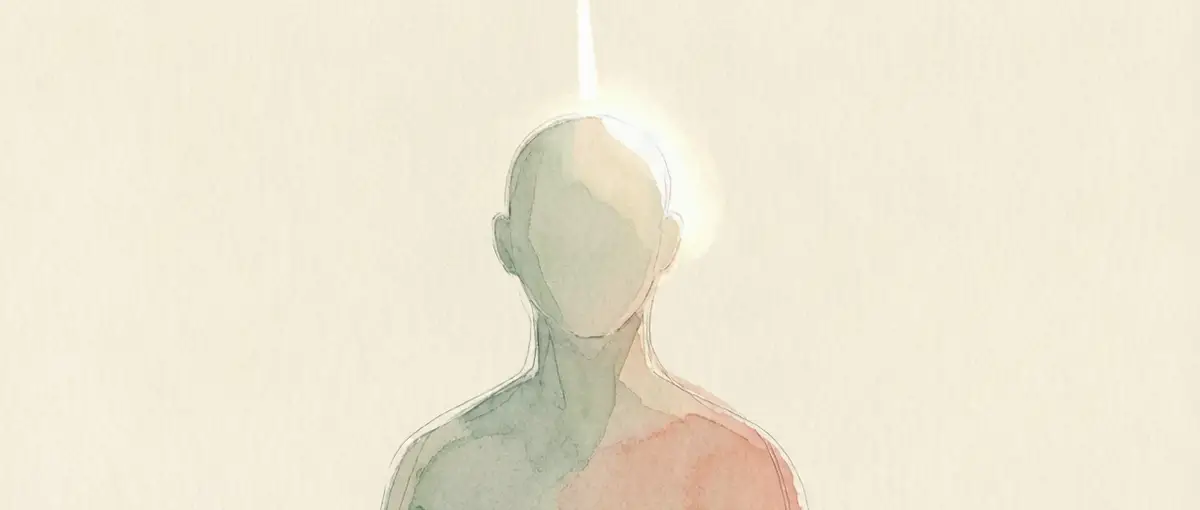
In BaZi, Liuri (Liu Ri) describes the finest day-by-day timing layer beneath the year and month. In simple terms, the Liuri meaning is the daily timing or “weather” of one particular day within a larger pattern. It helps name why one day can feel different within an otherwise steady month. This is not a fixed forecast or a reason to fear a date; it is a warm, non-predictive lens for noticing daily rhythm and keeping one difficult day from becoming a verdict about you.
You have probably known that feeling: most days in a month drift by, then one or two feel unlike the rest — your mood, your luck, even how you see people shifts. Everything opens, or everything clogs. The ancients placed this experience — "inside one month, different days as if swapped under a finer layer of light" — under the word Liuri.
What does Liuri mean in BaZi?
Liuri is often read as "should I go out today," as if rating each day lucky or unlucky. But its truest part is not the omen — it is the fineness. The year lays a broad light, the month a layer of weather, and Liuri gives the most intimate, most fleeting film of light of the day itself. It covers only your one day, closer and more drifting than the month.
The experience is ordinary: you are still you, the month unchanged, yet on some day you are suddenly seen — a word is caught, a thing is helped. On another, the same you meets walls. What Liuri corresponds to is this "light of the day": it does not rewrite your month's tone, only wraps you in the finest, most specific weather for one day. It is not that you changed today. You happen to walk one day of this month, covered by its finest light for twenty-four hours. You think your state shifts; often, it is the day's light changing.
Why do some days feel "extra"?
People remember certain days clearly, not because the biggest thing happened, but because that day the light fell on them most particularly.
On a smooth Liuri, everything holds you up; even a mistake becomes a charming flaw. On a snagged one, everything narrows; even easy things gain hurdles. This "extra" is not you turning into someone else — it is that day's light laid over you at its finest, densest. Understand this and the grip on certain days loosens: you did not suddenly become good or bad; you merely walked inside that day's finest light. Liuri records the light, not you. A friend fumbled a half-month proposal and brooded a week; two days earlier, a line tossed in an elevator had settled a team quarrel. The person had not changed — only the finest light covering her. One day pushed her forward, one pushed her to the corner.
Its shape: changing every day, densest yet lightest
Liuri is mistaken for a "super-short month." But its experience arrives layer by layer at the day's rhythm, too fast to catch. It does not wrap you thirty days like the month, nor a year like the year; it tends only the day's twenty-four hours, and changes next day.
So within an overall smooth month, a few days sit snagged; within a knotted one, a few suddenly turn clear. The lightness of Liuri lives here: the month is a paragraph, the day a spray of the wave. When the paragraph sinks, some spray still throws up its light; when it flows, some spray still falls short. You have not changed; you are merely carried through those hours by the day's finest weather. Like the sky: the month has its cloudy and clear, the day its dawn and dusk, and each day holds its own layer of light. You think you are unchanged; in truth that light is deepening or thinning you.
On the days you feel "snagged," how we go wrong
A snagged Liuri is not a great event — a "catch of the day": plans short one breath, relations short one spark, easy things stick. You have not worsened; the day's light simply narrowed your room for the day.
Two mistakes come easiest. One is blowing a single day's snag into a verdict on yourself — "how can I not even get a sentence out." The other is forcing through the snagged day with brute strength, only to hit harder. What Liuri points to: some days were never meant to be "pushed through" — only "gotten through, slowly." That narrowness is the day's limit, not your lifelong size. So the worst on a snagged day is translating "nothing goes right today" into "I am no good" — you only have a narrower road; turn sideways and pass. Wait for the light to change, and the narrow widens. I have seen someone fall twice in a day and feel useless; the next day, the same person closed a stalled deal.
How to live alongside it
Treat a single day as "the weather of that day," not "my fate today" — the least tiring way to live with Liuri.
On smooth days, don't overspend — that good light is the day's climate, not a permanent dividend; use it for what matters, steadier than enjoying "I'm really something today." On snagged days, don't rush conclusions. Allow yourself a day for going slower, resting, deciding less. The day will turn; you are the continuous one — don't let one day's finest light rewrite your whole judgment of yourself. On smooth days don't float believing you can do anything; on snagged days don't sink believing you are finished. Treat a day as a gust that blows past; you have not changed, only a different looseness or tightness inside different days.
In closing
The comfort Liuri offers is light: days flow, and you stay continuous.
No need, because one day sat snagged, to feel you collapsed; nor, because one day went smooth, to feel you reached the summit. The quietly comforting thing about the word Liuri keeps this for us — every day's light is only that day's light, and you are still you, wrapped in a layer of different tightness. Tomorrow the light will change, and you will still be that continuous you. Like someone who dips low on a few days each month, then learns it was only that day's light leaning askew — never you.
Want to understand what Liu Ri means in BaZi?
Liu Ri means the current day or daily timing layer in a BaZi reading. It describes how a particular day may feel different within a larger monthly pattern. The useful interpretation is temporary and contextual, not a guarantee of an event; use it to pace yourself rather than hand one day control over your whole life.
Want to understand a daily timing pattern in your own chart?
If certain days feel unusually different, start a personal BaZi reading to explore the pattern with context and self-reflection. The goal is practical clarity, not a fixed prediction.
想接着读:流月:同一年里,偏偏这个月格外拧巴 · 岁运并临:两层光叠在同一刻,那年的事被推到顶点 · 流年:明明还是你,偏偏这一年格外不一样
Written and reviewed by DustEcho Editorial for self-reflection and cultural inquiry—not counseling, medical advice, or a clinical diagnosis.
Not sure where to begin?